


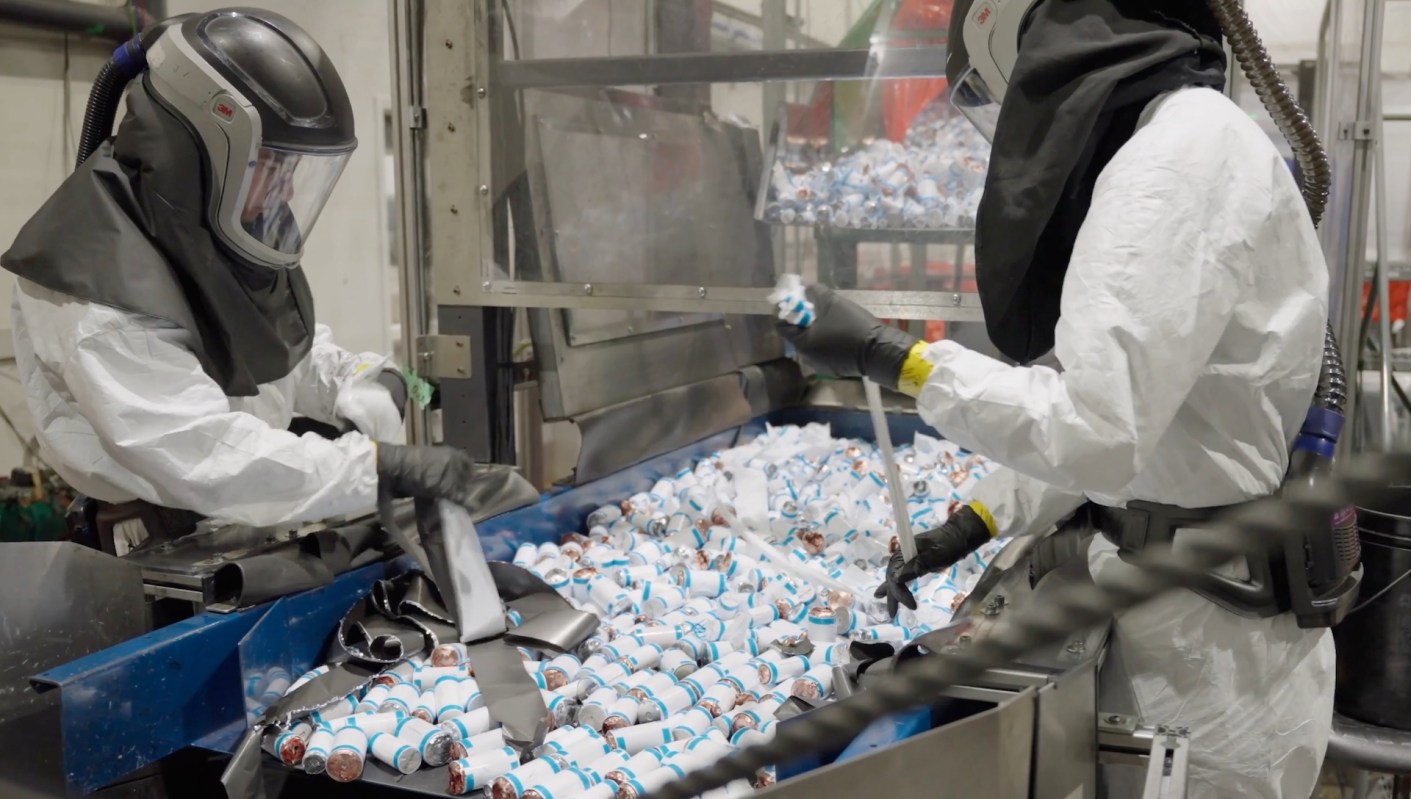
As electric vehicle adoption grows, Tesla is putting more attention on what comes after a battery pack reaches the end of its useful life.
The company said old packs and manufacturing scrap are being routed into a closed-loop recycling system so those materials can be used again in future batteries rather than landfilled.
Here's what to know
At recycling operations in Nevada and Texas, Tesla reported recovering more than 90% of materials such as nickel, cobalt, and lithium from scrapped lithium-ion batteries, according to Not a Tesla App. The company said those batteries do not go to landfills, and that the reclaimed metals can be returned to the battery supply chain, cutting waste and reducing the need for newly mined material.
Our goal is for no Tesla battery to end up in a landfill.
— Tesla North America (@tesla_na) August 6, 2026
Across our US operations, we're recovering more than 90% of key battery materials like nickel & cobalt from cells that we recycle
More details in our 2025 Impact Report https://t.co/6RS4myUvlm pic.twitter.com/wfYCd7QjP3
During 2025, Tesla said its Nevada facility processed more than 3,307 U.S. tons (3,000 metric tons) of battery material — about equal to 9,000 Model Y Rear-Wheel Drive packs. Its newer Texas site is expected to process another 3,307 US tons (3,000 metric tons) in 2026.
Battery technology matters beyond cars, too. Adding battery storage is one of the best ways to protect your home during outages, save money on energy, and even move closer to going off-grid. If you're curious about your options, you can explore EnergySage's free tools to compare home battery storage options and get competitive installation estimates.
EnergySage has also teamed up with electrification brand Qmerit to guarantee you get the best price on home battery storage solutions. For a lower-cost backup option, Pila offers plug-and-play batteries priced at a fraction of the cost of a whole-home backup system.
Why does this matter?
In its 2025 Impact Report, Tesla said it and its recycling partners processed 14,000 tons of batteries.
Demand for batteries is climbing, but U.S. mining still supplies relatively little lithium. Around Silver Peak, Nev., current operations produce about 5,512 US tons (5,000 metric tons) of lithium carbonate equivalent each year.
Save $10,000 on solar panels without even sharing your phone number Want to go solar but not sure who to trust? EnergySage has your back with free and transparent quotes from fully vetted providers in your area. To get started, just answer a few questions about your home — no phone number required. Within a day or two, EnergySage will email you the best options for your needs, and their expert advisers can help you compare quotes and pick a winner. Solar panels can save you more than $50k over their 25-year lifespan, and EnergySage can help you save as much as $10k on installation. Which begs the question — isn't that worth an email or two? |

That picture could shift if major projects move forward. The first phase of Thacker Pass in Nevada, for example, could add 44,092 US tons (40,000 metric tons) of battery-grade lithium carbonate equivalent annually once completed. Until then, recycling can help relieve pressure on supply chains.
Keeping those metals in circulation can lower costs, shrink supply-chain emissions, and provide automakers and utilities with a steadier source of battery materials.
What's being done?
Factory scrap, lab material, and batteries from end-of-life vehicles all feed into Tesla's recycling stream. Some of that work is done internally, and some is done through outside partners, with the goal of recovering valuable metals rather than discarding them.
Tesla has set a 2030 goal that would put recycled output roughly on par with the combined production of mines across North America. If it gets there, recycling would become a major source of battery inputs rather than simply a way to manage waste.
Stronger battery systems — whether in cars or homes — can improve reliability, increase energy independence, and lower costs.
Tesla North America posted an update on X: "Our goal is for no Tesla battery to end up in a landfill. Across our US operations, we're recovering more than 90% of key battery materials like nickel & cobalt from cells that we recycle."

Get TCD's free newsletters for easy tips, smart advice, and a chance to earn $5,000 toward home upgrades. To see more stories like this one, change your Google preferences here.






