


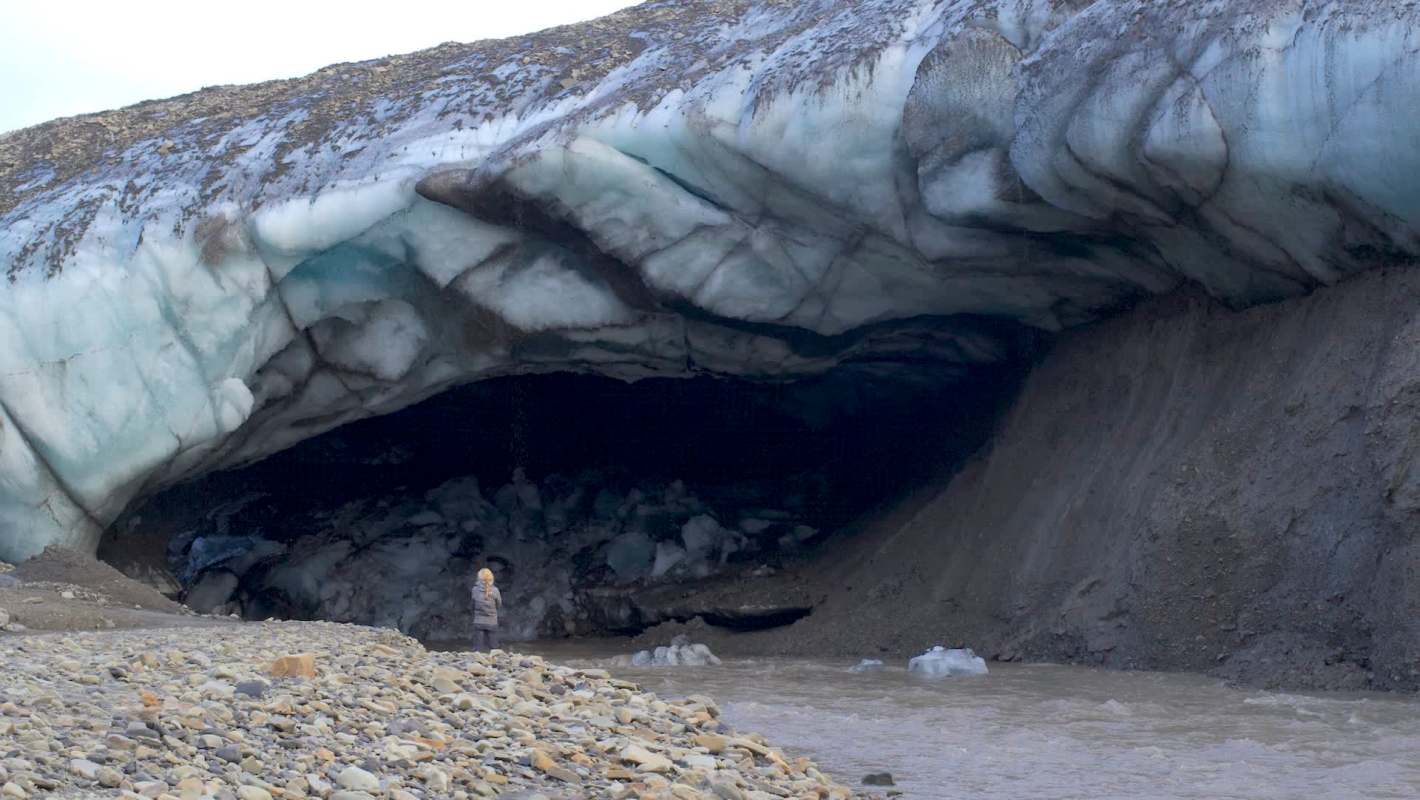
Glaciers are often seen as frozen vaults, preserving the past beneath layers of ice. In Norway's Svalbard archipelago, melting glaciers now appear to be doing the opposite, opening pathways for long-trapped methane to escape.
The process could create another hard-to-track climate impact in a rapidly warming Arctic.
Here's what to know
A study published this month in Nature Communications shows that rivers of meltwater flowing from Svalbard's shrinking glaciers are releasing methane previously trapped in the bedrock beneath the ice.
The findings indicate that glacier melt can uncover and activate once-concealed routes that let this potent greenhouse gas reach the atmosphere, according to a news release from the iC3 Polar Research Hub, which led the study.
The work points to what lead author Gabrielle Kleber described as a "feedback loop," since greenhouse gas emissions have contributed to glacier melting and now glacier melting could contribute further to rising temperatures by releasing the gas.
Scientists described examining 19 glacier-fed rivers in Svalbard to collect 148 water samples. Methane was present in every river they tested, and some readings showed levels up to 425 times higher than could be explained by contact with the atmosphere alone.
TCD Picks » Quince Spotlight
💡These best-sellers from Quince deliver affordable, sustainable luxury for all




The researchers determined that most of this methane was not being generated by microbes under the ice — a phenomenon observed beneath some Greenland glaciers. Instead, much of the gas appears to be associated with Svalbard's geology, particularly shale layers rich in ancient organic carbon that can generate methane over millions of years.
"We wanted to study many different glaciers, across a range of rock types and ice conditions," co-author Silje Waaler explained in the release. "That gave us a clearer picture of why some glacier rivers carry more methane than others."
More background
The process by which this methane is being released seems to begin when surface meltwater drops through openings in the ice down to the glacier bed.
"These glaciers are mostly melting on their surfaces," Kleber said in the release. "But this meltwater finds its way to the bottom of the glaciers through crevasses and holes. This means that it interacts with the rocks underneath, and where those rocks contain ancient gas, the water can flush methane out into rivers."
The methane-richest river water came from glaciers positioned above shale-heavy rock formations, but the bedrock itself did not tell the whole story. The state of the glacier bed was also important. Thawed, wet, active beds were much better at taking up methane than glaciers that were frozen solid to the ground beneath them.
"The temperature at the base of glaciers is an important piece of the puzzle," co-author Leonard Magerl noted in the release. "We found that the biggest methane releases happened where the right rocks and the right glacier conditions came together."
The study indicates that similar release mechanisms may operate beyond Svalbard.
What's being done?
To investigate the process in Norway, the researchers paired river-chemistry measurements with ground-penetrating radar surveys that revealed ice conditions and helped estimate how much of each glacier bed was thawed enough to carry water.
The team estimated that land-terminating glaciers across Svalbard may move roughly 201 to 406 U.S. tons (182 to 368 tonnes) of methane each year through meltwater.
The findings could help scientists build more accurate climate models and identify which regions may be most vulnerable as warming reshapes frozen environments.
"Our results show that future methane release will depend on both geology and glacier change," Kleber said in the release. "That makes it important to know what lies beneath the ice, not only how fast the ice is melting."
Where can I learn more?
What's happening in Svalbard is part of a wider pattern in polar regions, where thawing ice is revealing a range of climate threats:
• Near Canada's Mackenzie River, carbon release is intensifying as permafrost runoff pours into the Arctic Ocean.
• In the Arctic, ancient pathogens are resurfacing as thawing grounds expose old biological material.
• On Antarctic ice shelves, snow algae is darkening the surface and reinforcing melt.
• Across the Arctic, sea-ice loss is disrupting weather patterns far beyond the polar circle.
These examples help to show why research into methane escaping through melting glaciers could matter well beyond one archipelago. As ice retreats and thaw reaches deeper into the ground, problems that were once hidden could become climate threats with global reach.

Get TCD's free newsletters for easy tips, smart advice, and a chance to earn $5,000 toward home upgrades. To see more stories like this one, change your Google preferences here.






