


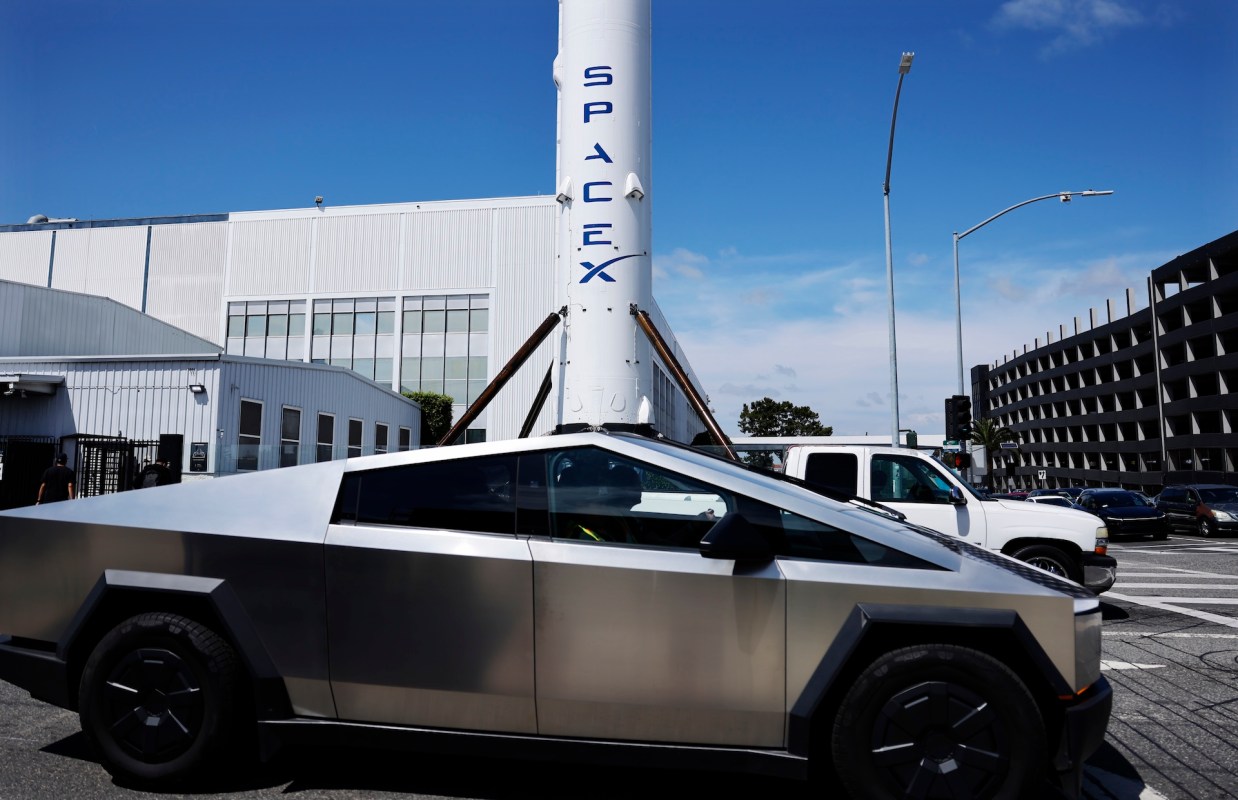
Texas could become home to an enormous new semiconductor hub if SpaceX and Tesla follow through on plans for a proposed site outside Houston, a project the companies say would grow into the world's largest building by footprint.
What happened?
According to Fox Business, SpaceX says it wants to build Terafab Texas in Grimes, Texas, as an enormous semiconductor facility.
The project, which SpaceX is pursuing with Tesla, is expected to exceed 100 million square feet. The outlet noted that the facility's footprint would be well beyond the Pentagon's roughly 6.6 million square feet and China's New Century Global Center at 18.9 million square feet.
The proposed complex, Terafab Texas, is planned for Grimes, Texas, and is intended to produce advanced logic and memory chips. With demand for AI hardware continuing to climb, a facility on that scale would significantly increase U.S. semiconductor output.
Elon Musk, CEO of SpaceX and Tesla, wrote on X, as quoted by Fox Business: "Terafab Texas will be the largest and most valuable building on Earth by far. And it will be stunningly beautiful."
SpaceX said in a press release, "This facility will house the manufacturing, packaging and testing of advanced logic and memory devices." It added that the chips are being designed for edge computing and inference, with Fox Business saying potential uses include Tesla's Optimus robots, autonomous Cybercabs, and SpaceX data centers.
TCD Picks » Quince Spotlight
💡These best-sellers from Quince deliver affordable, sustainable luxury for all




For the first phase, SpaceX projects a cost of about $16.8 billion and employment of more than 3,000 people. However, according to Fox Business, a filing in May set the initial investment at $55 billion and said it could eventually increase to $119 billion.
Why does it matter?
Fox Business reported that SpaceX believes combined demand from it and Tesla will exceed the world's available chip supply. In the company's words, "this looming gulf between supply and demand is at the core of Terafab's necessity."
Semiconductor availability influences prices and production across the economy, from cars and consumer electronics to automation. A U.S. plant of this size could strengthen domestic manufacturing, reduce reliance on overseas chip makers, and add thousands of jobs in Texas.
The proposal also highlights how closely AI growth is tied to the power system. AI can help utilities predict demand, improve battery storage, and better connect solar and wind energy to the grid. But AI workloads and chip fabrication also require large amounts of electricity and water, which can pressure local resources, raise costs, and introduce new security and societal risks if expansion outpaces planning.
What's being done?
Instead of depending entirely on external suppliers, SpaceX and Tesla say they are trying to create more chip-making capacity on their own.
They say Terafab will make, package, and test chips at large scale for use both on Earth and in space. "The Terafab is bringing cutting-edge manufacturing to America, creating thousands of high-paying jobs in the Lone Star State and enabling us to produce AI chips at scale for use on Earth and in space," Musk said.

Get TCD's free newsletters for easy tips, smart advice, and a chance to earn $5,000 toward home upgrades. To see more stories like this one, change your Google preferences here.






