


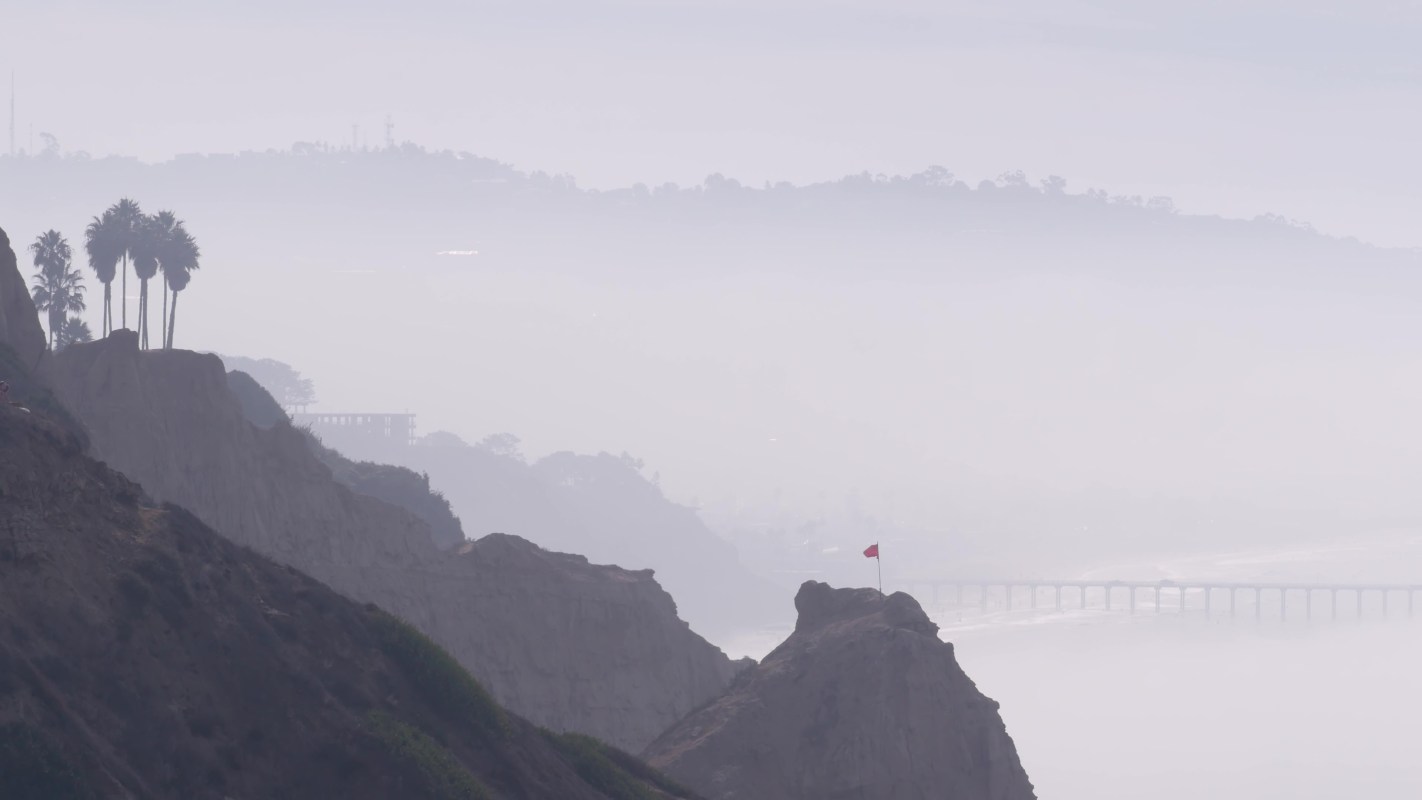
Southern California humidity hits an all-time high after 46 years, putting a question mark on the state's trademark "dry heat."
Here's what to know
A spell of unusual moisture has driven humidity in parts of the region to levels more commonly linked with Florida, adding to health dangers, making the heat feel worse, and stirring fresh worries about what an El Niño winter might deliver.
According to the Los Angeles Times, based on data through the end of August, UC climate scientist Daniel Swain determined that summer 2026 was the most humid in the last 46 years. His analysis used average dew points recorded since 1980 at the airports in Santa Barbara, Los Angeles, Long Beach, and San Diego.
Because dew point closely tracks how moist or dry the air feels, it is a useful measure of humidity. Swain said that when the air is humid, people have a harder time shedding heat, the Times reported. "These are some of the highest humidities we've ever experienced in coastal Southern California," he said. "There's already some evidence that this summer has been, at least at some locations in Southern California, the most humid summer on record."
According to the weather service office in Tampa, Fla., dew points below 60 degrees are comfortable, readings above 65 feel muggy, values over 70 are very humid and uncomfortable, and anything above 75 is oppressive. Shortly after noon on Sept. 8, 2026, Long Beach, Huntington Beach, and Newport Beach each reached a dew point of 76 — roughly matching New Orleans and Orlando, at that same moment.
Moist heat can be more dangerous than dry heat. Swain said some of the highest heat-index readings he was seeing were in Central and South Central L.A., where many residents do not have air conditioning at home.
TCD Picks » Quince Spotlight
💡These best-sellers from Quince deliver affordable, sustainable luxury for all




More background
Southern California's image as a place of mild, dry summers comes from a climate usually shaped by cool coastal waters, nearby deserts, mountain ranges, and daily wind cycles that tend to keep tropical moisture from entering the region.
According to the Times, meteorologist Kristan Lund of the weather service's Oxnard office said the region's typical summer dryness depends on breezes that blow from land to sea in the morning and from sea to land in the afternoon. Lund said that pattern weakened as moisture from the remnants of Hurricane Marie moved in from the southwest and combined with monsoonal moisture.
NOAA's marine heat wave tracker indicates that an extraordinary marine heat wave is stretching along the entire California coastline.
Swain said waters off Baja California were "off-the-charts warm," with temperatures near Ensenada about 10 degrees Fahrenheit above average. He said sea temperatures off L.A. were at or above the highest levels ever observed.
Dr. Muntu Davis, the L.A. County health officer, said, "Heat causes more deaths in the U.S. annually than floods, storms, and lightning combined. Those most likely to get ill during the heat include older adults, young children, outdoor workers, athletes, and individuals with chronic medical conditions," per the Times.
Swain expressed concerns, saying, "And the reality is, in some of these cases, we may not be able to do much at this point to engineer a way out of quite-serious coastal flooding, beach erosion, bluff collapses later this winter. It's going to be a real problem."
What can be done?
L.A. County health officials urged people to watch for signs of heat stroke or heat exhaustion, including dizziness, nausea, rapid heartbeat, and confusion.
Through Sept. 10, 2026, the weather service warned of major beach erosion, flooding at beaches and parking lots, shallow seawater flooding along vulnerable south-facing shores, and a higher risk of ocean drownings because of strong and dangerous rip currents.
Swain said, "The sea level off the coast of Southern California is now six to 10 inches above average. It might not sound like a lot, but ... you add on top of it high tide, you add on top of it big waves from Marie, and we're already getting significant coastal flooding."
Forecasters are also closely monitoring El Niño conditions, including Kelvin waves. NOAA says Kelvin waves form during El Niños, move warm water across the ocean, and raise sea surface temperatures and sea levels. Swain said one or two additional Kelvin waves were expected through the fall and winter.
Swain warned, "This will probably not be the most extreme humid heat event we see even this decade in Southern California, even though it is at the very upper edge or even beyond what we've seen historically."
Where can I learn more?
Southern California's muggy weather is a product of heat extremes across the region. The stories below show how hotter temperatures, extra moisture, and quick swings between hazards are reshaping California and the wider West.
• Across California last year, dangerously hot conditions persisted as century-old temperature records fell again.
• In Austin this summer, a soggy spring helped drive a 118-degree heat index into record territory.
• California's abrupt hydroclimate whiplash left experts stunned after drought conditions disappeared statewide.
• Across the West, heat waves drove 42% of burned acreage despite striking for only a few days.

Get TCD's free newsletters for easy tips, smart advice, and a chance to earn $5,000 toward home upgrades. To see more stories like this one, change your Google preferences here.






