


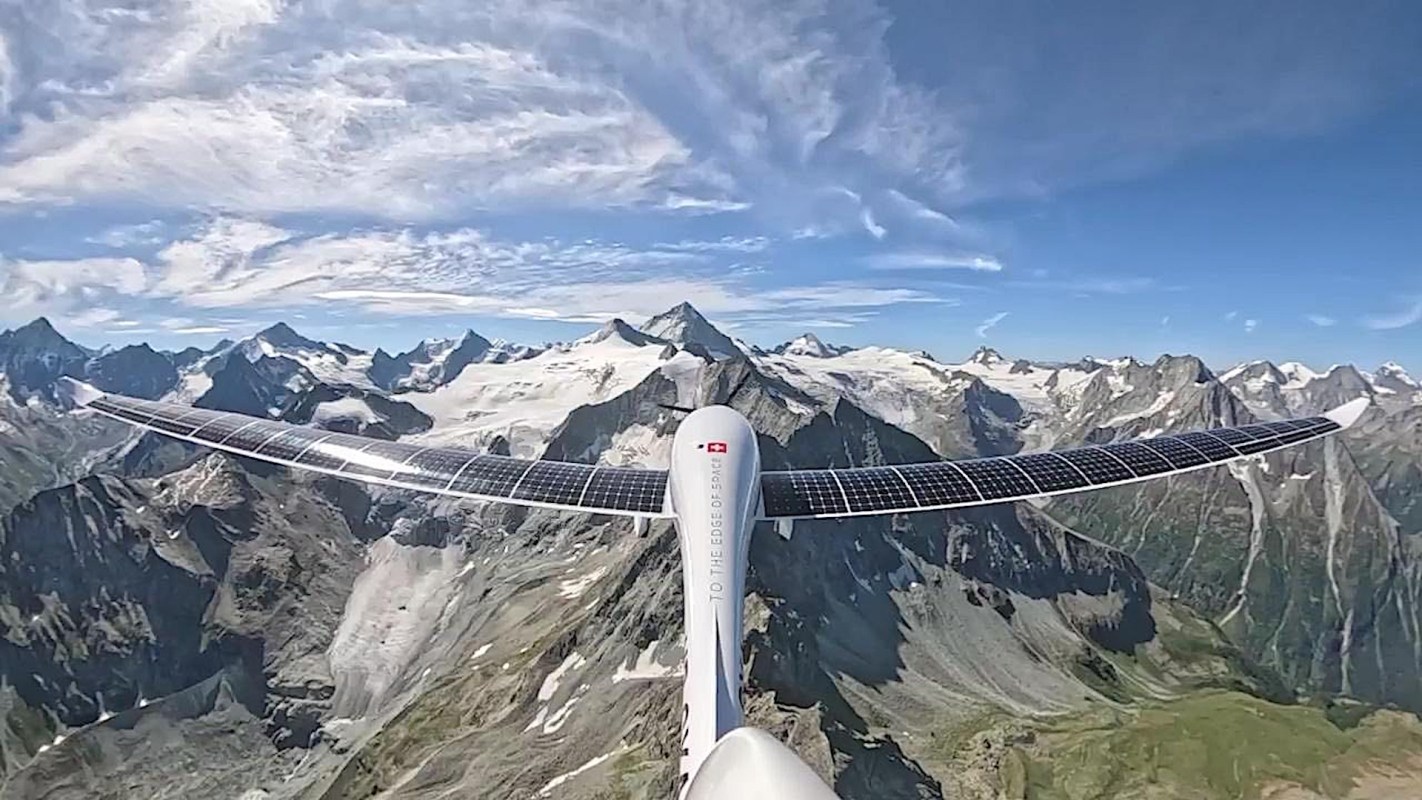
Swiss eco-explorer Raphaël Domjan is one step closer — or around 31,200 feet — to the stratosphere.
The adventurer's ride there was much different from airliners that typically travel at that height. That's because Domjan's plane is powered by the sun, providing a cleaner energy possibility for aviation's future, according to a SolarStratos news release about the August trip.
"I share this moment of joy with all the people who have been preparing for this achievement for years," the 53-year-old pilot said in a Tech Xplore story.
The five-plus-hour journey beat the previous electric and solar-powered flight height record of 30,298 feet. It's a milestone that stood for 15 years.
Domjan's one-person, low-speed SolarStratos HB-SXA aircraft has panels placed on the top of both of its long wings. It also has a propeller and a double electric motor on the front, with batteries to store the sun-generated electricity. The trip was aided by natural thermal updrafts, and batteries were recharged by the sun mid-flight to help complete the ascent. To qualify for the record, the plane needed to land with at least 16% charge left, according to TechXplore.
In a statement, SolarStratos called it "one of those unforgettable peaks that define great human and technological adventures."
Now, Domjan's goal is to fly alongside airliners in the stratosphere at more than 32,800 feet.
His solar-powered plane is an example of what cleaner aviation could soon resemble. Skydweller Aero, located in Spain and Oklahoma City, is working on an autonomous solar plane. Hydrogen- and battery-powered flyers are also in development elsewhere.
The aviation sector accounts for about 2.5% of the planet's heat-trapping air pollution production, and has contributed 4% to Earth's overheating so far. Those numbers will increase as more people fly, according to Our World in Data.
The exhaust isn't just warming our air. The National Oceanic and Atmospheric Administration reported that 91% of Earth's excess heat is absorbed by oceans, contributing to ruinous coral bleaching, glacial melt, and hazardous sea-level rise.
TCD Picks » Quince Spotlight
💡These best-sellers from Quince deliver affordable, sustainable luxury for all




|
If you don't have solar panels on your home, which of these factors is the biggest barrier to installing them? Click your choice to see results and speak your mind. |
 Upfront costs 💰
 Domjan's plane has an amazing 81.3-foot wingspan to accommodate the solar array built into the structure. It can takeoff at just 31 mph, with a cruising speed of just under 50 mph. While the Swiss adventurer was in the same neighborhood as big airliners, the human-haulers go much faster, at around 500 to 600 mph, according to Flying Magazine.
It's not the first time Domjan has put solar to the test. In 2012, he became the first person to circle the planet in a boat entirely powered by the sun, TechXplore reported.
"It's important to demonstrate what we can achieve with solar energy," he said, per the story.
Cleaner travel can happen on the ground, too. Electric vehicles save motorists about $1,500 in gas and service costs annually, in addition to preventing thousands of pounds of planet-warming tailpipe exhaust for each fuel-burner replaced, per government data. Up to $7,500 in tax credits are expiring on Sept. 30, so buying one now can secure significant savings.
And just like Domjan's plane, solar panels can be used to charge your EV, resulting in even more cleaner benefits. EnergySage can help you land tax incentives and find the best installer for a rooftop setup before certain perks for arrays end, too.
Even walking a little more can help your health, the planet, and your pocketbook.
But Domjan's aspirations are a lot higher.
"My goal is to show to the young generation … that tomorrow it will still be possible to fly without burning any fossil energies," he said in the TechXplore story.

Join our free newsletter for weekly updates on the latest innovations improving our lives and shaping our future, and don't miss this cool list of easy ways to help yourself while helping the planet.
Cool Picks





