


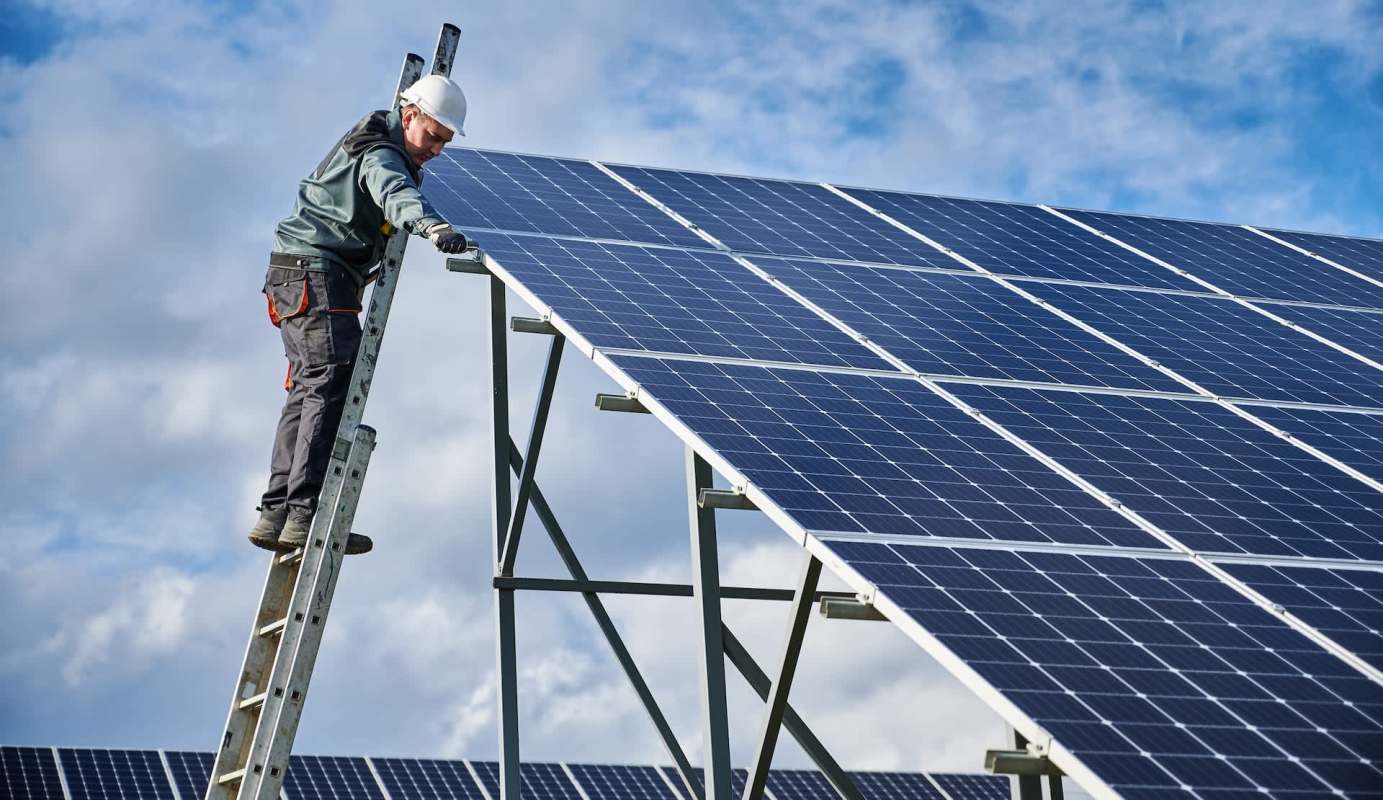
A proposed bill in Harford County, Maryland, could direct more solar power to warehouse and factory rooftops instead of open farmland.
Here's what to know
The proposal comes from District F Democrat Jacob Bennett. It would require qualifying new buildings on Commercial Industrial, Light Industrial, and General Industrial land to cover at least 40% of their rooftops with solar panels, and the same requirement would apply to additions of 20,000 square feet or more at existing industrial developments, according to The Baltimore Sun.
Under the legislation, those photovoltaic systems could power the site itself, feed electricity to the grid, or do both. The bill is scheduled for a public hearing on Oct. 13.
The county is also weighing 25 proposed community solar and battery energy storage projects, nearly all of them planned for farmland. Bennett says his bill is meant to move at least some of that clean-energy buildout onto "grey spaces" instead of agricultural land.
If you're curious what that could look like at home, you can explore EnergySage to get free solar installation estimates and compare quotes.
More background
This is Bennett's second attempt to put solar on industrial rooftops. In 2023, he proposed a similar amendment to a county warehouse-development bill, but it failed in a 3-4 vote, according to the Sun.
The county voted to ban data center construction, and Harford County continues to weigh solar and battery project applications.
What's being done?
The immediate next step is the Oct. 13 public hearing, where residents, developers, and officials can weigh in on how the requirement would affect future construction. If the bill passes, developers of qualifying industrial buildings would need to plan for solar earlier in the design process rather than treating it as an optional add-on.
Save $10,000 on solar panels without even sharing your phone number Want to go solar but not sure who to trust? EnergySage has your back with free and transparent quotes from fully vetted providers that can help you save as much as $10k on installation. To get started, just answer a few questions about your home — no phone number required. Within a day or two, EnergySage will email you the best local options for your needs, and their expert advisers can help you compare quotes and pick a winner. |

If you're thinking about your own roof, EnergySage's free services can help simplify a process that often feels confusing. EnergySage's solar map shows the average cost of a home solar panel system by state, along with solar panel incentives for each state. With EnergySage's help, the average person can save up to $10,000 on solar purchases and installations.
Homeowners can explore EnergySage for information about home battery storage options, including competitive installation estimates. Adding battery storage to a solar setup is one of the best ways to protect your home during outages, save money on energy, and go off-grid.
Bennett presented his proposal as a way to steer solar toward already developed land instead of productive fields.
"My goal in this bill is to be able to emphasize the push of solar on grey spaces, like rooftops on large industrial buildings, so that we can go to the state and say, 'look, we are doing our fair share and putting these somewhere, we are just asking for the autonomy to say where,'" Bennett said, per the Sun.
More From EnergySage
💡Go deep on the latest news and trends shaping the residential solar landscape

Where can I learn more?
Harford County isn't the only place trying to move solar onto already built spaces while lowering power costs. Across the Mid-Atlantic, states are trying everything from warehouse rooftop requirements to plug-in apartment systems and broader community-solar rules.
• In Pennsylvania, lawmakers are pushing solar onto warehouse roofs to cut statewide power bills.
• In Maryland and Virginia, plug-in balcony solar is opening cheaper clean power to renters.
• Connecticut and Virginia are speeding permits as new solar advocates push cheaper home power.
Those efforts highlight a debate over where new solar should go and who gets the savings. That same tension is driving Harford County's fight over rooftops versus farmland.

Get TCD's free newsletters for easy tips, smart advice, and a chance to earn $5,000 toward home upgrades. To see more stories like this one, change your Google preferences here.






