


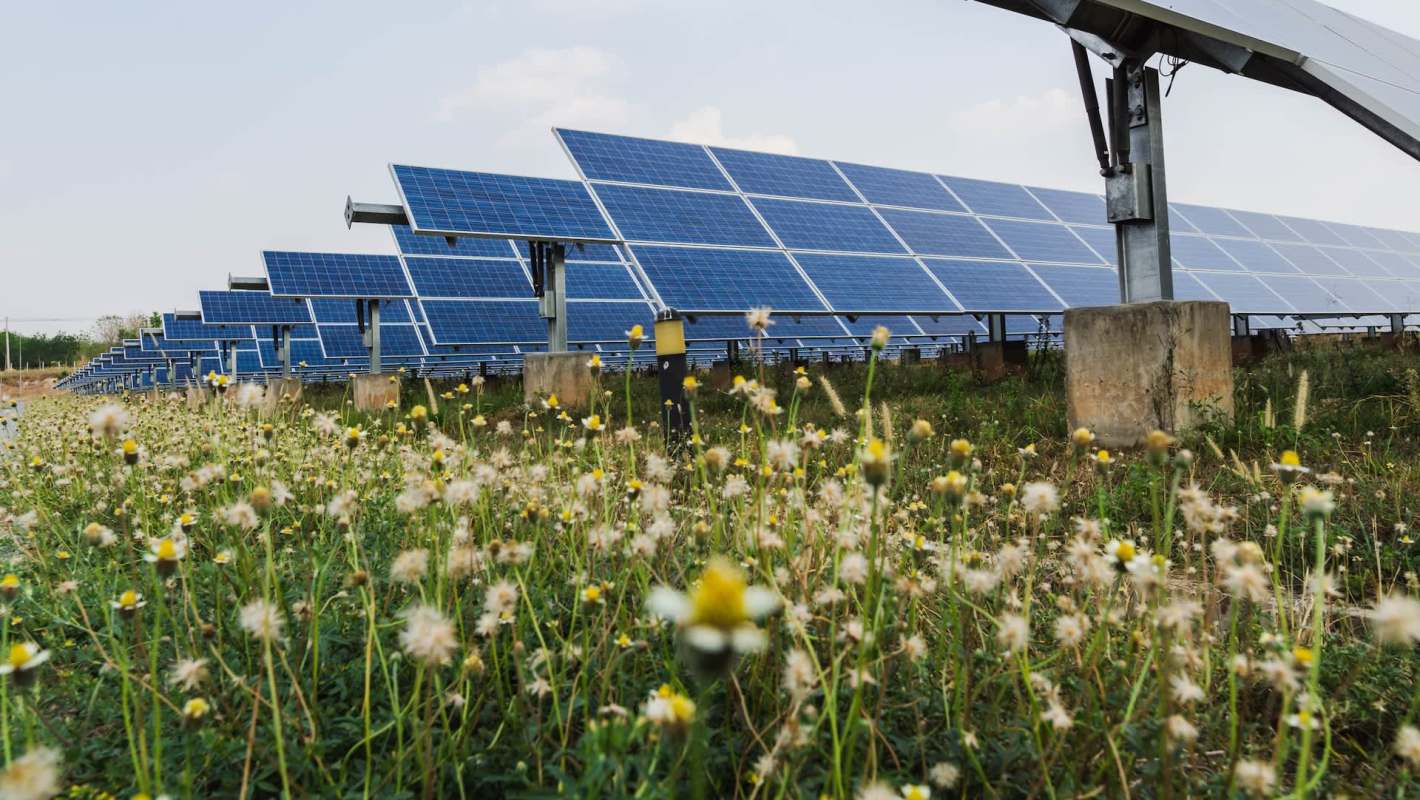
A solar farm in northern Illinois is drawing attention for more than the electricity it generates.
Containing around 7,000 panels, this site also uses pesticide-free native flowers to create habitat for bees, butterflies, birds, and even foxes.
The idea is to turn the land under solar arrays from mowed grass into a functioning ecosystem.
What happened?
NBC Chicago reported that French Road Solar in Burlington, Illinois, has planted several acres of native flowers around its thousands of panels. This setup allows the facility to produce electricity while also providing a quality habitat for pollinators and other wildlife.
"We often see birds nesting around the panels," Keith Hevenor, communications manager for Nexamp, told the outlet. "We find a lot of bees' nests on the panels. We see foxes, smaller wildlife, love this kind of habitat."
A TV report shows rows of panels standing above a mix of native vegetation selected to thrive in Illinois conditions. Hevenor said the custom seed blends include plants like "Black Eyed Susan [and] Yarrow," as well as a "whole variety of clovers, daisies, fleabane."
TCD Picks » Quince Spotlight
💡These best-sellers from Quince deliver affordable, sustainable luxury for all




The approach is known as agrivoltaics, the practice of combining solar power generation with agricultural use on the same land. In this case, the "crop" is habitat that can help sustain pollinators essential to farming.
Why does it matter?
Solar power can help expand cleaner power on the grid, reducing pollution from burning energy sources like coal, oil, and natural gas, which have been linked to health concerns. It also supports more stable energy costs by generating cheaper electricity.
At the same time, pollinator-friendly plantings can improve soil, reduce erosion, and require very little mowing, which lowers maintenance needs. The deep-rooted vegetation also helps maintain soil health and preserves the land for future agricultural use.
Nexamp leases land from farmers, and Hevenor said French Road Solar sits on a lower-yield part of a farm.
"So, this is a good way to put that to use and keep the viability of the farm," he told NBC Chicago. "One down season can really hurt a farmer. But in this case, they can count on those lease payments for the long term."
According to the Food and Agriculture Organization of the United Nations, pollinators assist with the reproduction of up to 35% of global food crops. NBC Chicago reported that some studies suggest pollinating insects may boost both crop quality and yields while also helping manage pests and disease.
Because the sites are maintained with native vegetation rather than traditional row crops, they usually don't require pesticides, herbicides, or fertilizers during operation. Many solar installations will remain active for decades, making long-term soil health an important consideration.
NBC Chicago reported that Chicago-based Trajectory Energy Partners is using a similar pollinator-focused model across about 80 solar sites in Illinois.
What are people saying?
Kiersten Sheets, senior project development manager for Trajectory Energy Partners, said the company is "intentionally seeding underneath the solar panels," creating "a native Illinois prairie" with shorter grasses and blooming plants that stay active year-round.
She added that the vegetation "helps with control of water infiltration on the site, it helps with the erosion, it also helps build a better soil base."
Hevenor said the goal is to build cleaner infrastructure that also gives back to communities and the environment.
"As clean energy resources increase, we have to find ways to make sure that they are not carrying on the legacy of the past of our fossil fuel," he said. "It's creating employment opportunities. It's created investment in local communities. It's providing new tax revenue in the local communities."
This innovative project not only provides clean energy for homeowners in Illinois but also helps protect the pollinators that keep our ecosystem thriving.

Get TCD's free newsletters for easy tips, smart advice, and a chance to earn $5,000 toward home upgrades. To see more stories like this one, change your Google preferences here.






