


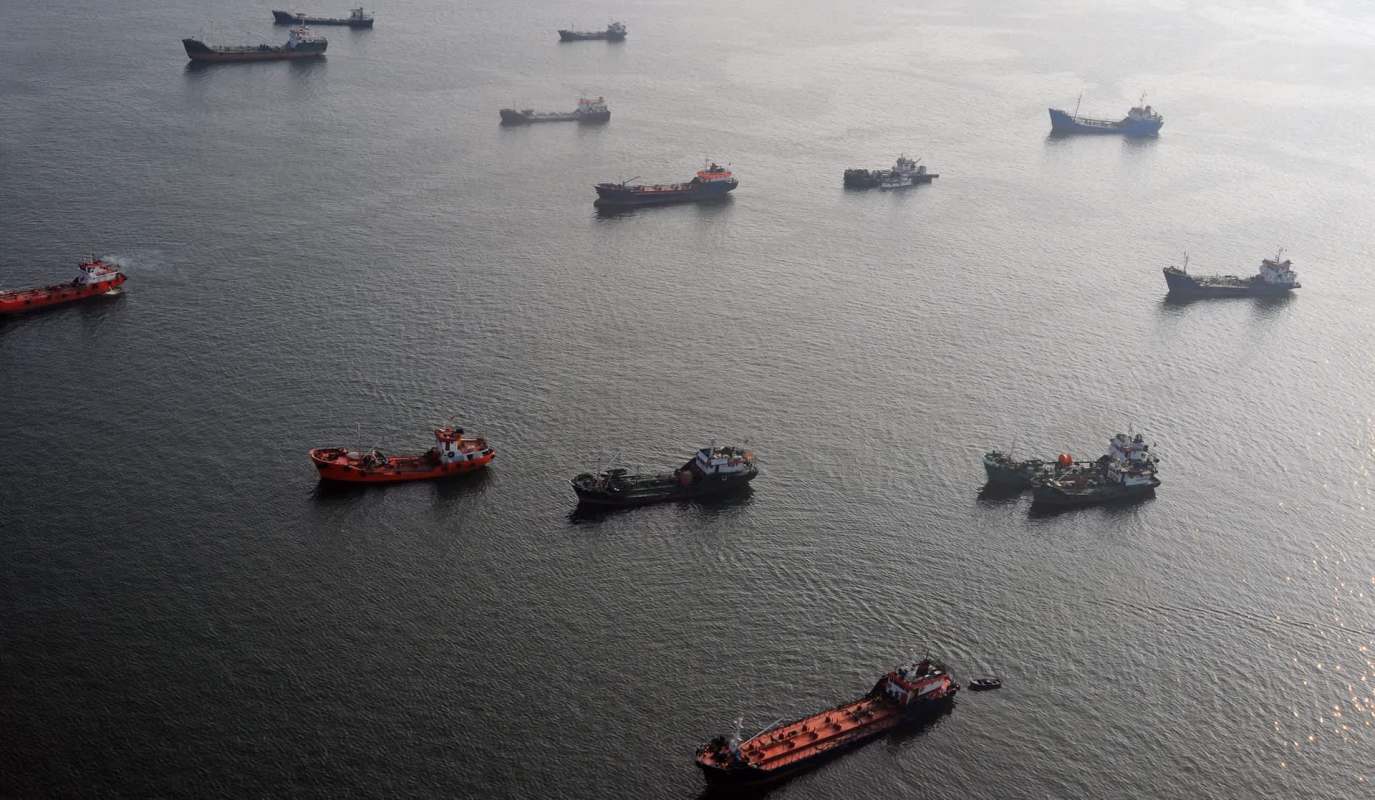
More than 1,500 cargo vessels delayed in the Persian Gulf and Gulf of Oman are drawing the attention of researchers who say the ships could be collecting marine life on their hulls after months of sitting still.
That raises concerns for coastal communities globally, threatening ports that depend on healthy fisheries, aquaculture, and clean shorelines. Researchers are worried these conditions could be a ground zero for a "super-spreader" event.
What's happening?
Scientists warned in a July 22 study published in Biological Invasions that the backlog near the blocked Strait of Hormuz may have created conditions for heavy marine growth on ship hulls, Cottage Life reported.
In most cases, vessels moving through that part of the Gulf wait only one to three days before transiting the strait. By contrast, many of the ships caught in the bottleneck have remained there for more than 100 days.
Marine buildup on underwater surfaces, known as biofouling, is made up of organisms such as algae, barnacles, and mussels. It can begin increasing rapidly after roughly 10 days. For idle ships, the International Maritime Organization advises taking steps to control that buildup after 18 to 30 days to limit the movement of species into places where they do not belong.
The researchers pointed to a World War II episode in which New Zealand vessels held in English ports contributed to the spread of an invasive barnacle into western Europe. They wrote that "the connection between immobile biofouled ships and marine species invasions has long been recognized."
TCD Picks » Quince Spotlight
💡These best-sellers from Quince deliver affordable, sustainable luxury for all




Why does it matter?
Researchers say that once these vessels begin moving again, any organisms attached to their hulls could be carried into ports around the world if the ships have not been cleaned first. That could disturb local marine environments and impose added burdens on communities that rely on them.
Canada is among the places that could be exposed, Sarah Bailey, an assistant professor in physical and environmental sciences at the University of Toronto, told Cottage Life, especially at saltwater ports such as Vancouver and Halifax. Possible hitchhikers, including algae, barnacles, mussels, small shrimp, and tunicates, can disrupt the natural habitat.
In the Maritimes, invasive tunicates have already caused problems for aquaculture operations.
"They foul buoys and nets and it makes the equipment really heavy causing it to sink," Bailey said. "So the shellfish harvest is impacted, and they have trouble selling the product because it gets contaminated with these non-native species."
What's being done?
Researchers say the clearest solution is to clean ships' hulls before they leave port. That would reduce the chances of marine hitchhikers being released into new waters. This is also a hard task to carry out for the crews of the ships.
Study lead author Mario Tamburri told the CBC that such a response is unlikely at the scale needed because there are too many ships to service and the conflict poses serious safety risks for workers.
Bailey said International Maritime Organization guidance on biofouling remains voluntary, though she's hopeful that will change.
"Canada is working with various members of the IMO, and we are currently drafting new regulations for management of ship biofouling, including keeping your ship clean, using coatings that prevent biofouling in the first place, and using cleaning technologies that prevent the organisms from being released back in the same location," Bailey said.
"Basically anything that lives on underwater surfaces—anything you'd see living on a dock—can get moved by these ships."

Get TCD's free newsletters for easy tips, smart advice, and a chance to earn $5,000 toward home upgrades. To see more stories like this one, change your Google preferences here.






