


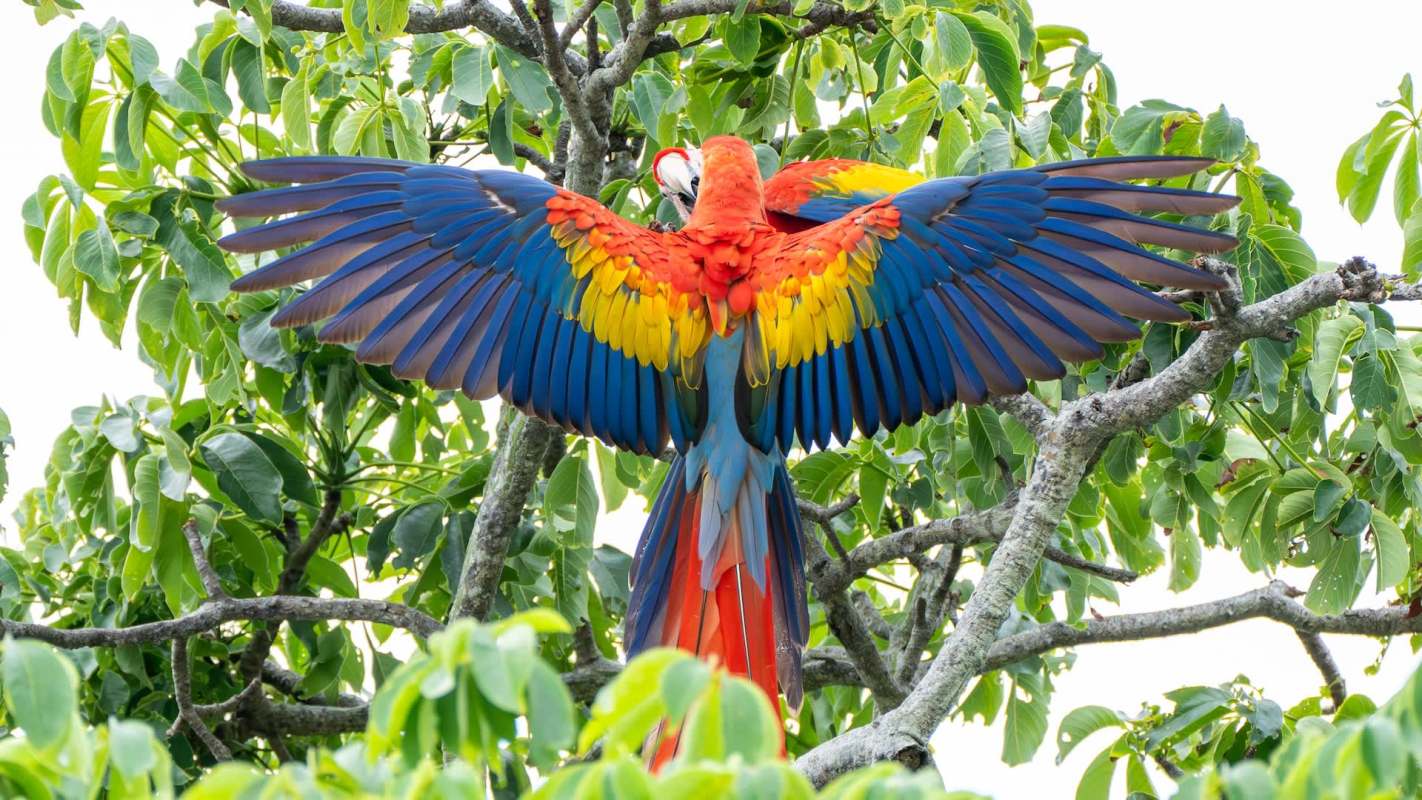
The birth of two chicks in Brazil's Atlantic Forest signals a major return: scarlet macaws are breeding there again for the first time in more than two centuries.
It is a small milestone with enormous significance. Birds once driven out by trafficking and habitat loss are beginning to reclaim their place in the wild.
What's happening?
More than 200 years after scarlet macaws vanished from this region of Brazil, conservationists are using a reintroduction effort to restore the species to the Atlantic Forest ecosystem.
As Planet Reborn (@Planet-Reborn) explains in a YouTube video, several of the macaws now back in the forest were first caught up in the illegal wildlife trade and then lived in captivity for decades before joining the restoration program.
Before they could be released, the birds had to recover core survival skills, from covering long distances in flight to locating food, responding to threats, and acting like wild macaws again. Because the landscape has been so heavily altered by human activity, conservationists planned the release carefully to improve the birds' chances of survival.
Those two chicks indicate that the project is not only sustaining individual macaws. With enough time, habitat, and protection, the birds are also resuming natural behaviors such as nesting and raising young.
TCD Picks » Quince Spotlight
💡These best-sellers from Quince deliver affordable, sustainable luxury for all




Why does it matter?
Because scarlet macaws are a keystone species, their reappearance can influence the condition of the wider forest around them.
As large fruit-eating birds, macaws help disperse seeds across wide areas, supporting forest regeneration. In a region as fragmented as the Atlantic Forest, seed dispersal helps support biodiversity, climate resilience, and the stability of ecosystems that nearby communities depend on for clean water, fertile land, and protection from extreme heat.
The wildlife trade also carries a human cost. A billion-dollar black market does not just harm animals; it strips forests of important ecological functions and leaves communities more vulnerable as natural systems weaken.
The arrival of the two chicks hints that this recovery may be more than a brief rebound and that damaged ecosystems can begin functioning again for both people and wildlife.
What's being done?
At the center of the recovery is direct conservation work: birds that once lived in captivity are being rehabilitated, released deliberately, and then monitored to see whether they can survive and reproduce in the wild.
Conservationists are also maintaining and rebuilding green corridors, or connected stretches of habitat that let animals move, feed, and breed without becoming isolated. Even after a successful release, the absence of those links can leave small populations vulnerable to inbreeding, food shortages, and renewed local extinction.
Protecting the macaws also means addressing the pressures that pushed them out in the first place, especially habitat destruction and trafficking. That work can help create a healthier forest that supports other native species as well.
When recovery programs succeed, the benefits can ripple outward to local economies, education, and community pride.
Two chicks do not erase 200 years of loss, but they do offer something conservation stories do not always get to show: proof that recovery is possible. In Brazil's Atlantic Forest, a species once silenced is beginning to sound like home again.

Get TCD's free newsletters for easy tips, smart advice, and a chance to earn $5,000 toward home upgrades. To see more stories like this one, change your Google preferences here.






