


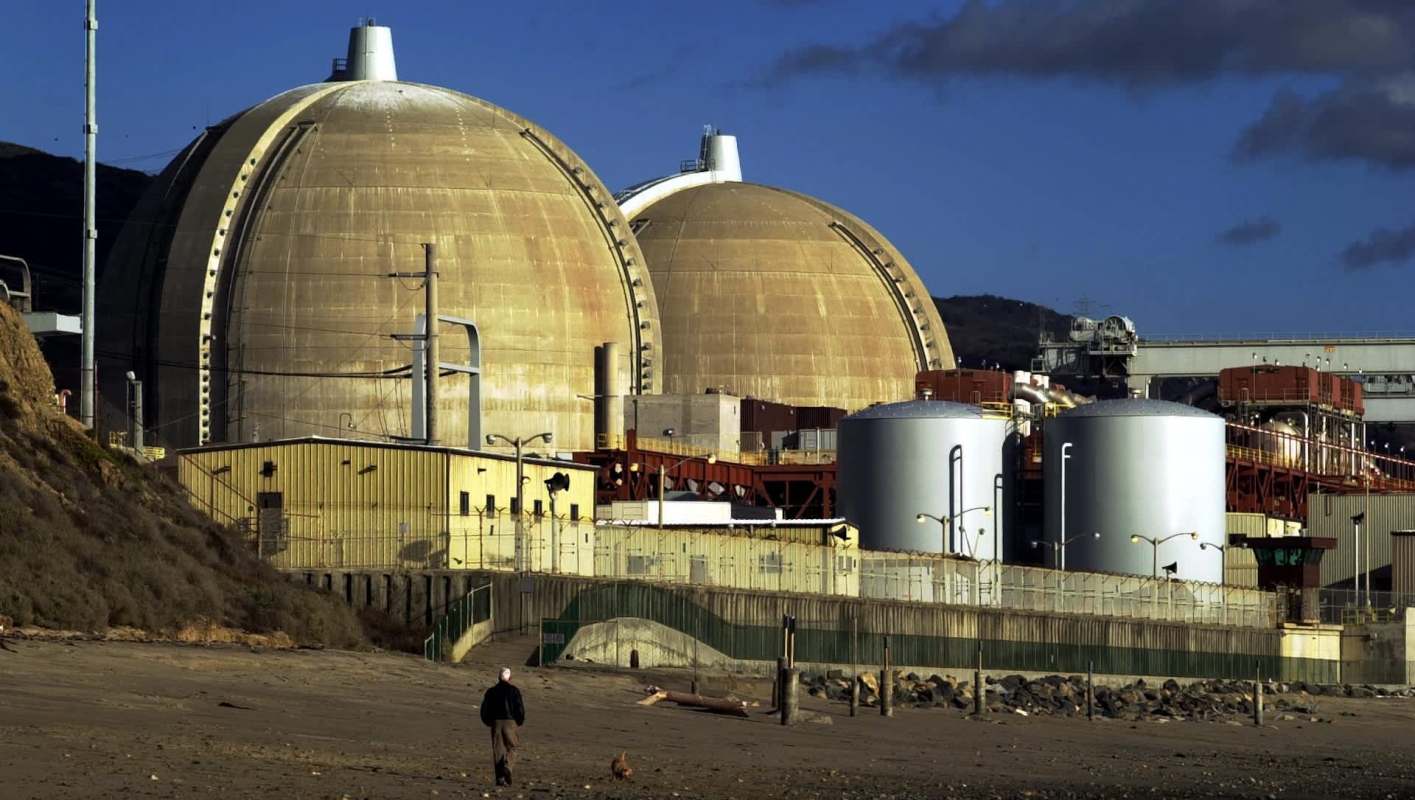
The San Onofre nuclear plant has been shut down for years, but one of its biggest dangers is still sitting on the coast. Roughly 3.6 million pounds of spent nuclear fuel remain stored at the site in temporary canisters near the shoreline, raising fresh calls for a regional safety plan while the federal government continues to delay a long-term solution.
Here's what to know
In a community opinion piece for Voice of OC, Orange County resident Sarah Mosko said the lack of a permanent federal repository for commercial spent fuel has effectively turned San Onofre into a nuclear waste site.
She said about 3.6 million pounds of highly radioactive waste remain at the facility south of San Clemente in 123 temporary storage canisters. According to Mosko, those canisters were not built for indefinite use and are vulnerable to corrosion and cracking in salty coastal air.
Mosko also said each canister holds cesium-137 equal to roughly one-third of the amount released in the 2011 Fukushima disaster. She argued that the site's position next to the Pacific Ocean and Interstate 5 adds concerns about flooding, earthquakes, tsunamis, sea-level rise, and security threats.
Nuclear power can generate vast totals of low-carbon electricity and help support grid reliability, which is why some experts see it as part of a cleaner energy mix. Still, San Onofre's remaining waste presents one of the industry's most difficult tradeoffs: how to manage dangerous material that must be isolated for extremely long periods.
More background
To show why she sees the issue as urgent, Mosko pointed to the chemical plant scare in Garden Grove as an example of how industrial accidents can suddenly disrupt whole communities. In her view, a failure involving radioactive waste could leave even longer-lasting harm to air, water, public health, and infrastructure.
TCD Picks » Quince Spotlight
💡These best-sellers from Quince deliver affordable, sustainable luxury for all




The design of San Onofre's storage setup is central to the debate. Mosko wrote that the waste is held in 5/8-inch steel canisters that sit out in the open at the retired plant on a vulnerable stretch of coastline.
The risks extend beyond the plant itself. A serious contamination event could affect nearby neighborhoods, a major transportation corridor, coastal ecosystems, and regional economic activity. Even without an accident, uncertainty over the waste's future can weigh on public trust.
After decades of stalled federal action, a permanent disposal site still has not been created. Until Washington does that, local and state leaders may be left trying to reduce the risks where the waste already sits.
What's being done?
Mosko wrote that efforts on a safer interim plan have involved Irvine Mayor Larry Agran, Chief Policy Advisor Scotty Hong, residents, community groups, lawmakers, researchers, and Southern California Edison. She also cited work by Dr. David Richardson, associate dean for research at UC Irvine, and postdoctoral researchers studying the issue.
One proposal under discussion would relocate the canisters, after decommissioning, to higher ground at the adjacent domes site in a fortified above-ground storage facility. Mosko said that approach would aim to improve monitoring, reduce corrosion risks, and better protect the waste from flooding, earthquakes, fire, and security threats.
The proposal also includes a "hot cell," which Mosko described as a shielded facility for inspecting canisters and repackaging waste if necessary. She pointed to countries including Switzerland and Germany as examples of places using above-ground storage systems designed for inspection and hazard protection.
The San Onofre nuclear waste is in the form of ceramic pellets rather than a liquid like many envision from television and movies, though liquid-form nuclear waste does exist, primarily from weapons development, and there is wastewater used for cooling that needs to be handled carefully since it contains radioactive isotopes. Depending on how the water was used, it may be released slowly or mixed into other materials — like cements, polymers, or resins — to solidify it from being released back into the environment.
In the San Onofre case, public concern has already been visible. In May and June, banners hung over Interstate 5 near the site reading "Nuclear Waste Forever Deadly" and "3 Million Pounds of Radioactivity … Next Exit."
A permanent federal solution could still be years away. Until then, Southern California's focus is on how to store the waste already at San Onofre as safely as possible.

Get TCD's free newsletters for easy tips, smart advice, and a chance to earn $5,000 toward home upgrades. To see more stories like this one, change your Google preferences here.






