


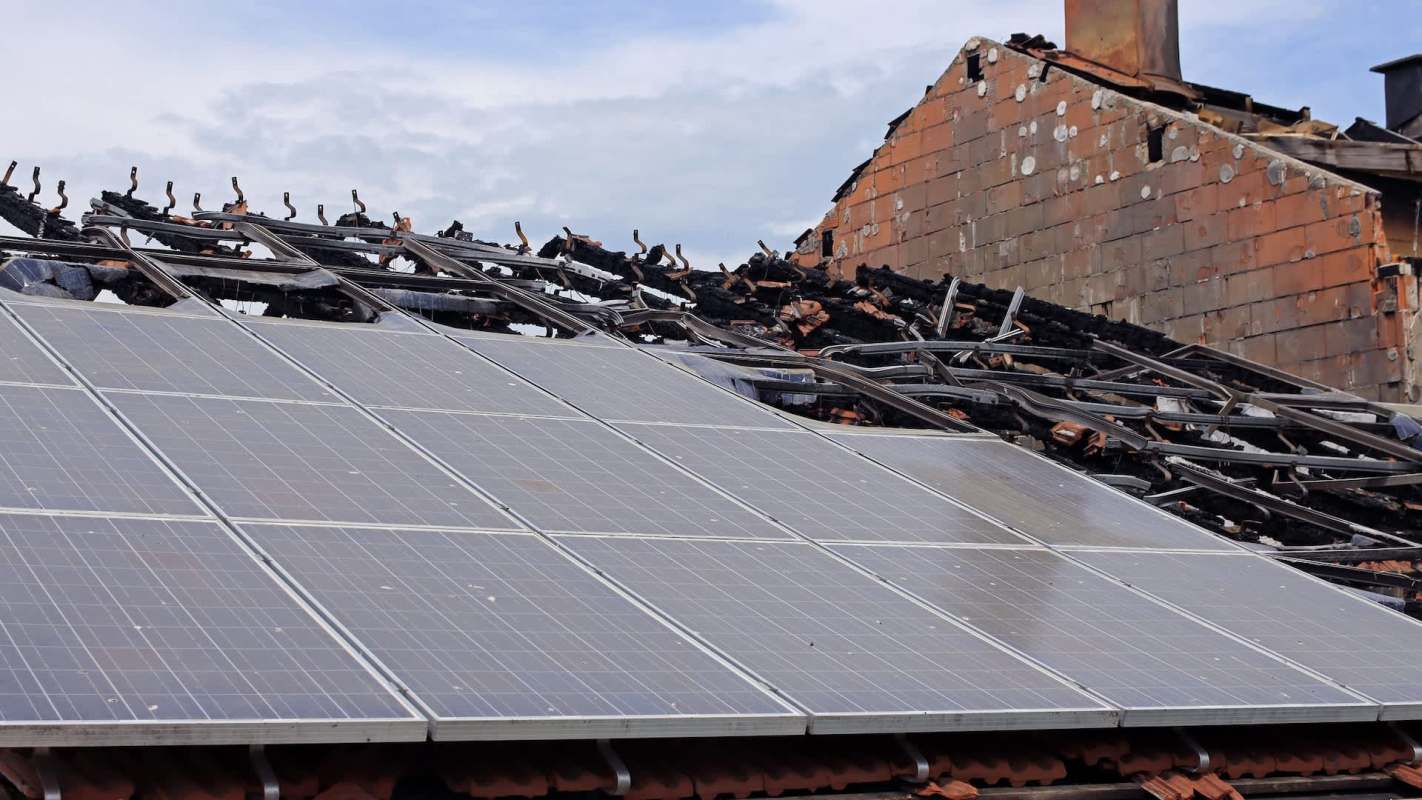
A warehouse fire in Los Angeles that burned for days is now raising broader concerns about rooftop solar safety.
As solar adoption continues to climb, one engineer argues that the industry needs to move faster on design changes that could reduce heat buildup and help prevent fires before they start.
What happened?
According to pv magazine USA, a June 17 blaze at a cold storage warehouse in Los Angeles' Boyle Heights neighborhood sent thick smoke into the air and was reportedly harder to manage because of the building's rooftop solar array.
Speaking with the publication, Lawrence Shaw — chief engineer for solar power systems and sole owner of Arizona-based installer Higher Powered LLC — said the fire could be an early warning of what may come if rooftop systems are not built with stronger thermal safeguards.
"The Boyle Heights fire is on everyone's radar at the moment," Shaw said. "There is a lot of property damage and harmful smoke."
Using U.S. Fire Administration data along with other sources, Shaw and a colleague created a model. The forecast suggests California alone could see 122 photovoltaic-related fires in 2030, with many additional incidents expected across the Southwest.
TCD Picks » Quince Spotlight
💡These best-sellers from Quince deliver affordable, sustainable luxury for all




At the center of Shaw's concern is trapped heat. He says panels installed too close to a roof can intensify heat buildup, especially in hot states such as Arizona and California where summer temperatures can spike.
Why does it matter?
Solar remains one of the clearest ways to lower electricity bills and reduce pollution from polluting, non-renewable energy sources. If safety practices do not keep pace with the industry's growth, high-profile fires could undermine public confidence in a technology with major financial and environmental benefits.
In Shaw's view, solar technology is not inherently unsafe. He said that as more systems are installed, the odds increase that something will go wrong somewhere in the broader network, similar to how widely used transformers can fail without discrediting the technology as a whole.
Rooftop fires can have serious consequences, including property damage, air-quality concerns, and more dangerous conditions for emergency crews.
"I think that rooftop solar has some inherent risks because of basic physics," Shaw said, according to pv magazine.
He also believes existing rules have not fully caught up with the problem.
"The National Electrical Code is not addressing this," Shaw said, arguing that the industry needs to focus more closely on ventilation and heat dissipation.
What's being done?
To lower the risk, Shaw wants rooftop systems mounted with more clearance so air can move beneath the panels and carry heat away, pv magazine reported.
"Most, if not all, of the solar panel should have an air gap with the roof greater than six inches," he said.
Shaw acknowledged that this can clash with aesthetic preferences, especially in places where low-profile installations are preferred, but he said safety should come first.
He also called for better tracking of solar fire incidents, including whether a fire began in a panel, inverter, or storage device. More standardized reporting could help installers, firefighters, and regulators identify patterns and improve system designs.
He pointed to other options too, including solar parking canopies, which provide better ventilation while shading vehicles, and drone-based thermal inspections that can spot hot areas before they become dangerous.
Shaw said the industry should "step back, look at the physics of what's happening, and ask, 'Is there a better way than all of this rooftop solar without an air gap?'" He added: "A solar parking canopy would provide shade for the vehicles and electricity for the house."

Get TCD's free newsletters for easy tips, smart advice, and a chance to earn $5,000 toward home upgrades. To see more stories like this one, change your Google preferences here.






