


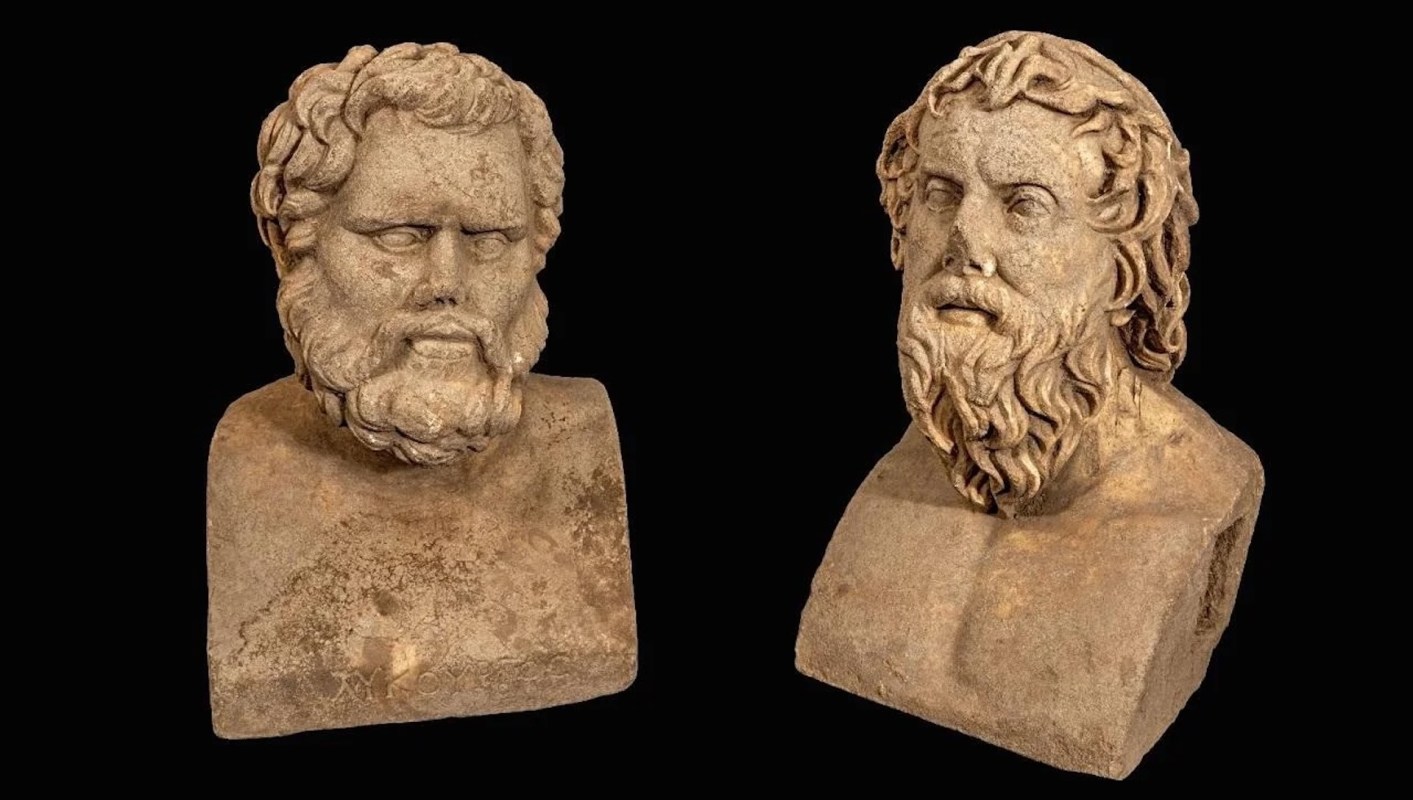
During excavations near Binyamina, Israel, archaeologists unearthed a pair of marble bust statues from the Roman era, estimated at around 1,700 years old, as Archaeology Magazine reported.
Their significance lies not just in their age or workmanship, but in the unusual way they were found, the publication wrote.
What happened?
Archaeology Mag reported that at a Roman-Byzantine winepress site, the team recovered two marble protomes, sculptures depicting a person's head and upper torso, from the pit where wine was collected.
The figures appear to depict people from the Greco-Roman world and were unusually well preserved, the outlet said. During the dig, researchers first noticed an unexpected object protruding from the ground. As the excavation continued, they determined it was marble, not the pottery fragments usually found at sites like this, Archaeology Mag noted.
A Greek inscription on one sculpture includes the name "Lycurgus," prompting researchers to investigate which historical figure is meant. The possibilities under study include Lycurgus of Sparta, known for his connection to that city's political and social system, and Lycurgus of Athens, the fourth-century BCE statesman and orator, per Archaeology Mag.
How the pieces ended up in the pit is one of the central unanswered questions.
TCD Picks » Quince Spotlight
💡These best-sellers from Quince deliver affordable, sustainable luxury for all




Archaeologists think they were not found where they had originally been displayed, Archaeology Mag said. Instead, someone seems to have intentionally buried them after the winepress went out of use, the outlet noted. The motive for doing so remains unclear.
Why does it matter?
The statues can shed light on daily life and on Roman culture, including how people furnished spaces and signaled wealth. In this region, Archaeology Mag noted marble was a costly material, so finely carved portrait sculptures would typically have belonged in affluent residences or prominent public settings.
The find also adds important evidence to the history of the Caesarea region. Similar portrait sculptures are uncommon there, and the most recent comparable example was found in the 1990s, Archaeology Mag said. That makes this pair a useful resource for studying local art and cultural influence.
Archaeologists suspect the statues were expensive, imported works that had once been highly valued before being deliberately buried and left unseen for almost 17 centuries. Why that happened is still unknown.
What's being done?
Researchers are now working to clean, conserve, and study the statues more closely, Archaeology Mag noted. Even well-preserved stone artifacts can reveal much more once dirt, mineral buildup, and wear patterns are carefully examined.
Scholars will also analyze the inscription to better identify the figures and the place where they may first have stood. Archaeology Mag suggested that evidence from the area around the site, including a nearby bathhouse, supports the idea that the sculptures were first displayed in a more prominent setting.
Conservation helps preserve shared history for museums, future research, and public education, while detailed analysis can reveal how art and social status intersected across the Roman Empire.
Major discoveries do not always come from grand temples or tombs. Sometimes they emerge from everyday industrial spaces, like a winepress, that once helped drive local economies.
For now, the statues' original home and the reason they were hidden remain unsolved. But their survival in such a strong condition gives researchers a rare chance to recover a forgotten chapter of life near ancient Caesarea.

Get TCD's free newsletters for easy tips, smart advice, and a chance to earn $5,000 toward home upgrades. To see more stories like this one, change your Google preferences here.






