


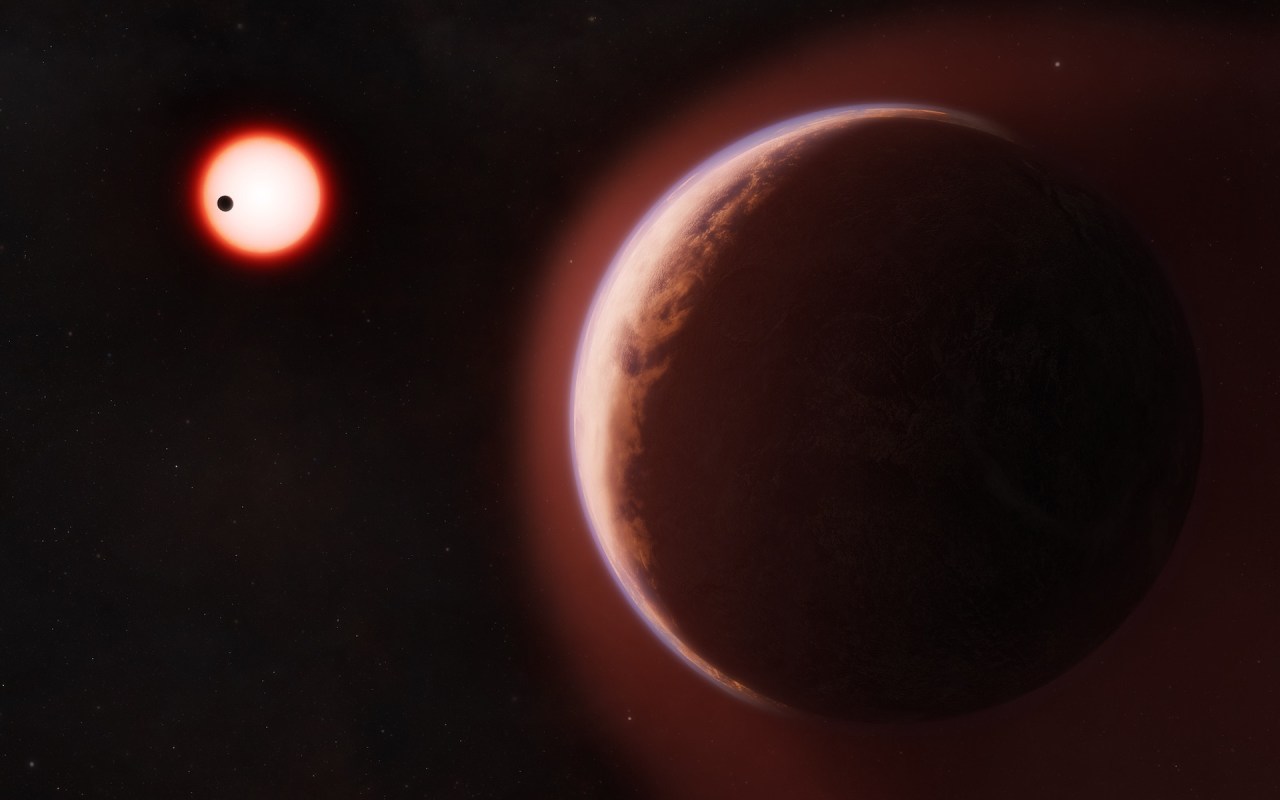
Scientists say a rocky planet 48 light-years from Earth appears to have an atmosphere, a major development in the search for life beyond our solar system.
If that finding holds up, it would make the world the first rocky planet in another star's habitable zone to show evidence of the kind of atmospheric layer that could help support life.
What happened?
New observations of LHS 1140b have given researchers their clearest sign yet that the planet may have held onto an atmosphere, Talker News reported.
Discovered in 2016, LHS 1140b circles a low-mass star at a distance that places it in the habitable zone, where liquid water could potentially exist. The data came from the Magellan Clay telescope at Las Campanas Observatory in Chile.
Researchers spotted helium escaping from the planet, and that matters because a world as old as LHS 1140b should have lost its helium long ago unless something were replenishing it.
In their study, published in Science, the team said that points to the rocky planet having an atmosphere.
TCD Picks » Quince Spotlight
💡These best-sellers from Quince deliver affordable, sustainable luxury for all




"An atmosphere is essential for a planet to support life as we know it. This is the first time anyone has found an atmosphere on a rocky planet in the habitable zone of another star," said Collin Cherubim, the Harvard University researcher who led the study.
The system contains another planet as well, LHS 1140c, but that one is outside the habitable zone.
Why does it matter?
Being able to identify an atmosphere on a rocky planet like this addresses one of the biggest unanswered questions in judging whether Earth-like exoplanets could actually be habitable.
The same tools and techniques used to study distant atmospheres also help researchers improve how they analyze gases, clouds, and heat-trapping layers closer to home.
That kind of work can support better climate models, stronger weather forecasting, and a clearer understanding of the conditions that keep our own air breathable and our planet comfortable to live on.
Robin Wordsworth, a Harvard professor, framed the significance this way: "Twenty years ago we wondered whether other terrestrial-type planets even existed. Then we learned they're common, and found some in the habitable zone."
What's being done?
Scientists are not stopping at helium.
Over the next four to five years, the James Webb Space Telescope is expected to examine LHS 1140b for signs of water, according to Talker News.
A confirmed water signal would bolster the idea that the planet has a stable atmosphere and conditions that may be more favorable to life.
Each new observation adds to a growing toolkit for identifying which distant planets deserve the closest look.
Cherubim said, "An atmosphere is essential for a planet to support life as we know it."
Wordsworth also added: "The next question was whether any of them had managed to keep an atmosphere. Now we know at least one has."

Get TCD's free newsletters for easy tips, smart advice, and a chance to earn $5,000 toward home upgrades. To see more stories like this one, change your Google preferences here.






