


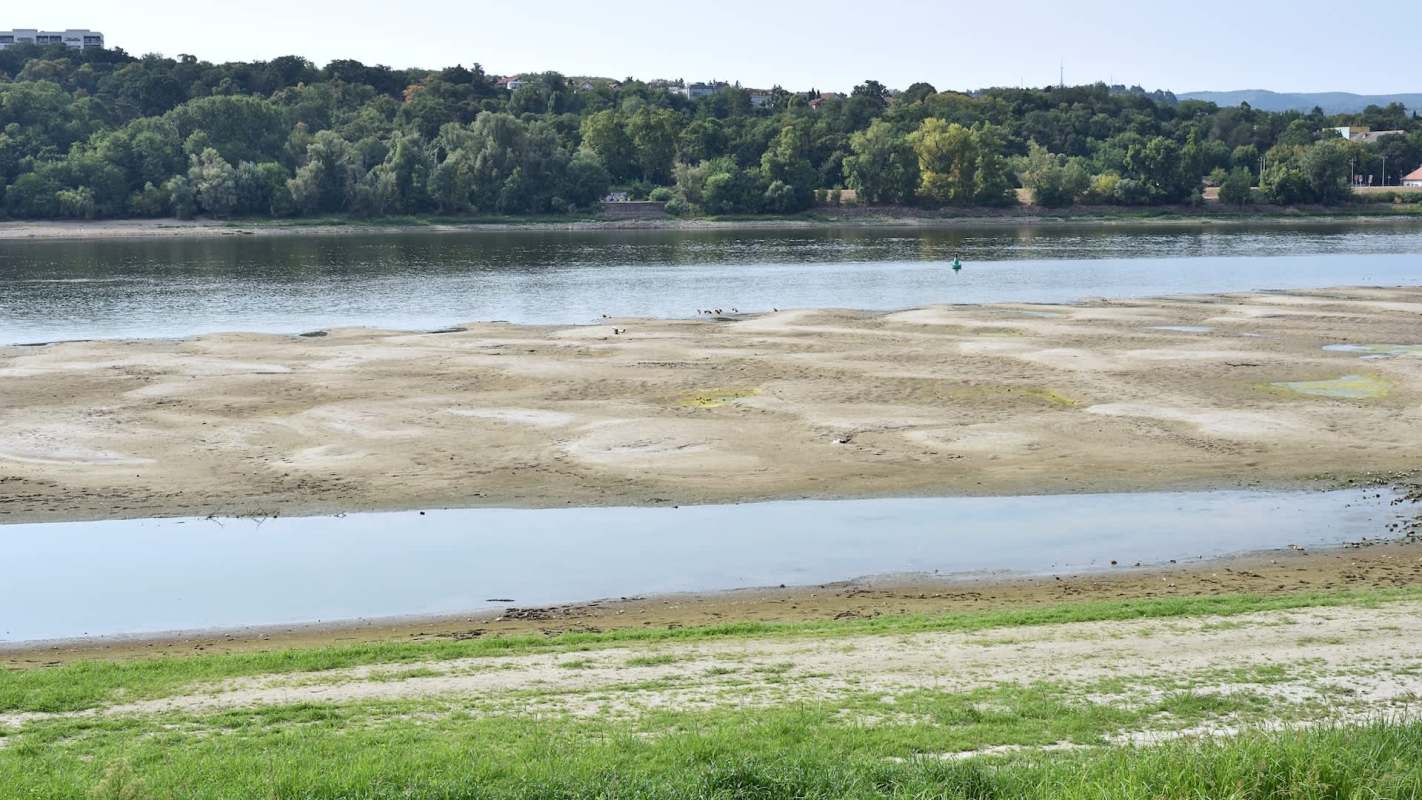
A stone outcrop on the edge of the Danube in Budapest, Hungary, is easy to overlook — until it appears at all. Known as Ínség-szikla, or the "Rock of Starvation," it only breaks the surface when the river drops to a dangerously low level.
Here's what to know
Its latest appearance comes during the Danube's 2026 drought, as intensifying heat and water shortages spread across Central Europe, according to Popular Science.
Seven times in the past 23 years — and already three times in 2026 — Budapest's Rock of Starvation has surfaced often enough to turn a once-unusual sight into a recurring warning. The formation is one of Central Europe's hunger stones, geologic markers exposed only when rivers or lakes sink unusually low, and this one appears when the Danube falls to about 37.5 inches.
The river's low-water conditions did not emerge overnight. After comparing current Danube conditions with more than 30 years of records, researchers at Austria's International Institute for Applied Systems Analysis found that rainfall from April through July was well below the 1990-2025 average across much of the basin, and that June brought more days above 86 degrees Fahrenheit than expected.
More background
Because more than 80 million people live in the Danube basin, the effects of prolonged low water reach far beyond Budapest, affecting food production, shipping, and energy systems, according to Popular Science.
Researchers say the 2026 drought began earlier than usual, reducing soil moisture and placing added strain on farms and native vegetation. By July, soils across much of Central Europe were drier than in any year since at least 1990, so damage on land was already underway before the river's decline became so visible.
TCD Picks » Quince Spotlight
💡These best-sellers from Quince deliver affordable, sustainable luxury for all




Crop yields are likely to suffer, and lower Danube water levels are disrupting transport and slowing trade.
What's being done?
By comparing current river conditions with decades of rainfall, heat, and soil data, researchers are building a clearer picture of how drought takes shape.
In 2026, what once served as a warning of local scarcity now points to a broader climate-linked water crisis on the Danube, affecting the millions who depend on the river.

Get TCD's free newsletters for easy tips, smart advice, and a chance to earn $5,000 toward home upgrades. To see more stories like this one, change your Google preferences here.






