


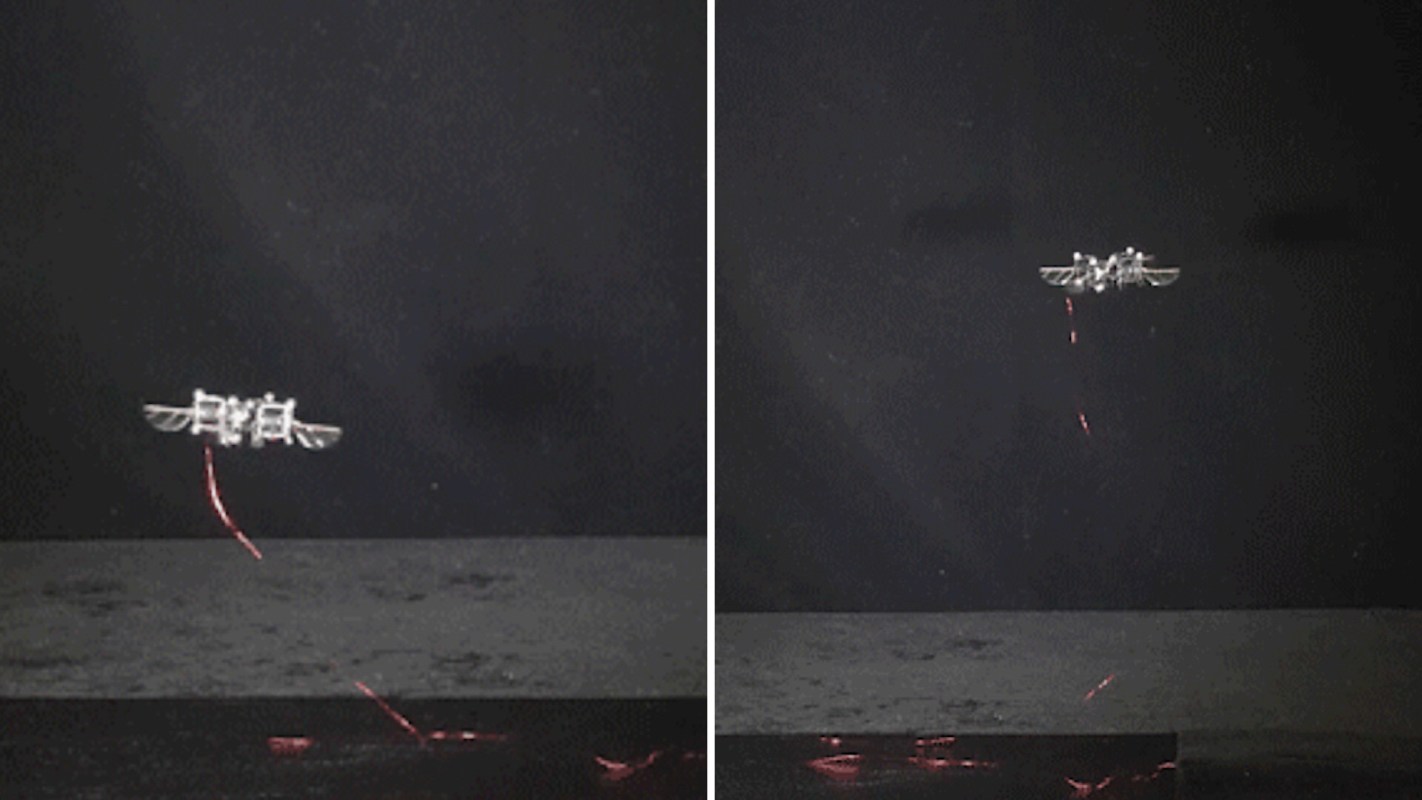
MIT researchers have developed more advanced bug-like robots that could one day pollinate indoor plants.
The weight of a paperclip, these robotic bees can remain airborne for nearly 17 minutes, Reuters reported. The work was published in Science Robotics.
"Since our robot looks like an insect and it's real lightweight and small, if you can really precisely control the robot, we might be able to do something on top of flowers or leaves, which really requires very delicate interactions," said Suhan Kim, co-lead author and electrical engineering and computer science researcher.
The goal is to reach 10,000 seconds — or 166 minutes — of flight time and dial in the precision so the artificial bugs can land on and take off from the center of a flower, MIT News noted. This iteration is already more agile and durable than previous robots, which had problems with lift because of an eight-wing design.
The scientists would also like to increase payload capacity so the machines can carry batteries or sensors to navigate outside the lab.
"Compared to the old robot, we can now generate control torque three times larger than before, which is why we can do very sophisticated and very accurate path-finding flights," senior author and head of the Soft and Micro Robotics Laboratory, Kevin Chen, said.
He added that the flight time was 100 times longer than that of any other experiment in the field. The robot insects traveled at an average of 35 centimeters (13.8 inches) per second and can do double flips and rolls.
With another step forward, the devices could become essential for indoor farming, which is expanding as rising global temperatures threaten traditional agriculture. The warming climate is making extreme weather events such as droughts and floods more severe and frequent, wreaking havoc on crops around the globe.
Bee populations worldwide are also at risk from the changing climate, as well as pesticide exposure, monoculture agriculture, parasites, and more, according to Planet Bee. This and the sixth extinction that is killing other insects and pollinators, especially birds, has destabilized food supplies, too.
"Vertical farming is a rapidly growing industry backed by billions of dollars in global investment," Reuters reported. "It is seen as a solution to the food security challenge posed by climate change and political tensions."
TCD Picks » Quince Spotlight
💡These best-sellers from Quince deliver affordable, sustainable luxury for all




These robotic bees could be part of that solution. Chen told MIT News that the team will focus on incorporating computing capabilities in addition to batteries and sensors in the technology over the next three to five years.
|
Do you think kids learn enough about gardening in school? Click your choice to see results and speak your mind. |
 Not even close 🧑🌾
Join our free newsletter for weekly updates on the latest innovations improving our lives and shaping our future, and don't miss this cool list of easy ways to help yourself while helping the planet.
Cool Picks





