


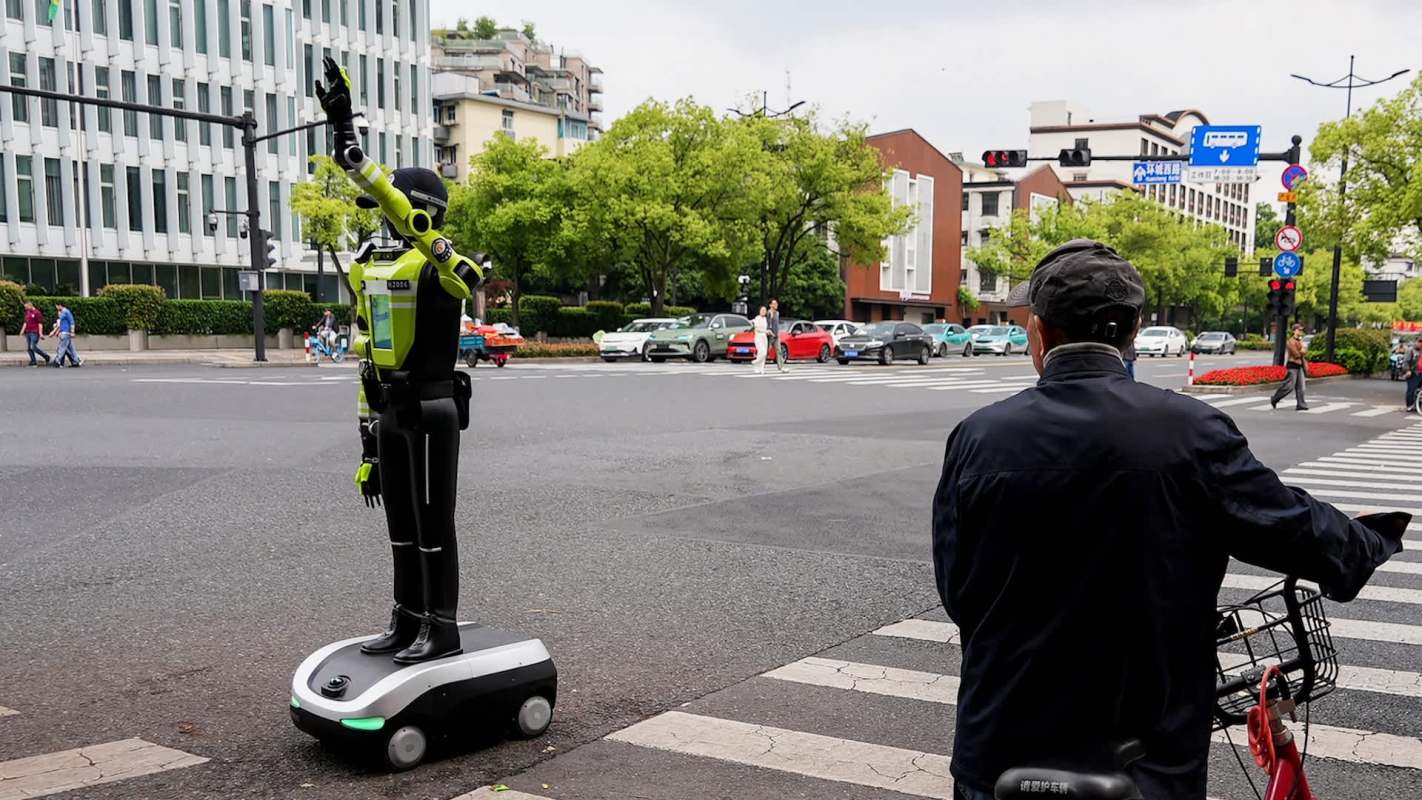
China's streets just got a futuristic upgrade. Drivers will now be guided through busy intersections by a robot police force — just imagine C-3PO telling you to turn left.
As Global Times reported, on the first day of the May Day holiday, China put its first organized robot traffic management squad into action around the West Lake scenic area in Hangzhou.
The rollout is more than just a flashy tech demo. According to Global Times, the 15-robot team is being used to direct pedestrians and cyclists, support traffic control, and help tourists find their way — while operating with human officers in a partnership model described as human-machine collaboration.
That makes this a notable milestone for a city that sees heavy holiday crowds and intense congestion around one of its most famous destinations. Before this week, the robots had already been used in real-world settings, such as marathon traffic support, but the May Day launch moved them from trial use to an organized group role during a major holiday rush.
A report from APT News on YouTube showed the robot traffic police in action.
The robots were stationed at key intersections across multiple districts, covering the West Lake scenic area, lakeside commercial zones, and major urban roads. They were assigned different jobs depending on the location, with some focusing on navigation and others concentrating on identifying traffic violations.
TCD Picks » Quince Spotlight
💡These best-sellers from Quince deliver affordable, sustainable luxury for all




In tourist-heavy areas, the robots are designed to act almost like interactive wayfinding kiosks on wheels. According to Global Times, visitors can hit the "speak" button on a robot's screen, ask for directions, and get help through spoken responses and visual prompts. The system draws on a large speech model along with live traffic and map data to suggest walking and public transit routes.
At busy intersections, the focus shifts to enforcement support. The robots rely on visual-recognition technology to detect things like riders without helmets, non-motorized vehicles crossing the stop line, and pedestrians entering or lingering in motor-vehicle lanes.
If a person ignores three voice reminders, the robot can record the incident and forward it to the traffic police bureau's early warning center.
They also connect directly to traffic signal systems and are able to carry out eight authorized traffic-control motions, including signals for going straight, stopping, and turning left. One main aim is to lighten the load on officers who would otherwise spend long stretches repeating warnings and spoken directions, especially in crowded tourist zones.
For humans, that could mean quicker directions, clearer crossing guidance, and potentially less confusion on the road. More efficient traffic flow and stronger support for walking and transit could also help reduce some unnecessary street congestion during major travel surges.
Public reaction has been enthusiastic. In comments cited by Global Times, one person said that "cyberpunk has become reality," while another wrote that "technology is changing daily life."
The article also claimed some commenters wanted robot traffic police rolled out nationwide, particularly if they can reduce holiday-period pressure on officers.

Get TCD's free newsletters for easy tips, smart advice, and a chance to earn $5,000 toward home upgrades. To see more stories like this one, change your Google preferences here.






