


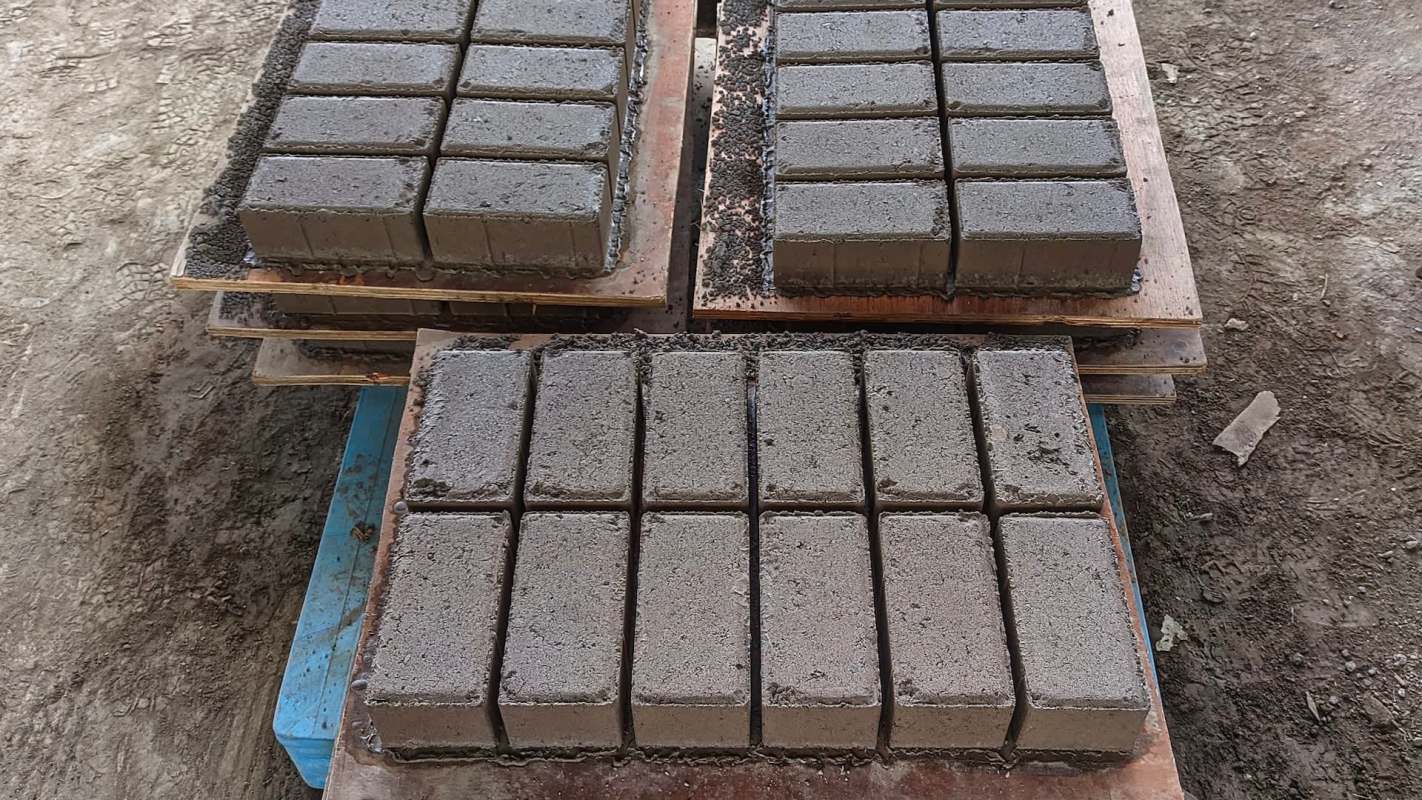
Despite being one of our most useful day-to-day tools, glass is a material that's rarely recycled due to complicated logistics. That's why researchers at the University of Portsmouth and their collaborators are creating a unique solution: turning waste glass into durable, low-carbon construction blocks.
Concrete, the backbone of modern infrastructure, is also one of the planet's dirtiest industries. According to Princeton University, cement, which is the glue holding concrete together, is responsible for about 8% of global carbon pollution. That's more than all the world's airplanes combined.
Each year, this adds up to around 3 billion tons of harmful carbon dioxide released into the atmosphere, largely from heating limestone and clay at high temperatures.
Compressed earth blocks (CEBs) offer a promising alternative. Made with soil, water, and typically cement, they cut down on the energy and pollution of traditional fired bricks. But replacing cement has been the missing piece… until now.
The research team tested different mixes of lime and recycled glass particles as a substitute for cement. "After testing blocks with varying mixes using lime and recycled waste glass, we found that a composition of 10% lime and 10% recycled glass particles produced the strongest blocks with no cracking under intense pressure," co-author Dr. Muhammad Ali told New Atlas.
In other words, trash glass just became treasure.
This innovation aligns with the push for a circular economy — keeping materials in use for as long as possible, rather than sending them to landfills. Reusing glass in construction is one great example of this, as is choosing reusable plastic-free products for everyday use.
The potential impact is especially powerful in regions where CEBs are already used to build homes, schools, and clinics. With locally sourced soil and labor-based production, glass-infused blocks could provide affordable, climate-friendly housing solutions in developing countries.
Researchers say more testing is needed to see how these blocks hold up in different climates. Still, the idea is gaining traction as part of a larger movement to give waste new life.
While the world's waste problem looms large, projects like this offer a glimpse of a greener future, where yesterday's trash could help build tomorrow's communities.
TCD Picks » Quince Spotlight
💡These best-sellers from Quince deliver affordable, sustainable luxury for all




|
Which of these factors would most effectively motivate you to recycle old clothes and electronics?
Click your choice to see results and speak your mind. |
 Giving me money back 💰
Join our free newsletter for weekly updates on the latest innovations improving our lives and shaping our future, and don't miss this cool list of easy ways to help yourself while helping the planet.
Cool Picks





