


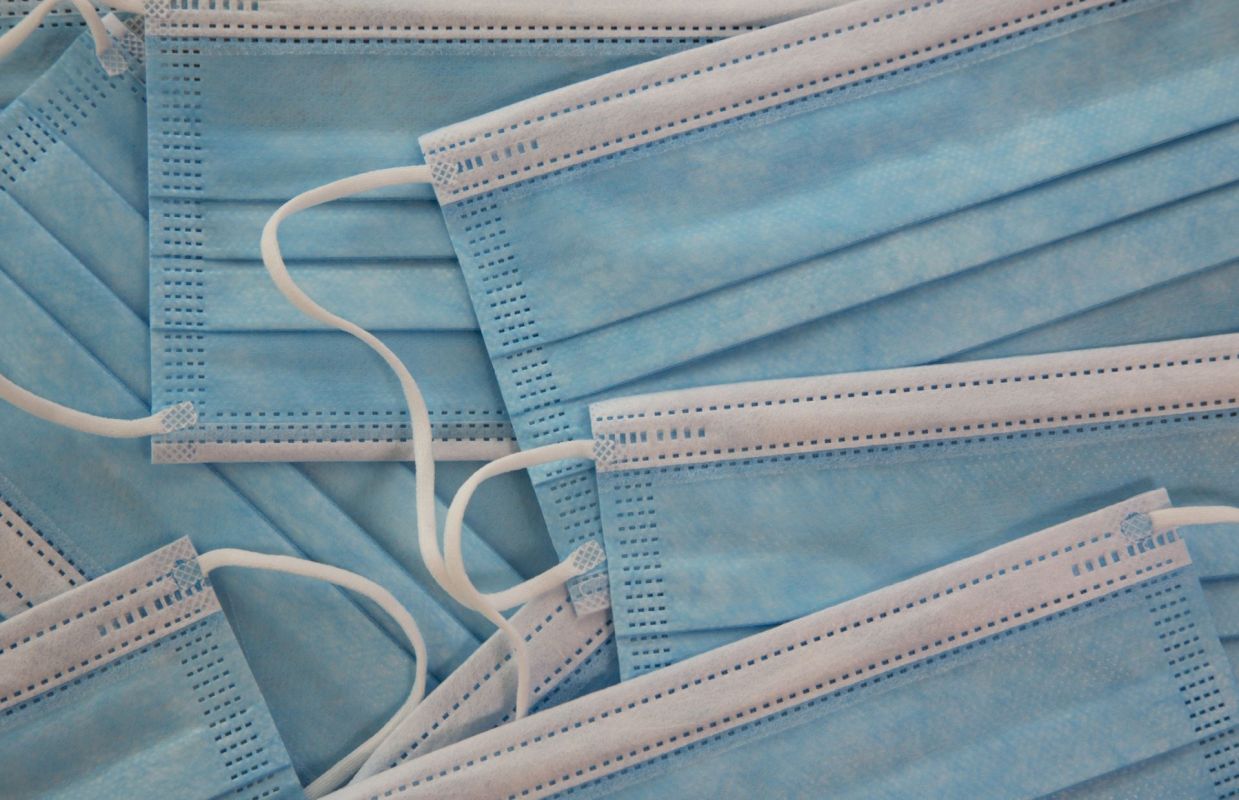
Researchers in China and Australia have developed a way to transform the globe's 950 billion discarded pandemic-era face masks into valuable electronic components, offering a climate-friendly solution to a stubborn waste problem.
While medical-grade face masks were necessary for public health and to prevent the transmission of COVID-19, their disposability led to a buildup of waste. When discarded in landfills, these plastic-based masks can take hundreds of years to break down. For faster processing, they can be incinerated, which releases toxic chemicals into the air. Either way, scientists say this waste poses a "major threat to wildlife and agricultural production."
To help address these waste woes, researchers developed a process that takes single-use face masks — which are largely made of polypropylene, a type of plastic — and turns them into nanocomposite film.
The thin, recycled film has useful and unique properties, including the ability to conduct heat like metal and block electromagnetic and radar interference "better than many commercial options," per Interesting Engineering. The researchers say the properties of the film could make it useful in electronic devices such as smartphones, electric vehicles, and LEDs, though it isn't yet being implemented.
Interesting Engineering reported that the "upcycling" method uses only water and tannic acid — a plant-based compound also found in tea and wine — to turn the masks into high-tech film. In the process, discarded masks are cleaned and shredded, then blended with tannic acid.
This acid coats the polypropylene fibers, giving them a negative surface charge. When blended with positively charged graphene nanoplatelets and pressed, the material fuses into a high-performance film.
The result is a product that's lighter, cheaper, and more effective than existing electronic components.
"This research presents a novel upcycling method that tackles pollution from discarded masks while converting them into low‑cost yet high‑value nanocomposite products," senior researcher Pingan Song of the University of Southern Queensland said. "It offers industries an affordable, high‑performance solution for developing advanced heat‑dissipation and electromagnetic‑shielding materials and opens new economic opportunities in electronics and recycling."
Plus, the climate benefits of the upcycled film are backed by research. A life‑cycle assessment of the process found that each kilogram of mask‑derived film could save 3.5 megajoules of dirty energy and 2.5 kilograms of carbon compared to leaving masks in a landfill. Economically, the process could also generate about $468 in profit per 1.1 tons of masks processed. Basically, the entire effort of recycling masks into these thin film products would actually make money, not waste it.
And the need goes beyond the massive amounts of mask-related waste from the height of the COVID-19 pandemic.
TCD Picks » Quince Spotlight
💡These best-sellers from Quince deliver affordable, sustainable luxury for all




"Single‑use face masks, most of which are not recyclable, remain widely used, especially in laboratories, hospitals, and other health care settings," Song noted.
Interesting Engineering reported that the scientists are now testing the approach on other plastic waste, such as disposable gowns and packaging film. The team is in talks for pilot production in 2026.
|
What should the government do about the fast fashion industry?
Click your choice to see results and speak your mind. |
 Set strict regulations 🚫
Join our free newsletter for weekly updates on the latest innovations improving our lives and shaping our future, and don't miss this cool list of easy ways to help yourself while helping the planet.
Cool Picks





