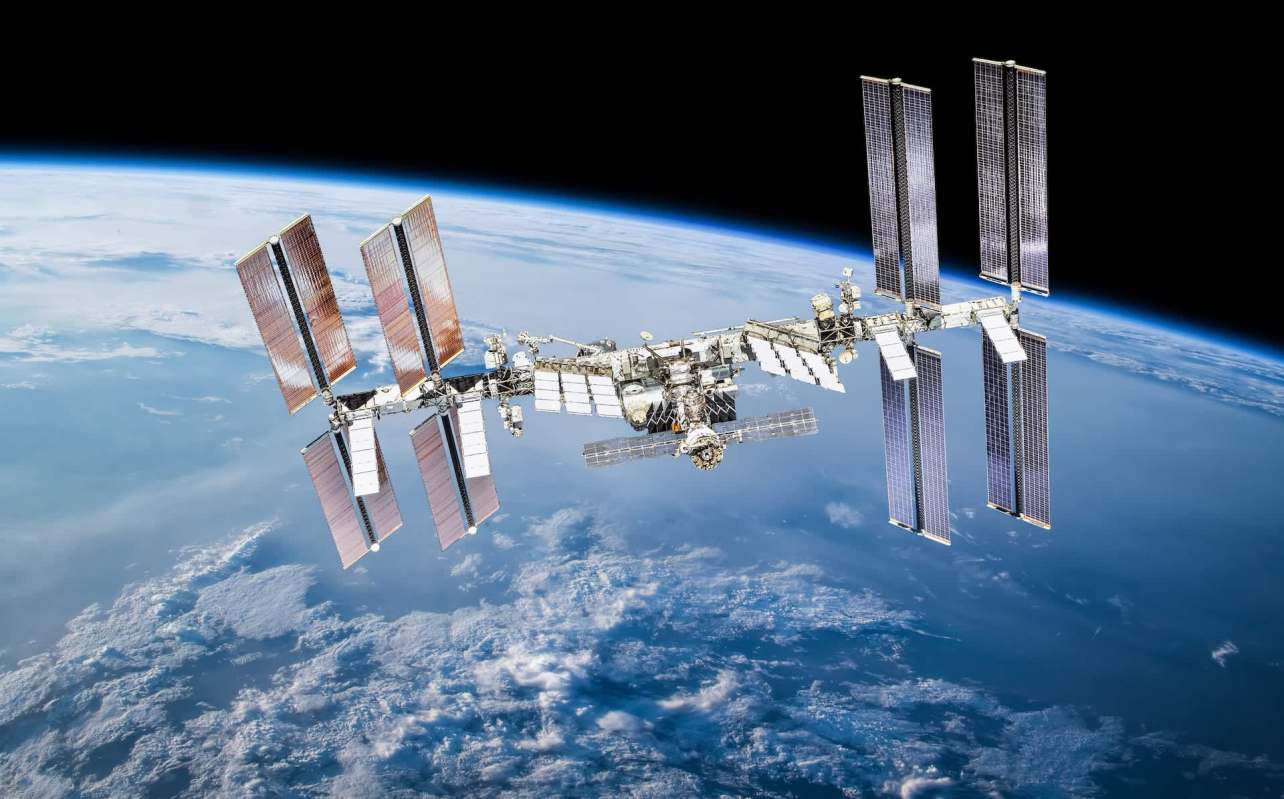
NASA's ultracold-atom experiment on the International Space Station has received an upgrade that expands how long it can observe matter near absolute zero. The mini-fridge-sized lab could help advance navigation, timing, and sensing technologies for use both in space and on Earth.
What happened?
Since reaching the ISS in 2018, NASA's Cold Atom Laboratory has now been updated four times. Hardware delivered to the station in April 2026 has already been installed and switched on.
Inside the station's near-weightless setting, researchers are using the upgraded Cold Atom Laboratory to examine ultracold atoms, according to Live Science. The system uses lasers to chill rubidium and potassium gases to just above absolute zero (minus 459.67 degrees Fahrenheit), a range where a Bose-Einstein condensate can form.
Earthly heat and gravity make these unusual quantum effects hard to study, but temperatures this low let scientists watch atoms behave in unfamiliar ways. Jason Williams, the Cold Atom Lab's project scientist at NASA's Jet Propulsion Laboratory in Southern California, told Live Science, "At the coldest temperatures, matter behaves drastically different from anything we have experienced."
Why does it matter?
More precise measurements of quantum effects can feed into technologies that depend on extremely accurate readings of time, motion, and gravity.
In practice, that could mean better navigation, improved timing systems, and more sophisticated sensors. NASA said the same technology could someday let astronauts navigate the lunar surface even if GPS signals aren't available, while also giving scientists a detailed picture of Earth's gravity field.
TCD Picks » Good Store Spotlight
Get 10% off your next purchase with code TCD10


Better positioning and timing systems can support transportation, communications, and scientific monitoring, while improved gravity sensing can deepen scientists' understanding of the planet. A quantum battery prototype Australian researchers unveiled earlier this year points to a similar trend: quantum research once confined to the lab is starting to edge toward tools people could one day use.
As Ethan Elliott, deputy project scientist at NASA's Jet Propulsion Laboratory in California, noted to Live Science, earlier quantum breakthroughs already led to "lasers, cellphones, and MRIs for medical imaging."
What's being done?
The latest round of changes includes a redesigned magnetic trap for the atom cloud, better atom sources, and enhanced measurement tools. Because the ISS provides low gravity, condensate matter waves can spread and evolve longer there than on Earth, allowing researchers to observe quantum matter more closely.
NASA sees the experiment as part of a wider push to turn cutting-edge space research into usable technology. The agency said the data also help show how future space-based quantum systems could support positioning, navigation, timing, and gravity sensing.
Elliott said, "We're performing Quantum 2.0, direct manipulation of large quantum states, and we hope for similar gains in quantum technology by advancing this science in orbit."

Get TCD's free newsletters for easy tips, smart advice, and a chance to earn $5,000 toward home upgrades. To see more stories like this one, change your Google preferences here.