


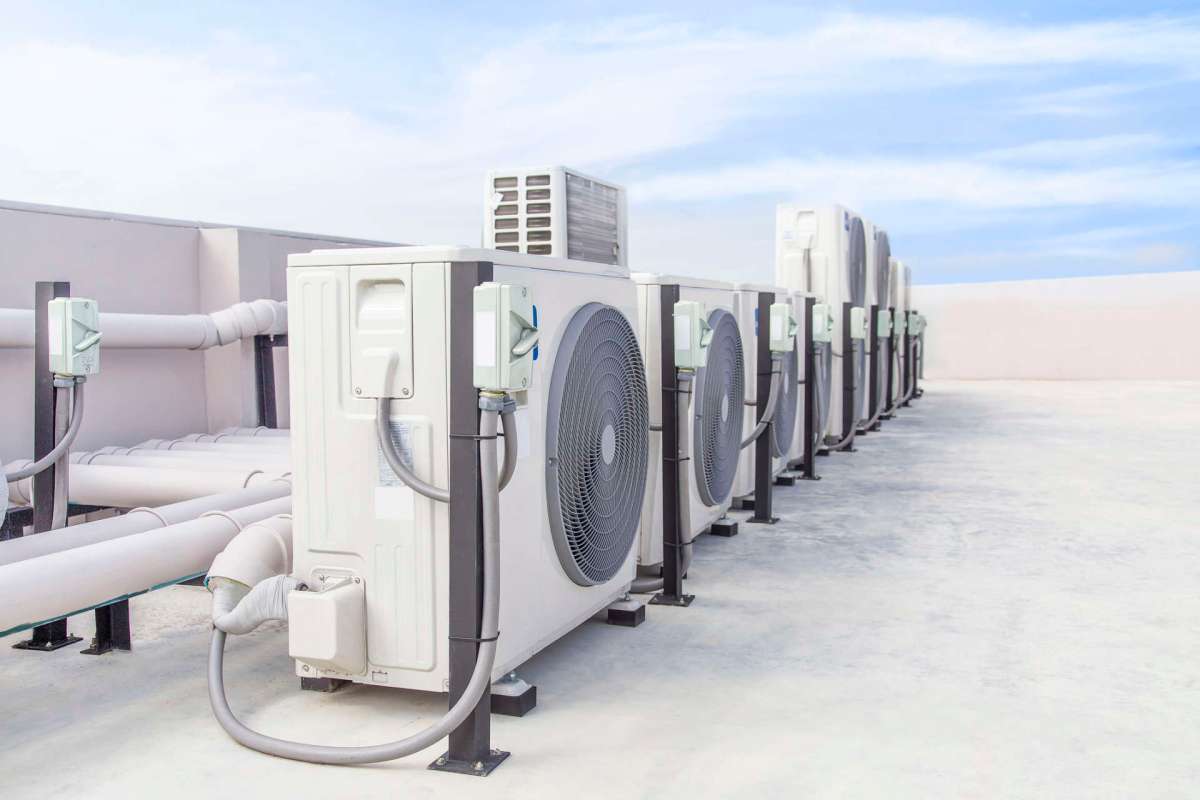
Commercial properties now have to support a wider mix of uses than older building systems were designed for. Offices serve hybrid teams, and many buildings also contain cafés, gyms, classrooms, server rooms, and even residential space, putting new pressure on heating and cooling planning.
Among the solutions highlighted by The ACHR News is variable refrigerant volume/flow, or VRV/F, technology, which aims to deliver more targeted temperature control across different areas while improving energy efficiency.
Here's what to know
AP Sharma, director of product marketing VRV, at Daikin Comfort Technologies North America, Inc., said the challenge is straightforward: "Modern buildings are not one single thermal indoor environment. They're a moving mosaic of microclimates."
When one system has to serve spaces that fill and empty throughout the day, older HVAC designs can struggle to keep up. Those setups often depend on centralized equipment, long duct runs, and broad zoning, which, in changing buildings, can lead to uneven comfort, wasted energy, and extra strain from repeated cycling.
In Sharma's description, each indoor unit in newer VRV/F systems acts as a "smart node," adjusting in real time to the heating or cooling actually needed. That allows one area — such as a packed conference room — to get more cooling without overconditioning nearby offices.
If you're thinking about your own energy costs, the same principle applies at home: upgrading your heating and cooling system is one of the best ways to save money on utility bills and protect yourself against rising energy prices.
Palmetto can help homeowners understand their HVAC options and slash their energy bills with new, efficient HVAC systems and heat pumps. Palmetto's Comfort Plan network can help you find efficient heating and cooling solutions for your home and connect you with vetted installers.
More background
Most buildings spend only a small amount of time at peak heating or cooling demand, as The ACHR News noted. Even so, conventional systems are frequently designed around those rare extreme conditions rather than the lighter loads that are more common day-to-day.
Save $10,000 on solar panels without even sharing your phone number Want to go solar but not sure who to trust? EnergySage has your back with free and transparent quotes from fully vetted providers in your area. To get started, just answer a few questions about your home — no phone number required. Within a day or two, EnergySage will email you the best options for your needs, and their expert advisers can help you compare quotes and pick a winner. Solar panels can save you more than $50k over their 25-year lifespan, and EnergySage can help you save as much as $10k on installation. Which begs the question — isn't that worth an email or two? |

That approach can waste energy. Sharma said variable-speed systems are built to modulate output continuously rather than switch fully on and off over and over, which can help maintain comfort and avoid unnecessary energy use.
Heat recovery adds another efficiency benefit. These systems can distribute heat to other parts of a building rather than exhausting it, using energy that might otherwise go to waste.
Across hotels, schools, offices, and homes, more responsive heating and cooling can reduce hot-and-cold swings, cut bills, and lower exposure to rising energy costs.
What can be done?
The ACHR News said some of the biggest commercial openings may be in retrofits, hospitality, education, multifamily buildings, and offices with changing occupancy patterns. Sharma also pointed to a Southwest hotel renovation in which modular equipment and smaller piping allowed parts of the property to remain open during construction.
At home, you do not need to wait for a major remodel to start exploring similar efficiency gains. Palmetto's Comfort Plan includes $0-down options that can lower your heating and cooling costs by up to 50%, plus 12 years of free maintenance if you're not ready to spend up front.
You can also drive costs down further by pairing solar panels with electric appliances such as efficient HVAC systems and heat pumps. EnergySage makes it easy to find the best solar system and installer for your home and budget, with potential savings of up to $10,000 on installations.
Planning systems around how buildings are actually used, rather than around rare worst-case scenarios alone, can help people stay comfortable while spending less.
"Success is no longer defined simply by whether the equipment runs," Sharma said. "Success is defined by whether or not the building performs the way it was designed to from the first day."

Get TCD's free newsletters for easy tips, smart advice, and a chance to earn $5,000 toward home upgrades. To see more stories like this one, change your Google preferences here.






