


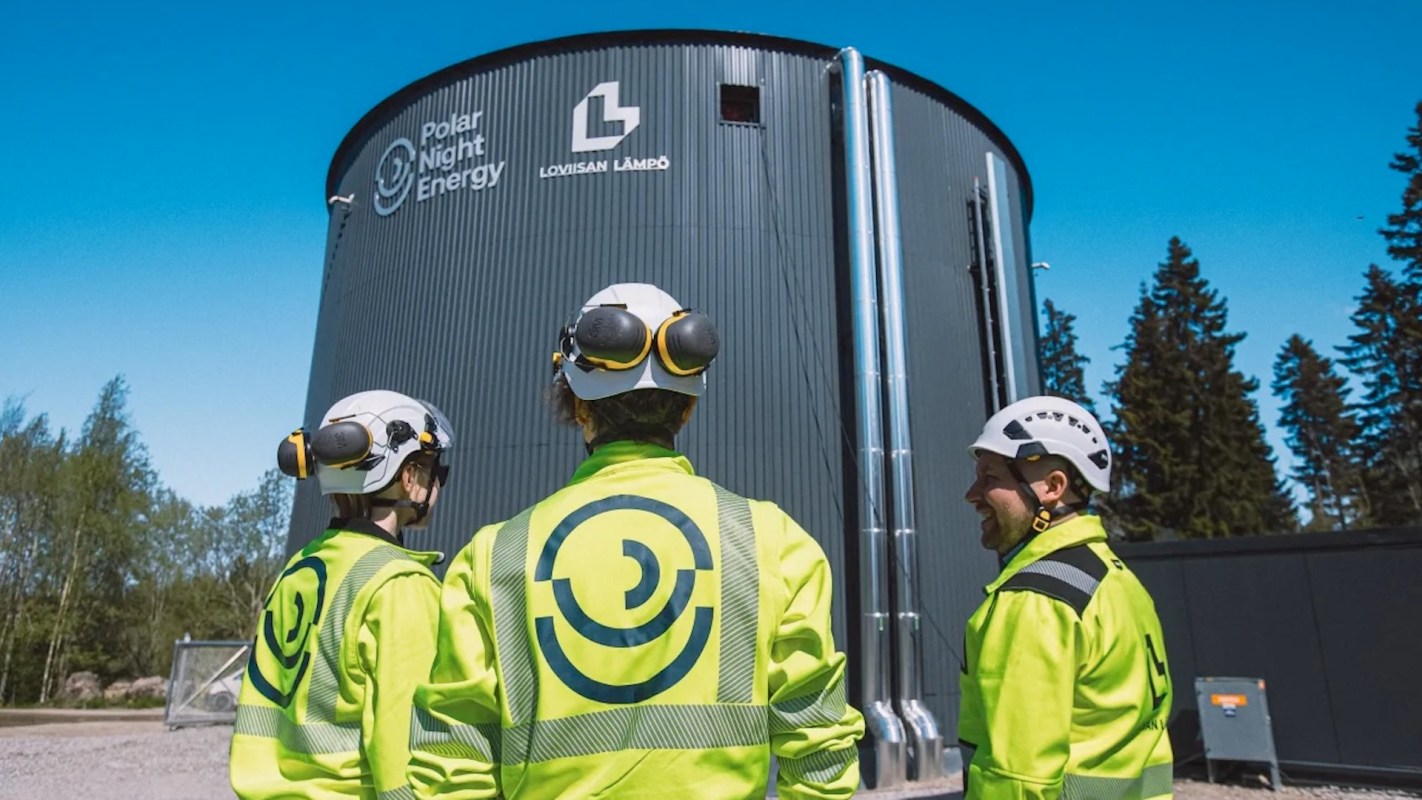
In the Finnish town of Pornainen, a giant sand battery is being used to store renewable energy for heat instead of burning oil.
For roughly 5,000 residents, the shift could mean more affordable home heating and less reliance on fuel markets that can swing sharply.
What's happening?
What CNBC described as the world's largest commercial sand battery is operating in southern Finland.
District heating company Loviisan Lämpö commissioned the installation, and Polar Night Energy developed it as a 43-foot tall, 49-foot wide facility filled with 2,205 tons of crushed soapstone that can store 100 megawatt-hours of thermal energy.
On one charge, the system can cover nearly a month of Pornainen's heat demand in summer or about a week of demand in winter.
Polar Night Energy introduced an earlier version in 2022, but the Pornainen project, which launched last year, is roughly 10 times larger.
TCD Picks » Quince Spotlight
💡These best-sellers from Quince deliver affordable, sustainable luxury for all




Before the battery was installed, the town relied on oil and wood chips for heat, Tommi Eronen, CEO of Polar Night Energy, said. He added that the system now provides combustion-free heating for most of the year, while the old wood-chip plant remains in place for backup and peak-demand periods.
Why does it matter?
Because wind and solar output rises and falls, storing energy is essential to making those power sources more dependable. Pornainen's system is meant to bridge that gap with a relatively simple design that is less expensive than some alternatives.
When renewable electricity is abundant and power prices are low, the battery takes energy from the grid and uses it to raise the temperature of the material inside the silo to very high levels.
CNBC reported that the heat can be stored for days or weeks before being transferred into water for the town's district heating network.
The project has already reduced polluting gases from the heating network by nearly 70% and cut wood-chip use by around 60%, based on Polar Night Energy estimates.
What's being done?
The Pornainen project is part of a broader effort to make renewable energy more practical for everyday use, especially in places where residents need dependable heat through long winters.
As CNBC detailed, Annette Höglund-Dönnes, chief commercial officer of Polar Night Energy, explained the appeal in simple terms: Communities can store energy when electricity is cheap and use it later when generating heat would be more expensive.
That model could help cities, utilities, and large buildings better manage energy costs while reducing pollution.
Jan Rosenow, an Oxford University professor of energy and climate policy, noted that electrothermal storage systems are likely to become popular because they can store energy much longer than many lithium-ion batteries and do not rely on rare earth materials.
"We're changing from a world where big power plants were doing the energy production to where solar and wind are producing the energy, then we need a massive amount of storage," Eronen said.

Get TCD's free newsletters for easy tips, smart advice, and a chance to earn $5,000 toward home upgrades. To see more stories like this one, change your Google preferences here.






