


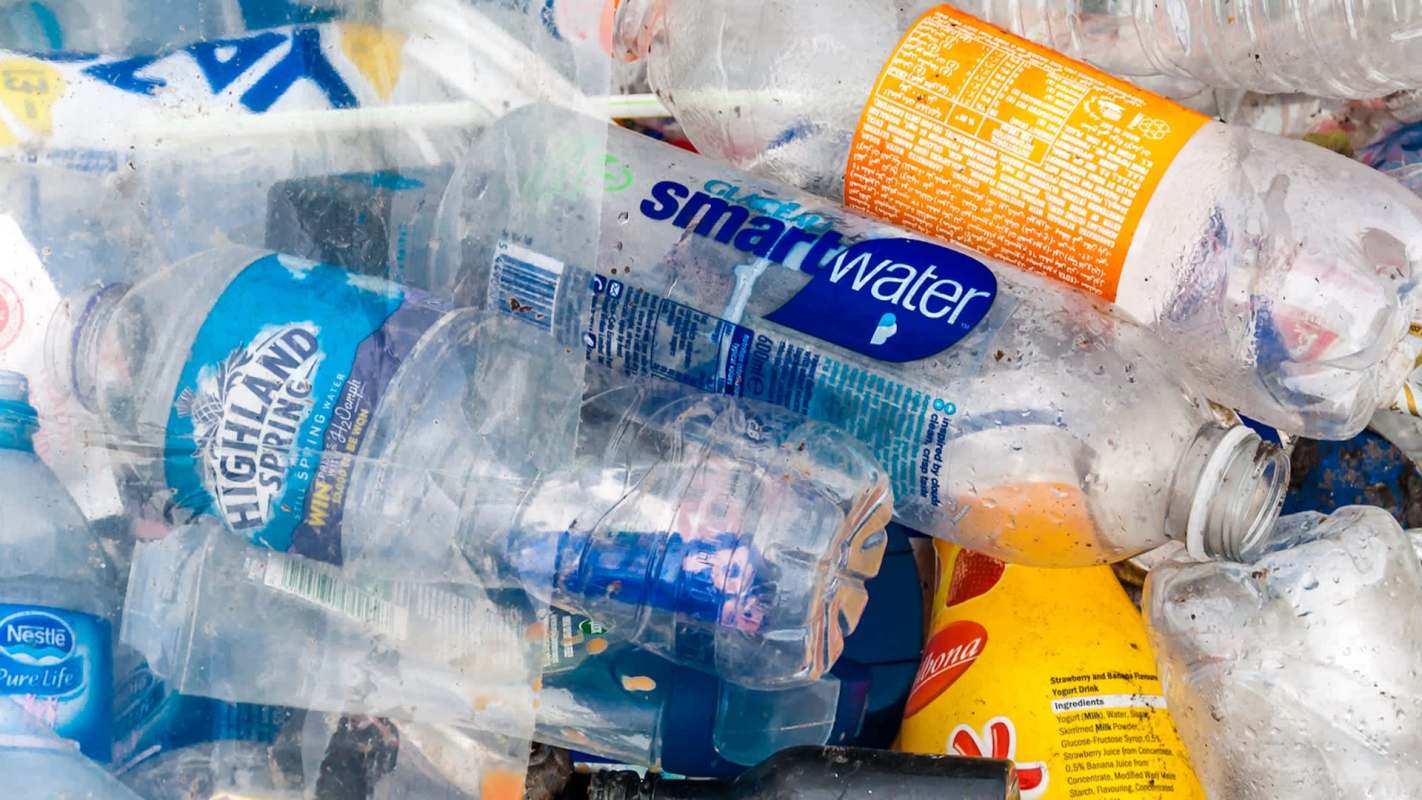
An expert team from China's Zhejiang University is using a complex mix of chemical reactions to recycle a common plastic into its base components.
If successful, the scientists could introduce a sustainable method to reuse polyethylene terephthalate, a plastic in bottles, packaging, and textiles. It accomplishes the feat without metal catalysts, high temperatures, or loads of solvents, according to a university report published by Newswise.
It's "a carefully designed reaction system" with a description that's heavy on labspeak.
Methanolysis is coupled with ethylene glycol transesterification at about 266 degrees Fahrenheit for two-and-a-half hours. The experts seemed to have found the right balance of reactions, chemicals, and environment to successfully reduce the plastic to its base parts — from polymers to monomers — with chemical yields of up to 99%, according to the report.
"The researchers dissected how each parameter governs depolymerization efficiency and product formation," the team wrote.
They didn't provide a clear timeline for commercialization but called the results "a promising pathway toward true closed-loop recycling."
The hundreds of millions of tons of plastic waste humans produce each year have a well-documented environmental impact. But the United Nations Office of Disaster Risk Reduction reported that the long-lasting material can also cause other problems to worsen as it slowly breaks down over the decades and turns into harmful microplastics.
"Plastic pollution and disaster risk share important interlinkages," the UN's experts wrote.
It limits the ability of ecosystems to adapt to changing climates, contributing to biodiversity loss. The garbage puts 200 million people in certain areas at greater flood risk during severe storms because of blocked drainage systems.
The UN added that plastic production is expected to triple by 2060, making effective recycling crucial. Yet, less than 10% is successfully processed. A large reason is that new plastics are cheaper, according to the Institute for Energy Economics and Financial Analysis.
TCD Picks » Quince Spotlight
💡These best-sellers from Quince deliver affordable, sustainable luxury for all




|
Who should be most responsible for recycling plastics? Click your choice to see results and speak your mind. |
 Governments 🏛️
 Recycling innovations, including a project in London that surprisingly uses laundry detergent, are important to increasing success rates and affordability.
The Zhejiang method has a couple of key breakthroughs in its favor.
It "successfully processed a wide range of real-world plastic wastes, including bottles, films, fabrics, and industrial scraps, consistently delivering high yields" while proving capable of working on polyesters and other substances, per the report.
What's more, the recovered base substances can be reused to make new plastics, solvents, and battery components.
"This strategy transforms plastic waste into premium chemicals rather than low-value recyclates, strengthening the economic case for chemical recycling," the experts added.
In the meantime, using what you already have is a good way to avoid plastic trash. Cloth grocery bags are a big upgrade over single-use plastic ones, and they won't leave you picking your produce off the sidewalk after a bust. And Terracycle is a great tool to help you find solutions for tough-to-recycle objects that you can't avoid.

Get TCD's free newsletters for easy tips to save more, waste less, and make smarter choices — and earn up to $5,000 toward clean upgrades in TCD's exclusive Rewards Club.
Cool Picks





