


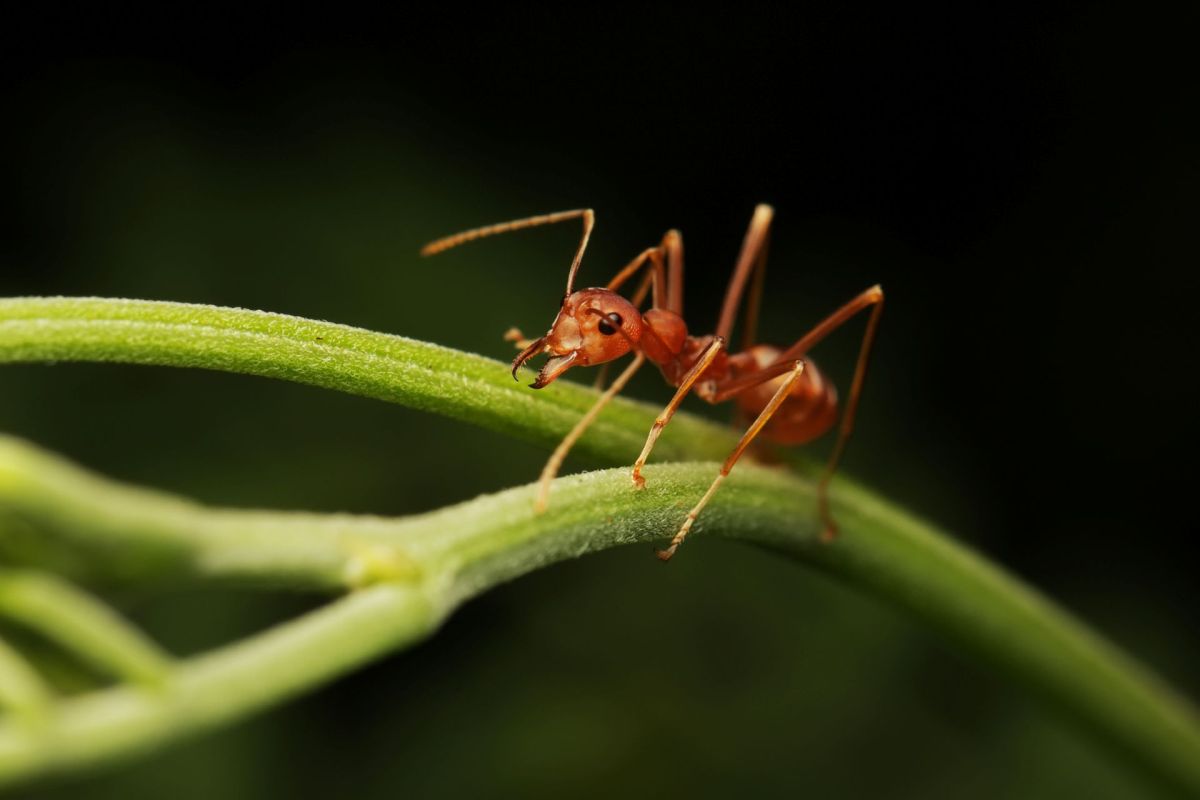
Anyone who has ever leaped away from a Texas fire ant mound may appreciate this unsettling bit of science: Tiny parasitic flies can attack the invasive pests so effectively that the ants eventually lose their heads.
That grisly process is more than a scientific curiosity. It became part of a decades-long effort to rein in one of Texas' most painful and costly pest problems.
What happened?
In the 1980s, Larry Gilbert — whom KUT described as a professor of integrative biology at the University of Texas at Austin — traveled to Brazil and saw tiny phorid flies limiting fire ant species. In Texas, he said, the insects had been spreading across the landscape like "syrup on a plate."
"In a field the size of a football field, you might have five or six species of these little [phorid] flies that attack the fire ants and inject eggs into them and cause great chaos," Gilbert said.
According to KUT, that observation led Gilbert's team to a project that lasted for decades: trying to establish four kinds of phorid flies in Texas.
Why does it matter?
The species did not originate in Texas. Fire ants first came from South America to Mobile, Alabama, in the 1930s before moving west and causing harm to crops, livestock, wildlife, and people. By 1998, Texas A&M AgriLife Extension Service estimated the annual cost to Texans at $1.2 billion.
TCD Picks » Quince Spotlight
💡These best-sellers from Quince deliver affordable, sustainable luxury for all




Before that, control efforts depended largely on pesticides, including chlordane, heptachlor, and mirex, which KUT said were later phased out and banned.
Despite those efforts, the ants are still common.
In one troubling example of the harm they can do, KUT told the story of 8-year-old Lucy, who on the final day of camp in 2024 stepped barefoot into two fire ant mounds in a field and ended up with more than 60 stings on each foot.
"I tried to keep calm," Lucy said. "But I think I started crying."
Meghan Goddin, Lucy's mother, described the aftermath in painful terms: "The recovery was long and torturous."
She added, "We are still waiting for the psychological scars to fade — she refuses to go back to sleepaway camp even two years later."
What are people saying?
Gilbert said ranchers have noticed changes on the land since the phorid flies were introduced.
"We get congratulations from ranchers saying, 'Since the flies got here, I'm seeing more quail, I'm starting to see lizards," he noted. "I always say, well, I can't claim that we did it, because maybe it was the drought, maybe it was this, maybe it was that … but we're pretty convinced that it has had a damping effect."
Wizzie Brown, whom KUT identified as an entomologist with Texas A&M AgriLife Extension Service, said Texans do have ways to manage mounds, including bait products that make ants "essentially kill themselves off for you."
But she also offered a simple warning for anyone living with the pests: "And if you're new to Texas, watch where you step."

Get TCD's free newsletters for easy tips, smart advice, and a chance to earn $5,000 toward home upgrades. To see more stories like this one, change your Google preferences here.






