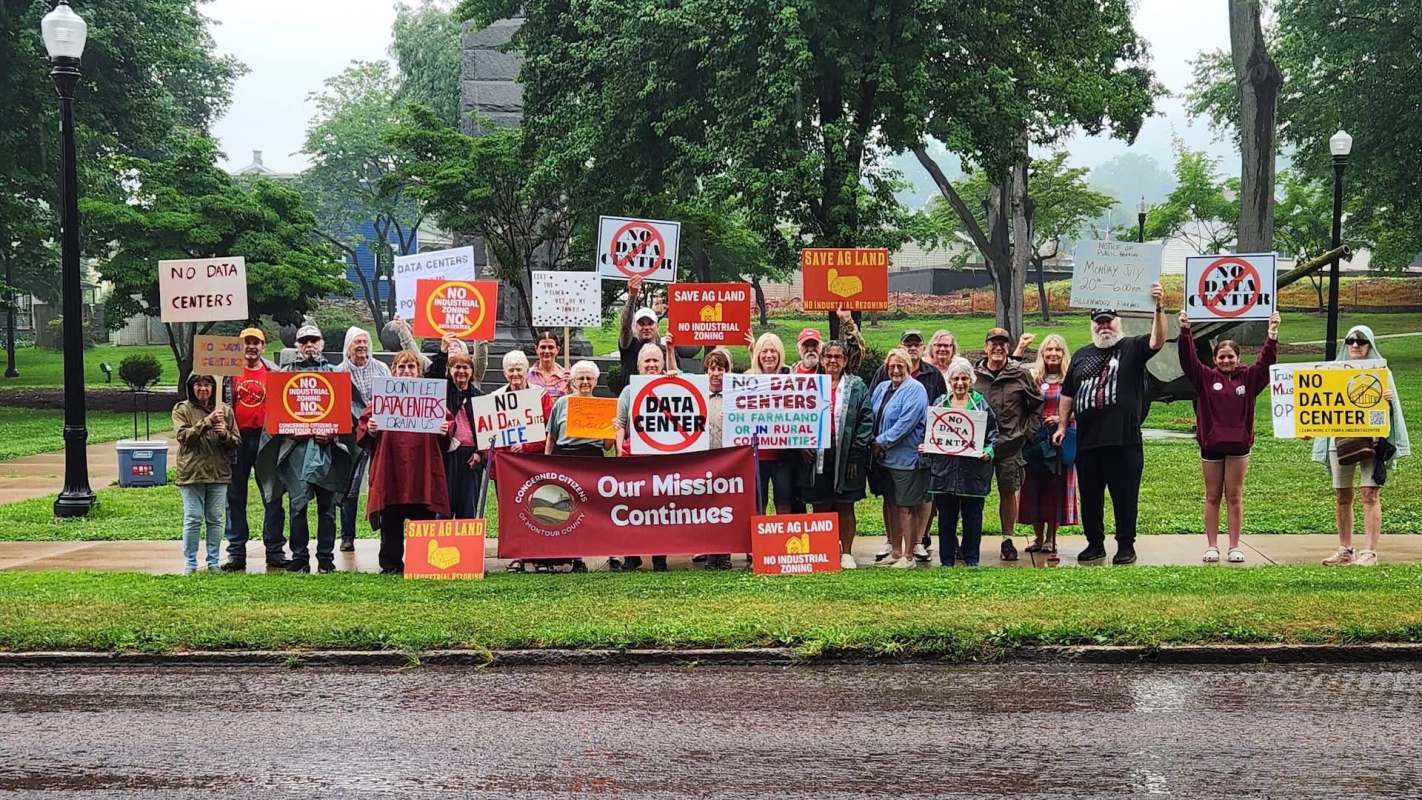
Rain did not stop Pennsylvania residents from sending a clear message over the weekend as demonstrators gathered in Danville to oppose proposed data center developments: They do not want their towns quietly reshaped without having a stronger say before major projects move forward.
In Danville, people assembled by the Montour County Veterans Memorial and stretched down Mill Street, using signs, chants, and cowbells to call for more public input before large projects advance.
What happened?
Saturday's event in Danville was part of the National Data Center Day of Protest, bringing together attendees who objected to proposed Pennsylvania data centers and trying to make sure more residents know what is being discussed.
According to The News-Item, people came from Montour, Northumberland, and Chester counties for the rally, which was organized by Concerned Citizens of Montour County.
Even with rain falling, the group remained on the street with signs opposing projects planned around Pennsylvania, including in the Coal Region. Supportive drivers sounded their horns while demonstrators shook cowbells and repeated, "no data centers in our small town" and "PA is not for sale."
Participants said their goal was to educate neighbors on the potential impacts of these projects before decisions are finalized.
TCD Picks » Good Store Spotlight
Get 10% off your next purchase with code TCD10




Why does it matter?
Data centers are often promoted as part of the digital economy, but they can also stir serious local concerns.
Large facilities can require enormous amounts of electricity, extensive infrastructure, and significant water use for cooling, depending on the design — data centers can even consume up to 5 million gallons of water a day, an amount comparable to that used by a town of 10,000 people.
For small towns, that can translate into fears of industrialization, land-use changes, noise, environmental strain, and the possibility that residents will be left to pay the price while outside companies collect the benefits.
Residents are asking who gets to decide what happens to their communities.
The frustration on display in Danville reflects a broader pattern in places facing rapid development. More residents are questioning whether promises of progress are being used to push projects forward without enough transparency or meaningful public input.
It also ties into broader concerns in other communities, where rising demand for energy-hungry infrastructure has raised difficult questions about how to protect local resources while planning for the future.
What's being done?
In Danville, residents are showing up in public, making noise, and trying to inform their neighbors before proposals move any further.
By joining a national day of protest, organizers also connected local concerns to a larger movement.
Communities often have more influence when they share information, compare experiences, and push for stronger oversight together rather than acting one town at a time.
The demonstration shows that development decisions are not only technical or economic issues. They are also community issues, and residents are demanding respect for their towns, their health, and their environment before any major changes move forward.
The protesters' message was blunt and memorable, even in the rain.

Get TCD's free newsletters for easy tips, smart advice, and a chance to earn $5,000 toward home upgrades. To see more stories like this one, change your Google preferences here.