


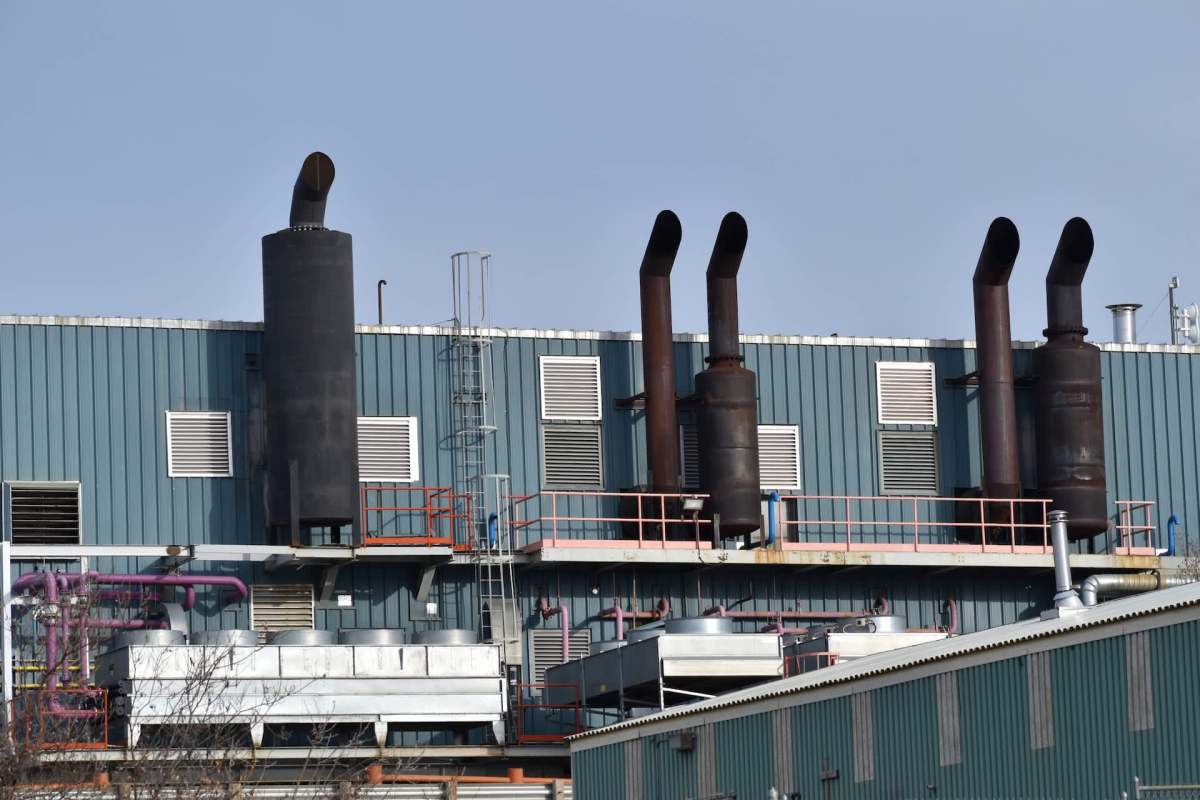
As extreme heat pushed electricity demand toward record levels, a federal emergency order raised a troubling question for communities in Pennsylvania: What happens when data centers turn on diesel backup generators at massive scale?
For residents living near server campuses, the answer could mean more than just keeping computers online. It could also mean more local air pollution at the very moment people are already being told to stay inside and protect themselves from dangerous heat.
What happened?
During the late-June heat wave, PJM Interconnection — the regional grid operator for Pennsylvania and 12 other states — obtained a U.S. Department of Energy emergency order to allow data centers and other large electricity users to switch from grid power to backup generators, according to The Scranton Times-Tribune. The authorization was in place from June 30 through July 7.
PJM said it did not use that emergency measure, The Times-Tribune reported, though demand on the grid climbed to a record 168,158 megawatts on July 2. Even so, the decision brought new attention to the implications of data center growth in the Keystone State.
The proposed Wildcat Ridge Data Center Campus in Archbald illustrates the scale involved. The 14-building project would require 1.6 gigawatts of electricity, and its 588 diesel backup generators could exceed the output of Lackawanna County's largest power plant, which is rated at 1,485 megawatts.
That led Sierra Club Pennsylvania Chapter Director Tom Schuster to describe the setup as "essentially installing the cheapest and dirtiest type of power plant."
TCD Picks » Quince Spotlight
💡These best-sellers from Quince deliver affordable, sustainable luxury for all




Why does it matter?
What worries critics is not simply the amount of electricity these campuses need but the source of that power when the grid is strained. Backup generators can supply large amounts of electricity, yet they are subject to less stringent pollution rules than major power plants.
At a hearing in Archbald, Harvard environmental health scientist Michael Cork cited EPA modeling that showed Wildcat Ridge's nearly 600 generators could cause between $3.3 million and $124 million in annual health damages in Lackawanna County, according to The Times-Tribune. Schuster argued that Tier 4 diesel generators can emit twice the nitrogen oxides per kilowatt-hour of a coal plant and that Tier 2 units can emit 20 times as much.
"They're even worse than coal," Schuster said, per the newspaper.
There is also concern about where that pollution would disperse. According to The Times-Tribune, it would come out near ground level rather than from tall stacks, which could leave it to linger around homes, parks, and schools. During heat waves, when children, older adults, and people with respiratory conditions are already at great risk, that adds another serious layer of concern.
The issue also reflects the growing link between artificial intelligence and the power grid. Data centers are expanding in part because AI tools require enormous computing capacity. While AI can offer benefits — including helping utilities forecast demand more accurately and improve clean energy systems — its growth also brings trade-offs, including rising electricity consumption, heavy water use for cooling, potential security and misuse concerns, and the possibility of higher household energy costs if demand surges and grid upgrades become necessary.
What's being done?
Cork urged regulators to build health protections into the approval process before projects move ahead. He called for measuring health effects in advance, imposing enforceable limits on generator use, requiring the cleanest available engines, and putting public air monitoring in place.
A broader review is also being sought by local officials. The Times-Tribune reported that Lackawanna County Commissioner Bill Gaughan wants a countywide assessment of cumulative health and environmental effects to gauge how residents could be affected if multiple projects are approved.
Community advocates say the concern could spread well beyond one site. According to The Times-Tribune, Stop Archbald Data Centers co-founder and industrial hygienist Tamara Misewicz-Healey said Archbald alone could host upward of 1,000 generators.
"These decisions need to be made before a community is locked into risk, not after," Cork said, while Gaughan added: "The billionaires that are driving this AI revolution ... want communities like Lackawanna County to bear the burden while they reap all the rewards. … They get rich; we get sick."

Get TCD's free newsletters for easy tips, smart advice, and a chance to earn $5,000 toward home upgrades. To see more stories like this one, change your Google preferences here.






