


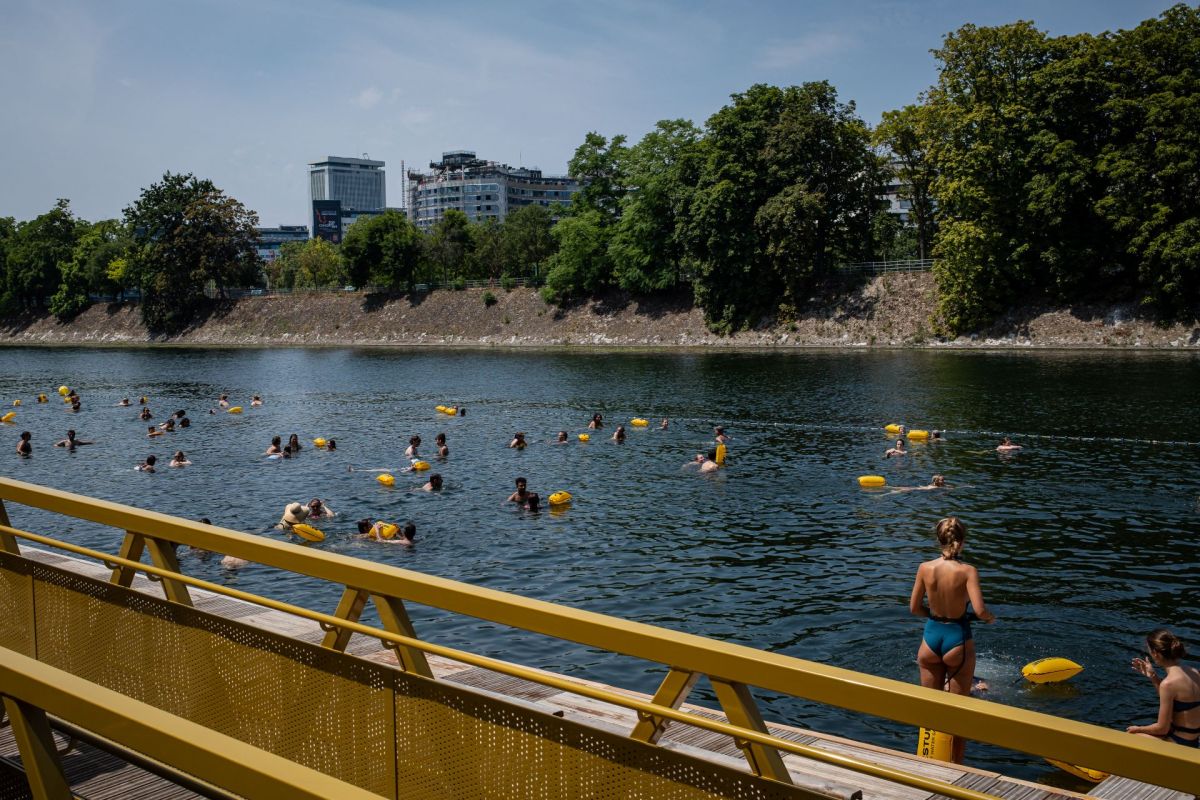
Paris opened three public swimming spots along the Seine just as another heat wave bore down on the city, a major milestone for a river that, not long ago, was considered too polluted to touch.
The seasonal launch began July 4, giving residents and visitors a new way to cool off after Paris recently reached a record high of 104 degrees Fahrenheit, according to CNN.
What's happening?
This year, the city is offering three free swimming sites: Bras Marie near Notre-Dame; Grenelle with views of the Eiffel Tower; and Bercy, which includes one pool stretching 220 feet. It's the second consecutive summer people have been allowed to swim in the river.
More than 1 billion euros was spent to make that comeback possible. Long before this reopening, the Seine had deteriorated severely; by the 1970s, untreated wastewater had turned it into a "flowing urban cesspit," and only three hardy fish species remained, according to CNN.
A 1923 ban followed drownings and river-traffic accidents, but it was worsening pollution that erased Paris' tradition of swimming in the river.
Even as recently as 2013, water quality problems forced the cancellation of a triathlon.
TCD Picks » Quince Spotlight
💡These best-sellers from Quince deliver affordable, sustainable luxury for all




The effort to return swimmers to the Seine unfolded over decades. In 1988, then-Mayor Jacques Chirac famously promised he would swim in the river in three years to show it was clean, but that never happened. Then-Mayor Anne Hidalgo picked the goal back up in 2016 ahead of the 2024 Olympics, helping turn it into an infrastructure project.
Why does it matter?
In a city facing intensifying heat, safe public access to water offers meaningful relief, especially as heat waves grow more dangerous for older adults, children, outdoor workers, and people without easy access to cooling.
The reopening also reflects urban environmental recovery tied to public works. A cleaner river can improve daily life not only for swimmers but also for nearby communities and wildlife and boost the broader health of the city's ecosystem.
Paris' first public season in 2025 drew around 100,000 people, CNN reported.
What's being done?
At the center of the cleanup is a massive underground stormwater basin near Gare d'Austerlitz.
It can hold roughly 13.2 million gallons of overflow, or about 20 Olympic-size swimming pools' worth, helping prevent heavy rain from sending sewage directly into the Seine.
Because Paris' old sewer network carries rain and wastewater through the same pipes, storms can trigger sewage overflows into the river, according to CNN. Officials say the upgraded system has cut major spill incidents to about two a year from roughly 15.
The city is also relying on daily water-quality testing and a color-flag safety system. Green means swimming is allowed; yellow signals caution; and red means the sites are closed because of conditions such as contamination risk, storms, or strong currents.
The restoration did not erase risk, but it did create a new public resource for a hotter future.

Get TCD's free newsletters for easy tips, smart advice, and a chance to earn $5,000 toward home upgrades. To see more stories like this one, change your Google preferences here.






