


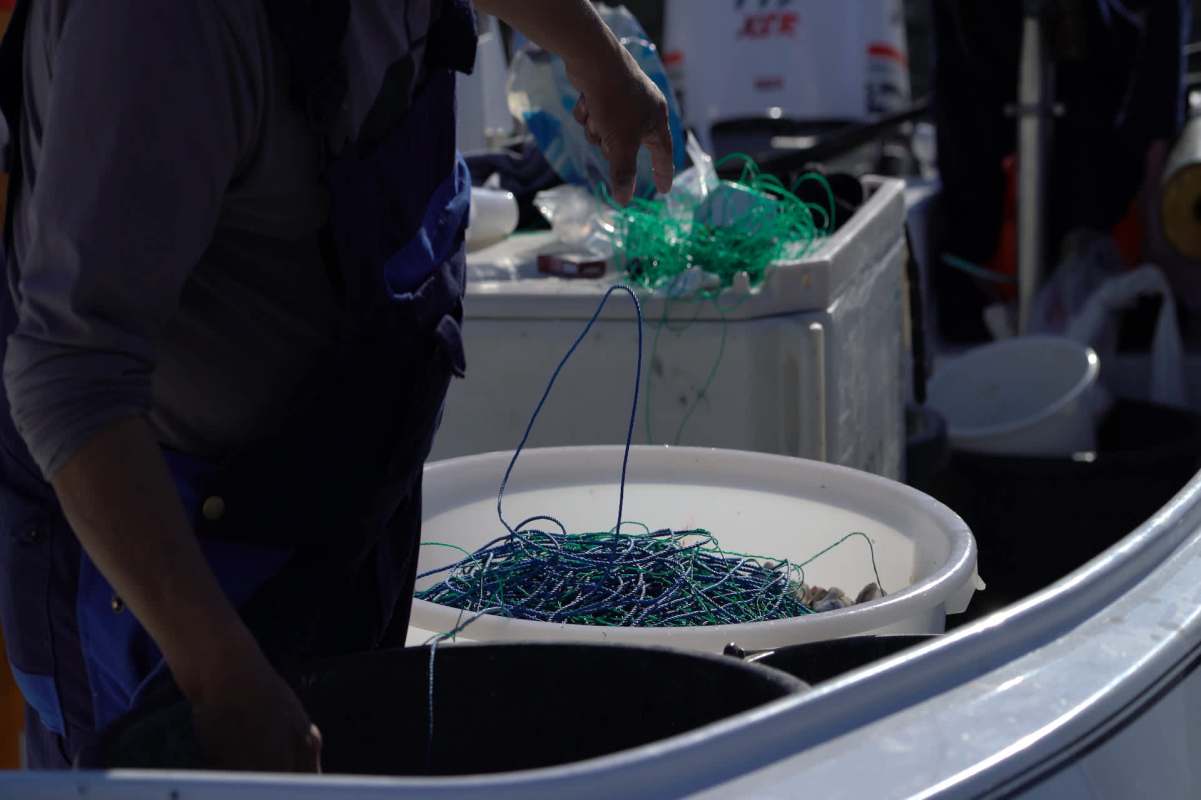
A Canadian nonprofit is ensuring "ghost gear" won't sleep with the fishes through a first-of-its-kind recycling program for marine waste.
The Ocean Legacy Foundation aims to tackle this common plastic pollution by taking discarded fishing nets, ropes, and more and converting them into plastic pellets, according to CBC. The foundation recycles around 800 to 1,000 tons of marine waste per year, collecting gear from community partners as well as its own cleanup efforts.
Once converted, the pellets can then be sold to manufacturers to make anything from patio furniture to flower pots. Chloé Dubois, co-founder and executive director of Ocean Legacy, said its efforts are a vital component of protecting local ecosystems.
"Plastic pollution is one of the biggest challenges facing our time," she said. "We really need to conserve the biodiversity we have in Canada as well as internationally. So we really need to be better at managing these materials."
Ghost gear — another term for marine debris — is one of the leading causes of ocean wildlife deaths, as animals can get tangled in the ropes and nets and suffocate or starve. The United Nations Environment Programme estimates that over 640,000 tons of gear find their way into the ocean every year, and like other plastic, it won't decompose for hundreds of years.
The Canadian Department of Fisheries and Oceans historically provides support to organizations like Ocean Legacy through their Ghost Gear Fund, but recent cuts to funding have left their ocean cleanups and recycling programs in jeopardy of scaling back.
For now, though, their efforts are addressing marine waste from coast to coast, collecting plastics from their native British Columbia all the way to New Brunswick and Nova Scotia.
"It's important to expand these types of marine recovery plastic programs from coast to coast because this is a national problem and it's not going away," Dubois said.
|
How concerned are you about the plastic waste in our oceans? Click your choice to see results and speak your mind. |
 Extremely 😫
Join our free newsletter for weekly updates on the latest innovations improving our lives and shaping our future, and don't miss this cool list of easy ways to help yourself while helping the planet.
Cool Picks





