


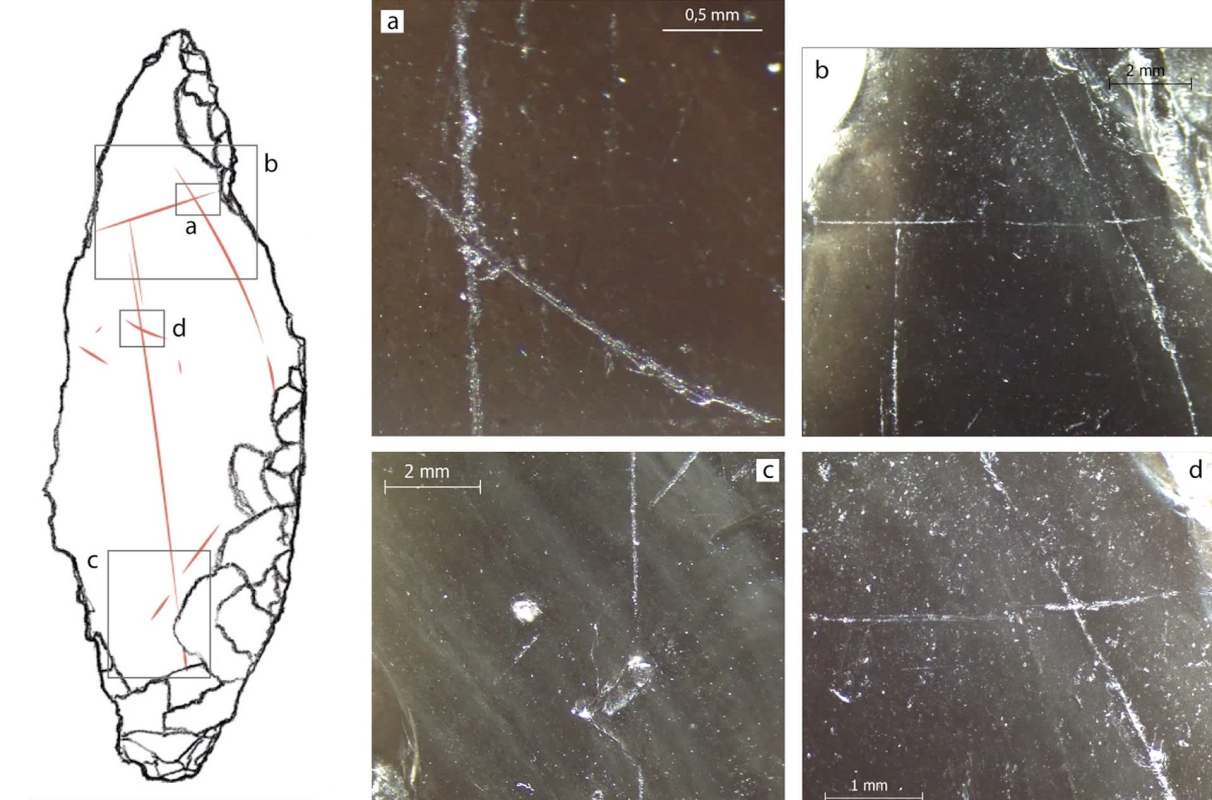
Archaeologists used engraved obsidian arrowheads from a 9,000-year-old site in Israel to explore whether early farming communities were connected by shared symbols, ideas, and trade networks reaching into what is now central Turkey.
Though the arrowheads were functional tools, the carved markings on some of them suggest they may have held meanings that can no longer be known.
What happened?
At the ancient settlement near Tel Aviv, excavations began in 2012 and uncovered about 400 obsidian artifacts that were crafted locally. The discovery was striking because this volcanic glass does not occur naturally in Northern Israel. Research linked the material to quarry areas in central Turkey, as The Debrief reported.
A number of the obsidian arrowheads carry intentional incisions. Since similar markings are known from a rare group of engraved projectile points in Central Anatolia, the Israeli artifacts may belong to a broader visual or symbolic tradition.
On July 28, Plos One published a study that examined 11 newly documented engraved arrowheads from Tepecik-Çiftlik, a Neolithic settlement in Cappadocia. With those finds included, the regional count of such artifacts reached 43.
Study authors Alice Vinet and Denis Guilbeau said that the engravings do not consistently correspond to any particular arrowhead shape, production method, or use. Some marks seem to have been made before the tools were finished, while others appear to have been added afterward.
TCD Picks » Quince Spotlight
💡These best-sellers from Quince deliver affordable, sustainable luxury for all




Why does it matter?
If that reading is correct, long-distance exchange in the ancient world may have carried more than raw material alone. Obsidian was moved across great distances, and the engravings suggest that ideas, and perhaps shared identities, may have traveled with it.
That possibility could reshape how researchers view some of the earliest settled farming societies. Rather than isolated villages making tools only for survival, these communities may have been part of regional networks with recognizable symbols and traditions.
Arrowheads are common finds at ancient sites, but these engraved examples are unusual. Scholars have said the possibilities include personal identifiers, clan symbols, hunter's marks, or ritual uses, yet the purpose remains unknown.
What's being done?
For the study, the researchers examined the arrowheads' technology, function, and iconography and also connected the obsidian to Turkish volcanic source areas such as Göllü Dağ and Nenezi Dağ, according to The Debrief.
They also studied the contexts in which the artifacts were recovered. Some were found in houses, others in stone tool production areas, and still more in surveys. That pattern suggests the engraved points were embedded in everyday life rather than reserved for rituals.
Comparisons across additional sites may show whether the incisions signaled ownership, community affiliation, or something symbolic. As more artifacts are identified, researchers may be able to detect patterns that are still too faint to confirm.
"The analysis of these incised arrowheads, along with the limited archaeological and ethnographic comparisons available, calls for a cautious interpretation," Vinet and Guilbeau wrote.

Get TCD's free newsletters for easy tips, smart advice, and a chance to earn $5,000 toward home upgrades. To see more stories like this one, change your Google preferences here.






