


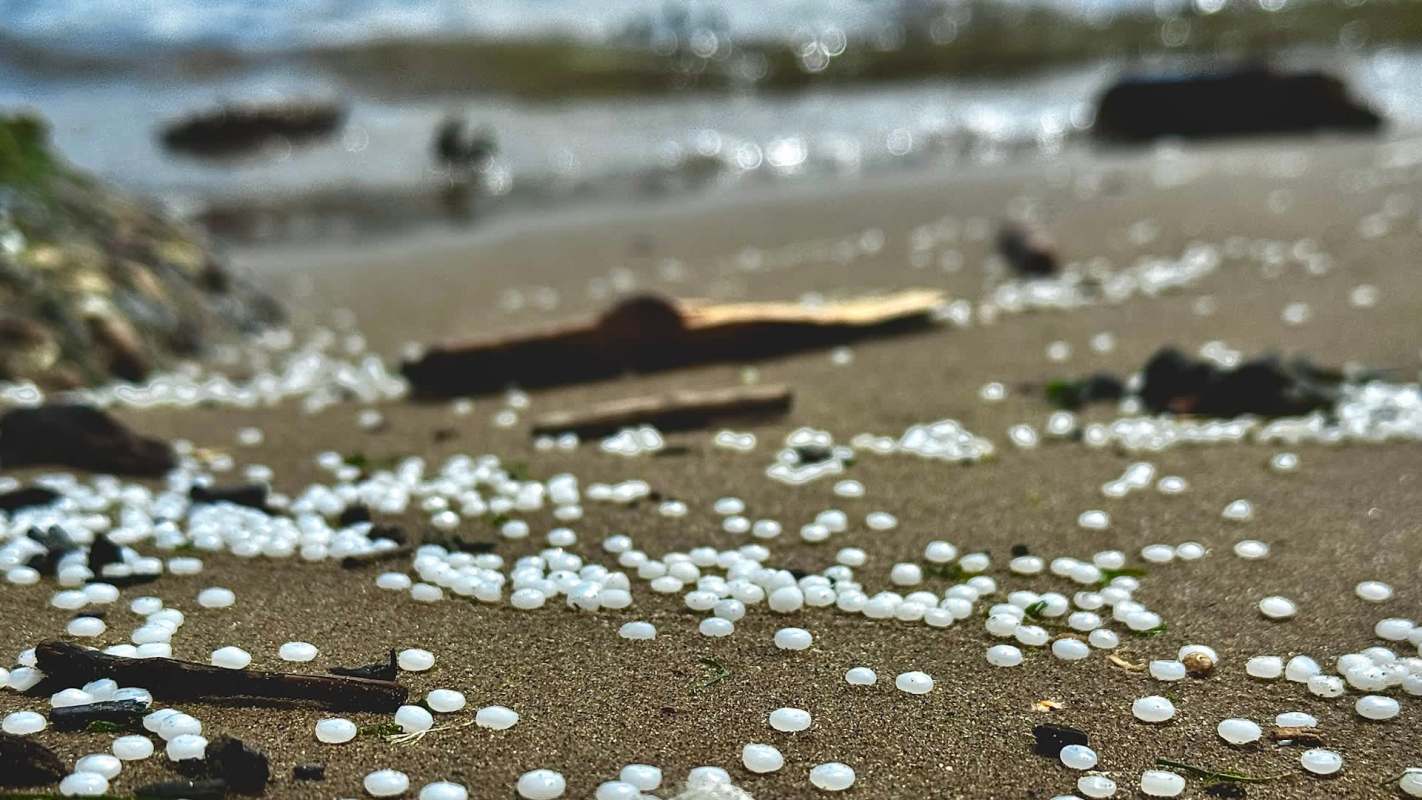
Tiny plastic pellets used to make everyday products are getting a major legal reclassification in Illinois.
Illinois is now the first state in the Great Lakes and Mississippi River watersheds to treat spilled nurdles as pollution.
Here's what to know
Under a new Illinois law, companies that manufacture, use, or transport nurdles must report spills and develop plans to keep the pellets out of stormwater runoff, according to the Detroit News.
Governor JB Pritzker signed the measure after the House passed it 69-33 and the Senate 44-13.
These pellets have shown up in waterways throughout Illinois and across all five Great Lakes.
Nurdles are tiny industrial plastic pellets made by petrochemical plants and used as the raw material for new plastic products, and they can escape from chemical plants, factories, trains, and trucks during production and transport.
TCD Picks » Quince Spotlight
💡These best-sellers from Quince deliver affordable, sustainable luxury for all




Scientists are studying possible links between microplastic exposure and health problems such as heart disease, fertility issues, premature birth, some cancers, and conditions including Parkinson's and Alzheimer's. Fish can also mistake nurdles for food.
State Representative Joyce Mason, the chief House sponsor of the bill, said in a statement, "Plastic pellets may be small, but their impact on our environment, wildlife and public health is significant."
More background
The new law comes as microplastic pollution draws increasing attention across the Midwest, particularly in waterways that feed the Great Lakes and the Mississippi River.
Researchers have already documented how widespread the pellets have become.
TCD Picks » Quince Spotlight
💡These best-sellers from Quince deliver affordable, sustainable luxury for all
Tim Hoellein, a Loyola University biologist who studies microplastics, and his graduate students found nurdles in samples taken from several waterways — including the Calumet, Des Plaines, Illinois, and Rock rivers, as well as the Mississippi stretch between Dubuque and the Quad Cities.
The problem also extends to Lake Michigan, where researchers have found microplastics embedded in beach sand. Some of those particles come from larger plastic waste breaking down in the environment, while others are synthetic fibers shed from clothing and carried through sewage systems.
Environment Illinois, a nonprofit advocacy group that backed the legislation, summed up the challenge this way: "There is no silver bullet solution to address this pervasive problem. Multiple policy changes at the local, state and federal level are needed to combat this."
What's being done?
Illinois' new reporting and prevention requirements are one example of a broader push to stop plastic pollution before it spreads through waterways.
The measure also builds on other plastics-related laws already enacted in Illinois, including requirements for bottle-filling stations at large event forums, a ban on mini-toiletry bottles at hotels, and rules allowing people to bring nonplastic containers from home for takeout food.
Lawmakers are still considering another measure that would prohibit single-use polystyrene food containers across Illinois.
Other governments are taking action as well. California has some of the country's strictest plastic rules, while Ontario and seven U.S. states use "extended producer responsibility" laws that require manufacturers to help pay for cutting packaging waste and strengthening recycling.
The Illinois Manufacturers' Association was neutral on the measure.
Mark Denzler, president and chief executive of the Illinois Manufacturers' Association, said, "We look forward to working with the (Illinois) EPA and stakeholders moving ahead to utilize best practices."
Hoellein offered a stark sense of the scale of the problem: "We find at least 50 or 60 nurdles a week in a plastic trash trap right downtown on the Chicago River."

Get TCD's free newsletters for easy tips, smart advice, and a chance to earn $5,000 toward home upgrades. To see more stories like this one, change your Google preferences here.







