


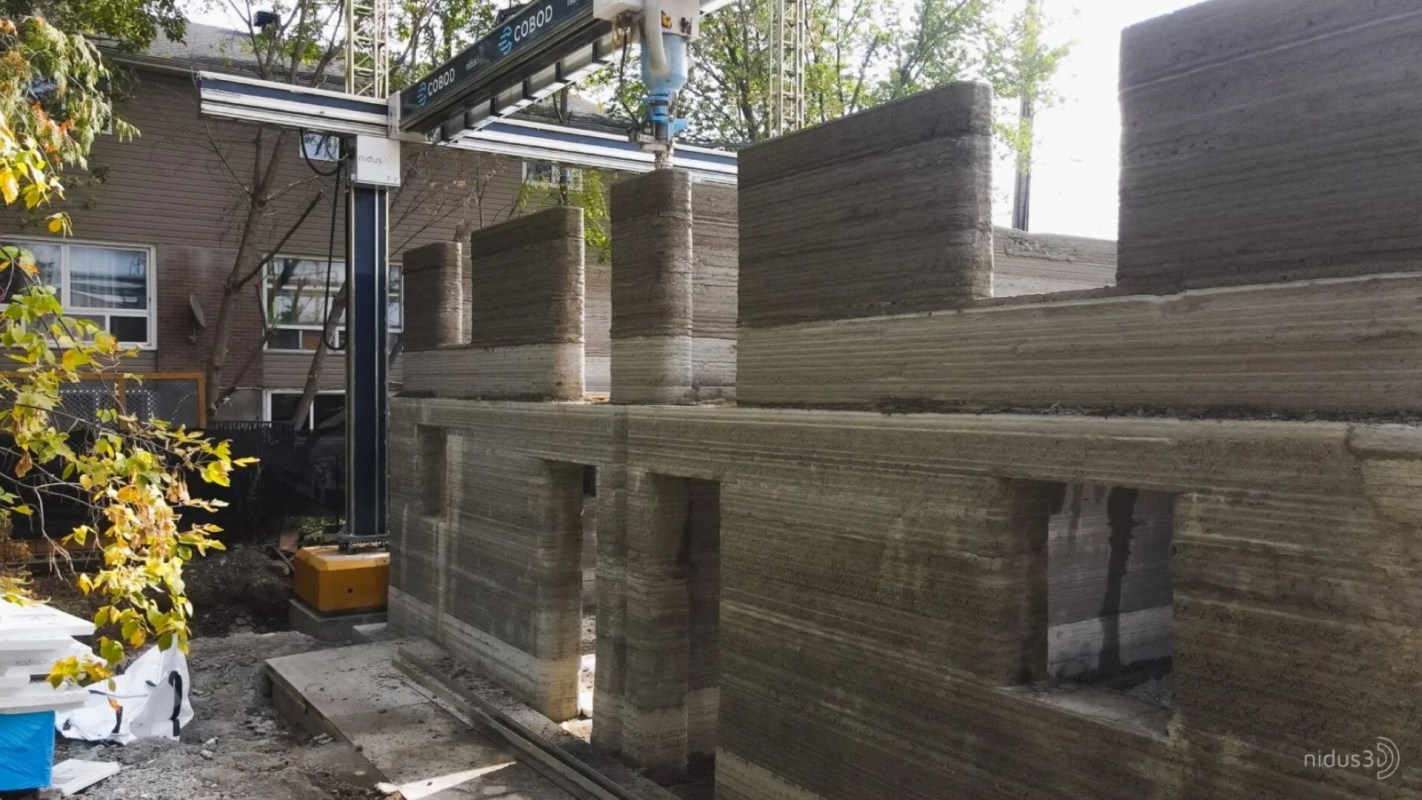
Canadian company nidus3D is continuing to revolutionize the construction industry, using COBOD's technology to build North America's first 3D-printed three-story structure.
As detailed by Archinect News, the 4,500-square-foot Toronto-area townhouse, which contains four residential units, also includes the world's only 3D-printed basement.
"Completing the world's first 3D-printed basement is another impressive achievement that only amplifies the technology's potential to transform construction," COBOD cofounder Philip Lund-Nielsen said in a statement published by Archinect News.
Nidus3D, established in 2021, has been wasting no time in its quest to build affordable housing, partnering with Habitat for Humanity, Queen's University, and others to help deliver low-cost homes around the world.
Just one year after its founding, the Canadian construction company finished North America's first 3D-printed two-story building. Since at least 50% of residential structures in the United States and Canada have two stories, as Archinect News noted, nidus3D believes its processes can help meet demands amid a growing housing crisis.
"Being able to employ new technology to deliver that housing product more predictably and more economically, at a much higher production rate, is critical to meeting our supply requirements," nidus3D founder Hugh Roberts explained for Global News in October 2022.
3D-printed homes aren't just less expensive to construct. They're also better for the environment. According to the UN Environment Programme, the buildings and construction sector is the largest generator of heat-trapping gases at 37%, with the production and use of materials like cement accounting for much of the carbon pollution.
However, 3D printing creates less harmful waste because the technology can accurately gauge how much material each project needs. Shorter build times and a reduced need for hauling materials back and forth also contribute to reduced pollution levels.
COBOD's printer has already garnered praise for its ability to construct energy-efficient, climate-resilient homes. More companies are getting in on the action, too, with Texas-based ICON showcasing its technology at an SXSW event in March, according to Archinect News.
More access to these types of homes could make a significant difference in the lives of lucky occupants, helping to lower their electric bills and protect against extreme weather that has grown more severe because of rising global temperatures.
TCD Picks » Quince Spotlight
💡These best-sellers from Quince deliver affordable, sustainable luxury for all




"It's going to be very interesting to see how the future comes with 3D printing, and it's definitely very exciting to see," heavy equipment operator Jonathan Cunningham told Global News after nidus3D broke ground on the 3D-printed basement.
According to Archinect News, the Toronto-area townhouse is one of the first residentially permitted 3D-printed buildings in Canada.

Join our free newsletter for weekly updates on the coolest innovations improving our lives and saving our planet.
Cool Picks





