


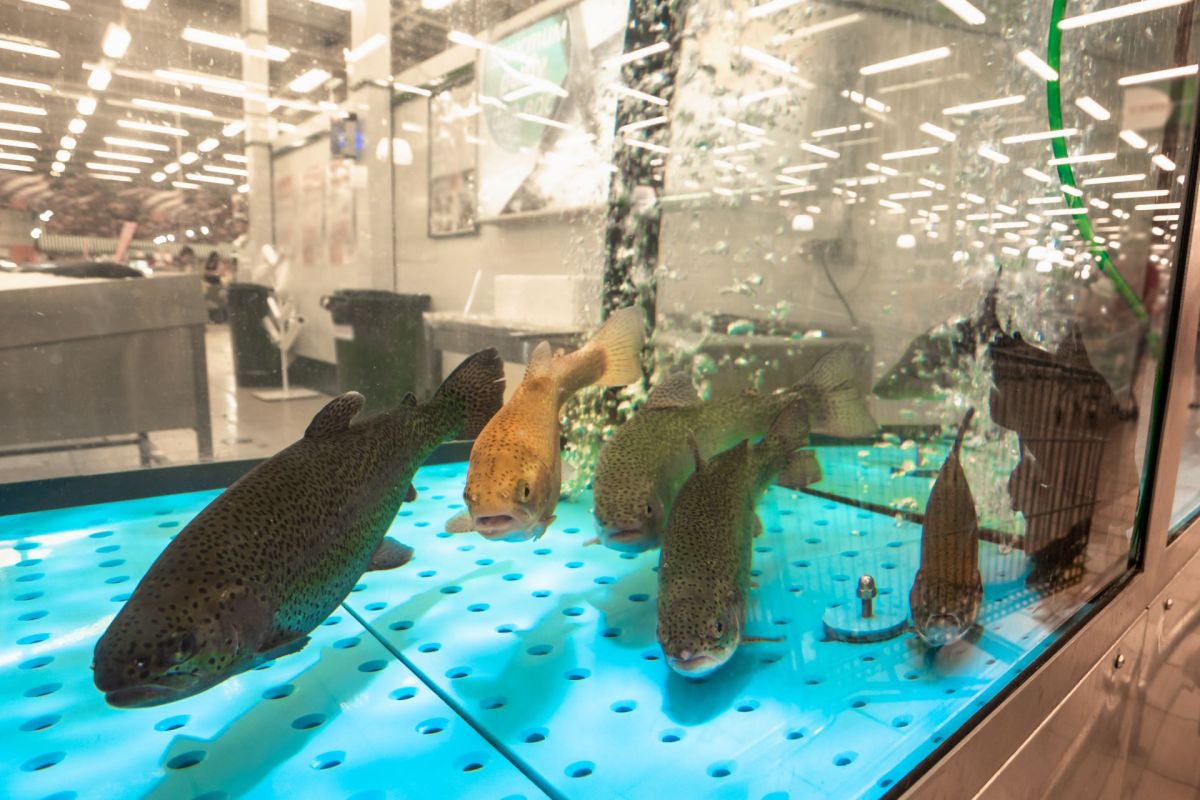
Nanoplastics are disrupting fish's ability to think and make decisions, with troubling implications for ocean food webs.
What's happening?
Scientists from Shantou University, the Chinese Academy of Fisheries Sciences, and Charles Darwin University wanted to find out how tiny plastic particles affect brain function in marine fish.
According to the study, published in the journal Marine Pollution Bulletin, they introduced polystyrene nanoplastics into the tanks of marine medaka, a small fish species, then ran the animals through a maze.
Fish that had been in contact with nanoplastics rushed through choices and stumbled at higher rates than their unexposed counterparts. That kind of impulsive behavior could spell disaster in open water.
"The important things for any animal are reproduction, shelter, and feed," co-author Professor Sunil Kadri from Charles Darwin University's Research Institute for Northern Agriculture said in a statement shared by Phys.org.
"For a fish which has changed its behavior, it may have trouble capturing food and most importantly, have trouble avoiding predators."
A fish that can't dodge a predator or successfully mate faces real survival problems, and those effects multiply across entire populations.
Why is nanoplastic pollution concerning?
Roughly 80% to 85% of ocean trash is plastic, as environmental studies have found. Sunlight and cold water cause it to splinter into increasingly tiny fragments over time. Once those pieces shrink to the nanoscale, they can slip past biological barriers and reach deep into tissues and cells, something that larger plastic fragments cannot.
"Nanoplastics are already widespread, found in oceans, freshwater systems, and even soil, and can move up the food chain, accumulating in living organisms," said co-author Dr. Zonghang Zhang from Shantou University in the statement.
"Given their pervasive presence and potential to accumulate, we cannot afford to ignore them simply because they are 'invisible.'"
TCD Picks » Quince Spotlight
💡These best-sellers from Quince deliver affordable, sustainable luxury for all




|
Which of these savings plans for rooftop solar panels would be most appealing for you?
Click your choice to see results and earn rewards to spend on home upgrades. |
 Save $1,000 this year 💸
 For you, this hits close to home. Fish and shellfish are a dietary staple for billions of people. If nanoplastics are changing how marine life behaves and whether it survives, fishing communities and food supplies feel the consequences.
What's being done about nanoplastic pollution?
Professor Kadri urged governments to pair plastic pollution policy with protections for marine ecosystems and fisheries.
You can cut your plastic footprint by swapping single-use items for reusable bags, bottles, and containers. Recycle properly and choose products with minimal packaging to keep more plastic out of waterways.
Outside of your own habits, contact your local representatives and voice your support for stricter rules on plastic waste and marine conservation.

Get TCD's free newsletters for easy tips to save more, waste less, and make smarter choices — and earn up to $5,000 toward clean upgrades in TCD's exclusive Rewards Club.
Cool Picks





