


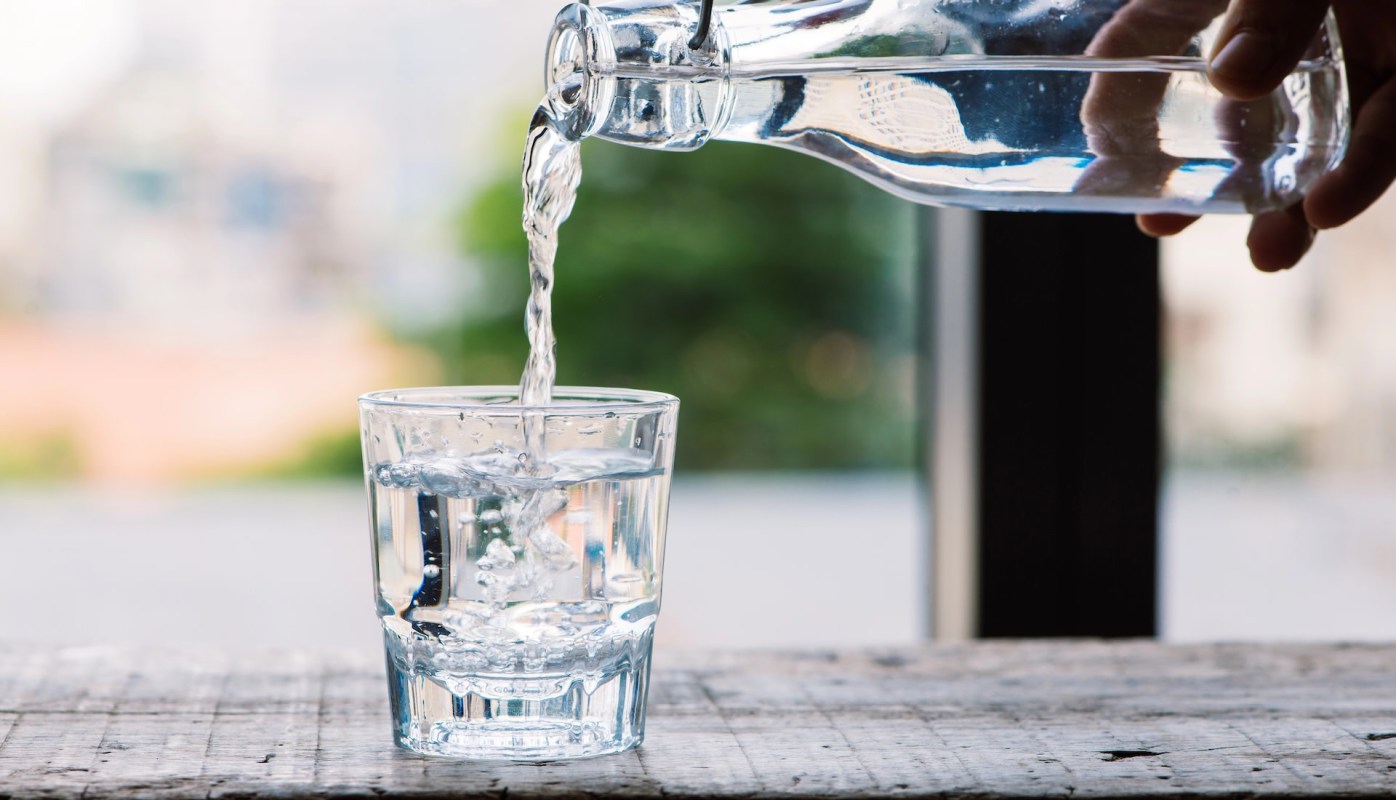
One of the most pressing issues of our time is water scarcity. One study published in the journal Science found that four billion people don't have reliable access to safe drinking water.
Moreover, according to the World Health Organization, nearly 850 million people don't even have access to a basic drinking water service.
Unfortunately, experts warn that deteriorating water conditions due to a warming climate (which contributes to desertification) and deforestation are some factors exacerbating the crisis.
However, researchers from Drexel University have announced an ambitious three-year project that could lead to quicker production times for potable water and ultimately save lives.
The $5 million multinational collaboration with the United Arab Emirates' Khalifa University, Italy's University of Padua, and manufacturing company Carbon-Ukraine will focus on the development of MXene nanomaterials. Yury Gogotsi, PhD, and his partners at Drexel's College of Engineering first discovered the nanomaterials and began testing in 2011.
The versatile, two-dimensional nanomaterials have a range of applications, according to Drexel researchers, including in telecommunications, energy storage, and electromagnetics. The team is particularly excited about MXenes' potential to make more drinking water because the materials have an "exceptional acuity for liquid filtration and ion separation."
The collaboration, also known as MX-Innovation, intends to leverage these properties to develop more advanced desalination technology known as hybrid capacitive deionization.
Other experiments with hybrid capacitive deionization, or HCDI, suggest this method could provide more efficient, cost-effective, and environmentally friendly salt-removal capabilities, according to studies in the journals Desalination and Environmental Engineering Research.
"Our preliminary results show that the MXene electrodes with bi-stacked architecture exceed the salt removal performance demonstrated by nanostructured carbon electrodes," said Yuan Zhang, PhD, a postdoctoral researcher in the Nanomaterial Institute, per a press release.
MX-Innovation — funded by Khalifa's Research & Innovation Center for Graphene and 2D Materials (RIC2D) — will also examine how MXene nanomaterials may be able to improve diagnostic techniques to support better health outcomes for cancer and transplant patients. The researchers hope to remove barriers to commercial-scale production of MXene by 2028.
TCD Picks » Upway Spotlight
💡Upway makes it easy to find discounts of up to 60% on premium e-bike brands





|
Do you feel safe drinking the tap water where you live? Click your choice to see results and speak your mind. |
 Always 👍
 "The partnership between Khalifa University and Drexel University is well-aligned, as both institutions share a strong focus on commercializing the research," said RIC2D senior director and professor Hassan Arafat. "These solutions are critically important for the UAE and the broader region, and the project promises to deliver meaningful global impact."
"Exploring MXene applications at a greater scale will certainly expand the capabilities of this family of materials and offer vital opportunities to people in need of more drinking water and address crucial clinical research and medical diagnostics needs," added Gogotsi. "This effort is timely and further emphasizes the importance of the work we are doing with MXenes."

Join our free newsletter for weekly updates on the latest innovations improving our lives and shaping our future, and don't miss this cool list of easy ways to help yourself while helping the planet.
Cool Picks





