


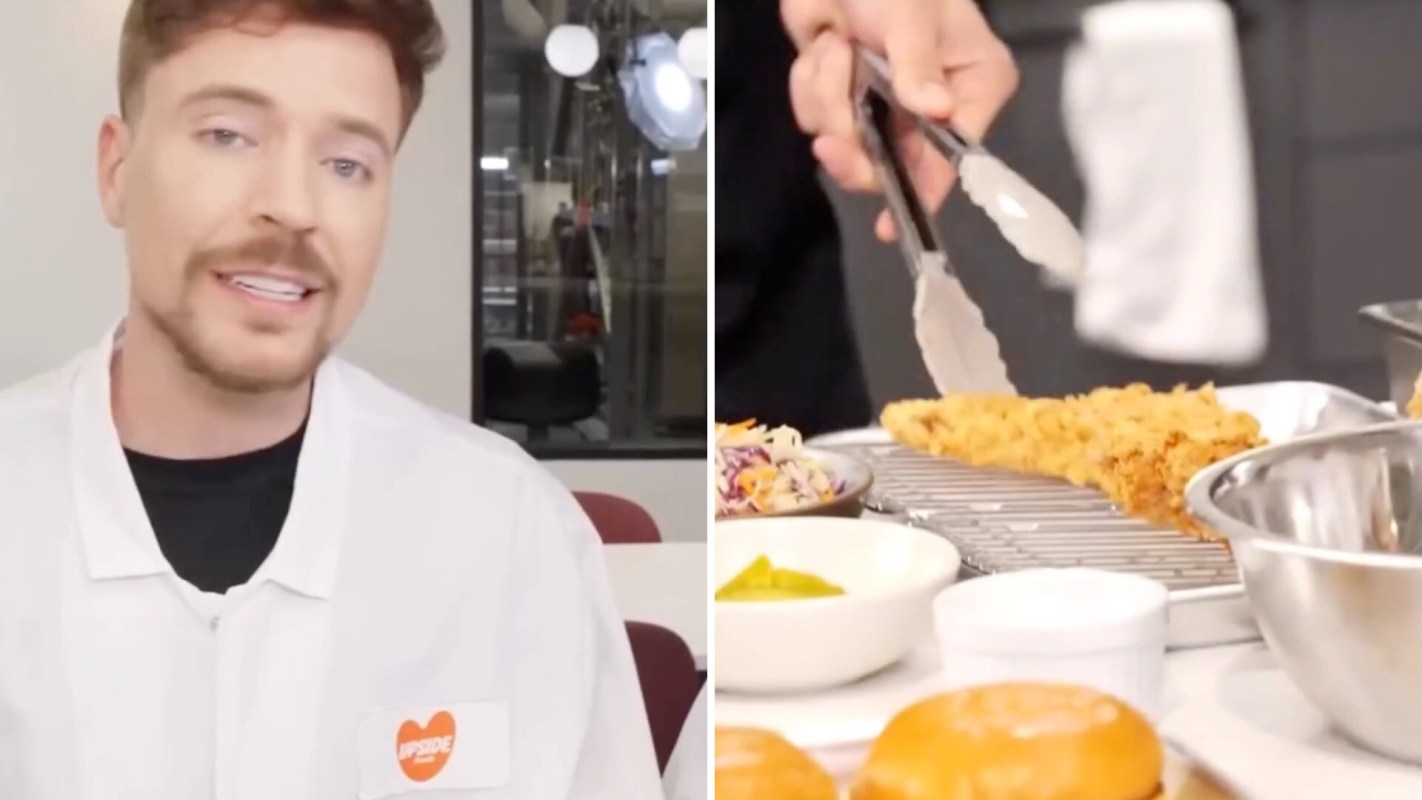
Upside foods has now become able to produce over 1 million pounds of chicken per year without killing a single chicken, and in a taste test, YouTuber MrBeast was unable to distinguish cultivated chicken from conventional chicken.
Here's what to know
Upside Foods reported an annual production capacity of more than 1 million pounds of chicken grown without animal slaughter, according to TechCrunch. The company said it has expanded its production scale ten thousandfold.
The increased output tackles a central problem for cultivated meat producers, who need to supply enough meat at prices consumers will accept.
Upside Foods CEO Dr. Uma Valeti expected MrBeast, real name Jimmy Donaldson, to pick out the conventional chicken when he visited the facility for a video on future tech. The 11-year-old company hosted the creator and his video crew for the comparison earlier this year, with videos posted by both the MrBeast channel and Upside's.
"I was like, 'Oh my gosh, what is he going to say?'" Valeti told TechCrunch. "I thought he would maybe say a nice thing here and there but he would get it right. But he didn't."
Valeti told TechCrunch that Upside's chicken costs about as much as "really high-quality organic chicken." That contrasts with the $300,000 required to produce the first lab-grown hamburger in 2013 — though as Donaldson says, over $200 million of research and development went into Upside to get to this point, not to mention being able to build on some of that prior work in the field.
TCD Picks » Quince Spotlight
💡These best-sellers from Quince deliver affordable, sustainable luxury for all




With that in mind, lab-grown meat could one day become a cheaper alternative with no molecular difference and theoretically less risk for disease and environmental contamination, along with fewer concerns around animal treatment, as many researchers in the field say.
More background
According to alternative-protein nonprofit the Good Food Institute, feeding the world conventional meat in 2050 would take the resources of 5.5 Earths, TechCrunch reported. The United Nations projects a population approaching 10 billion that year.
As Donaldson says in the videos, over 200 million chickens are killed every day for meat production, figures backed up by Our World in Data, and everything that goes into that requires massive resources.
"We use less water, less land, less energy," Valeti said. "The power of this technology is you protect the choice of eating what we love, but we can also protect everything else we love about protecting life, and the environment, and animal welfare."
Upside also said its cultivation process helps limit antibiotic resistance and contamination from Salmonella and E. coli alongside lowering cholesterol and saturated fat.
A 2021 estimate put Americans' annual chicken consumption at about eight billion birds, a market Upside hopes to help supply through a different production method.
What's being done?
Valeti told TechCrunch that Upside had secured another round of clearances from the Food and Drug Administration and Department of Agriculture. The company also announced that several California restaurants would serve its chicken.
The company has also worked to improve how its chicken performs on the plate. The product includes olive oil, pea fiber, and soy protein isolate, additions that Upside said increase its nutrient density per dollar spent without changing its flavor. In other words, for now at least, the company is including some of the same techniques as plant-based companies like Beyond Meat in order to achieve more affordable prices per pound yet still providing a product that is mostly true meat.
To evaluate the taste, Valeti said he turned to acclaimed chefs Thomas Keller and Nancy Silverton. Their feedback gave the team more confidence that the chicken would work in dishes people already enjoy.
Those culinary checks complement the production experiments that Valeti credits with helping Upside expand its capacity.
"Unless we show it at the largest scale possible that anybody has done, no one is going to believe us," Valeti said, per TechCrunch.

Get TCD's free newsletters for easy tips, smart advice, and a chance to earn $5,000 toward home upgrades. To see more stories like this one, change your Google preferences here.






