


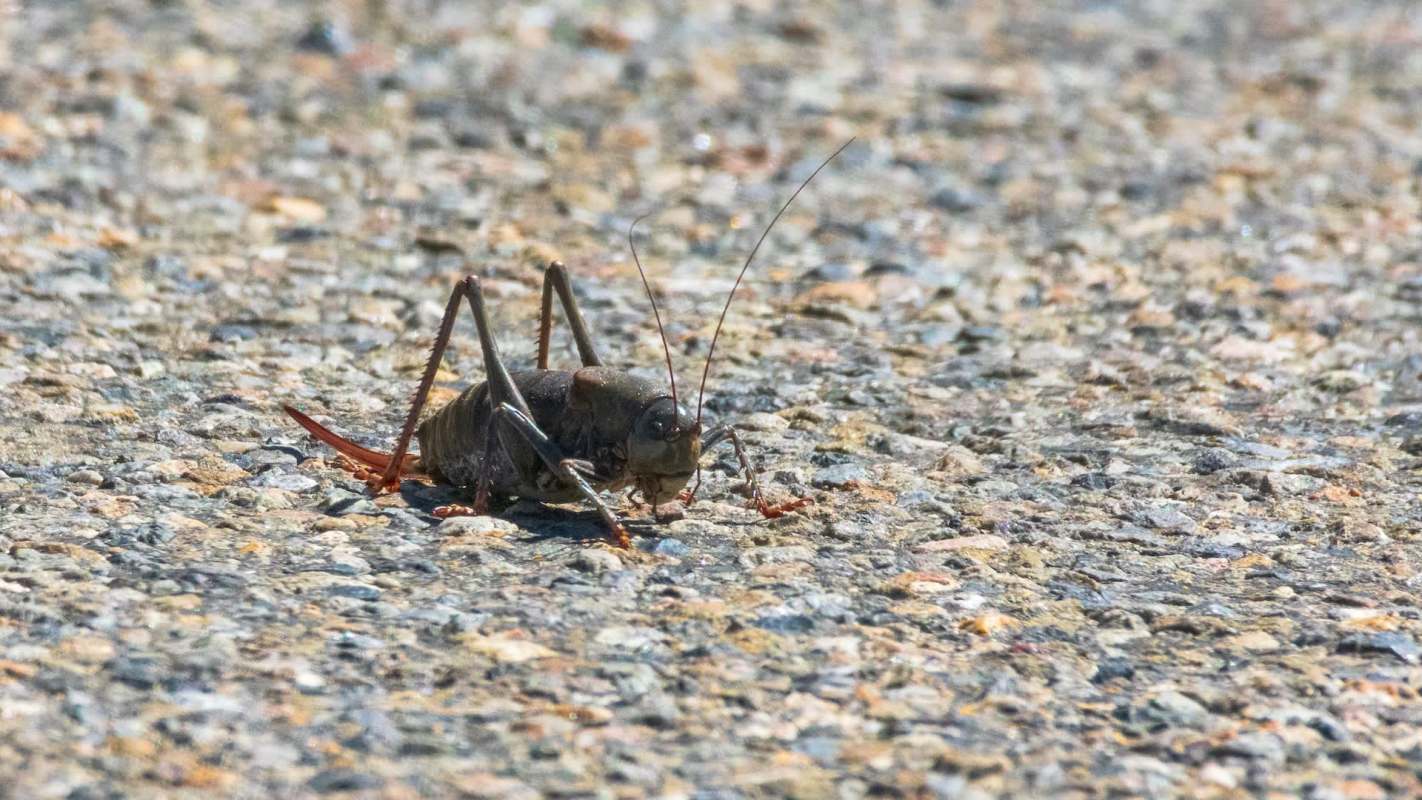
On Highway 140 in Southern Oregon, summer drivers are running into an unusually nasty problem: Mormon crickets are being crushed in such large numbers that the pavement is getting slick and the air reeks.
Most of the reports are coming from around Adel, a few miles east of Lakeview, where swarms have become a headache that has drawn complaints from residents and attention from federal officials, according to Oregon Public Broadcasting.
What's happening?
This year, the insects have spread over both public and private land near the unincorporated community of Adel. Officials say Lake County hasn't dealt with Mormon crickets (which are actually katydids, not true crickets) before now, even though other parts of Eastern Oregon have seen similar outbreaks before.
The biggest issue so far is along the roadside. Officials say the insects are not causing major damage, but they are clustering on warm pavement and being run over in huge numbers.
BLM spokesperson Joey Nikirk said, per Oregon Public Broadcasting: "The crickets are causing nuisance conditions where they are creating road hazards due to large densities over the road and associated odor from crickets that have been run over [by motor vehicles]."
Despite their name, the insects are native to Oregon and much of the American West. The term "Mormon cricket" goes back to the mid-1800s, when they destroyed crops grown by Mormon settlers in Utah, per Washington State University.
TCD Picks » Quince Spotlight
💡These best-sellers from Quince deliver affordable, sustainable luxury for all




Why does it matter?
The aftermath creates two immediate problems: bug-covered pavement can become slippery, and the smell is hard to ignore.
The swarms are also a reminder of how development keeps pushing into the crickets' habitat. A similar outbreak in Elko, Nevada, prompted a state entomologist to note that as people move further into the insects' native range, encounters like these become more likely.
Oregon has already seen how severe these outbreaks can get. In 2021, state agriculture officials estimated Mormon crickets had spread across more than 10 million acres of rangeland in 18 counties, the state's most severe outbreak in years. Their numbers can spike in warm, dry years, and they feed on wheat, barley, alfalfa, and garden vegetables.
Because alfalfa and grasses feed livestock, losses in these crops can affect not just ranchers but also local economies and food supplies.
What's being done?
The Lakeview BLM office is working with the U.S. Department of Agriculture to respond to the swarms. This year, crews turned to carbaryl-based bait, which targets the insects' nervous systems.
That differs from past control efforts, which often relied on diflubenzuron, an insecticide that prevents nymphs from developing into adults. Environmental groups fought that chemical in court, arguing it could harm bees, butterflies, moths, beetles, and aquatic invertebrates. Oregon Public Broadcasting also reported that a Portland court found that the agency had violated environmental law by failing to weigh other options.
Nikirk said the roadway keeps drawing the insects back for a grim reason: "They are also attracted to protein and salt sources [from] other dead crickets on the road surface."

Get TCD's free newsletters for easy tips, smart advice, and a chance to earn $5,000 toward home upgrades. To see more stories like this one, change your Google preferences here.






