


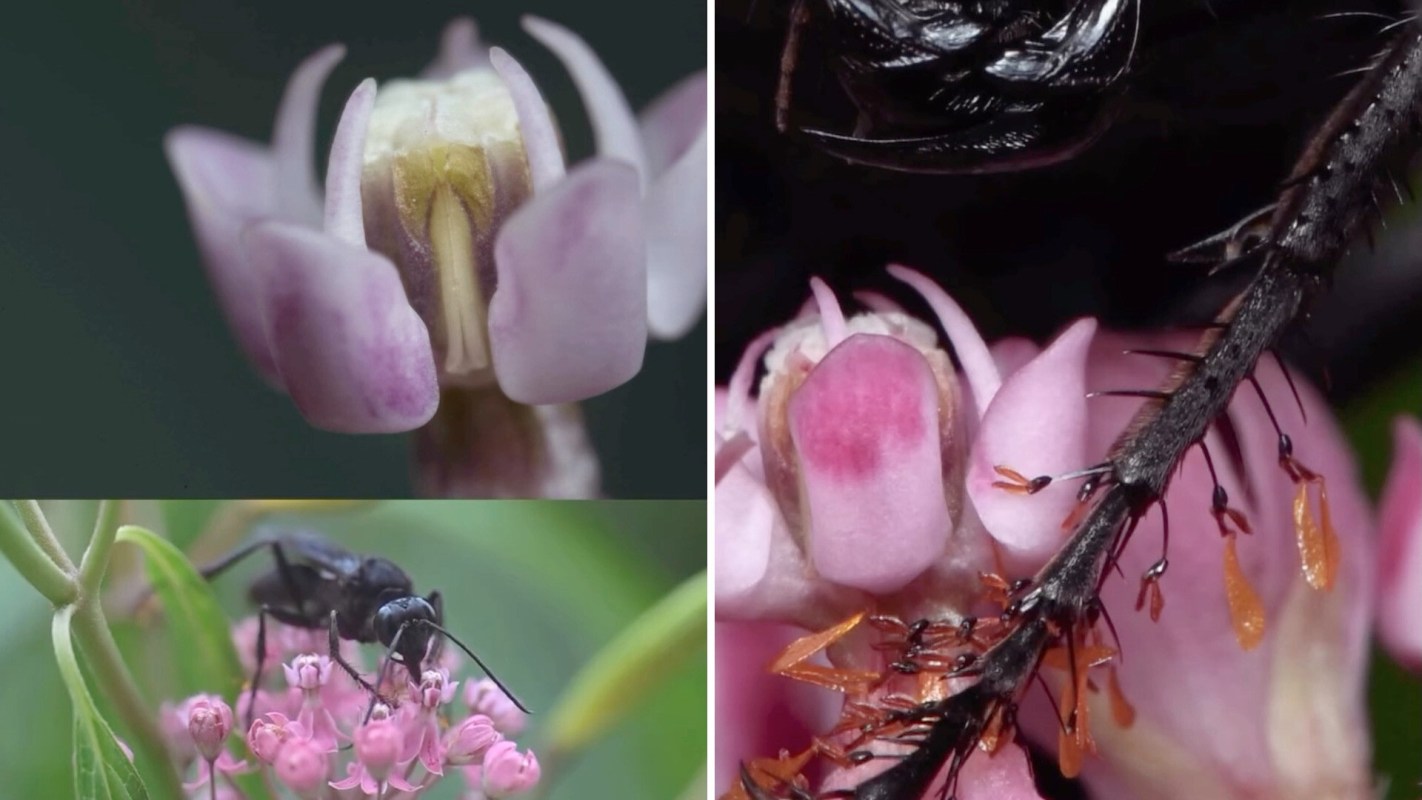
A slow-motion garden video from Pennsylvania is giving viewers a rare look at an unusual pollination exchange: a milkweed flower clips waxy pollen packs onto a great black wasp as it drinks nectar.
The close-up interaction turns an easy-to-miss backyard moment into a reminder that some native plants and insects are engaged in far more complex relationships than they first appear.
Here's what to know
In an Instagram post shared by photographer Scott Keys (@skeysimages), the action is slowed to one-tenth speed, showing a great black wasp on swamp milkweed just as the flower's concealed pollination mechanism catches on its leg.
Rather than dusting visitors with loose pollen, milkweed keeps waxy, connected pollen bodies known as pollinia inside narrow openings called stigmatic slits.
When the wasp reaches in for nectar, a leg may slide into one of those openings and come back out carrying the pollen.
Because great black wasps are comparatively large at roughly one to two inches long, the clip makes the mechanism easier to see. It shows them using their legs to pull the flowers inward while they feed.
TCD Picks » Quince Spotlight
💡These best-sellers from Quince deliver affordable, sustainable luxury for all




The system is not without danger: smaller or weaker pollinators may become trapped if a leg cannot be pulled free.
One commenter said, "So I've watched bees get stuck on milkweed flowers. This would explain it!"
More background
Although milkweed is best known for its blooms, Keys said, "They don't produce pollen like other plants" and instead depend on larger insects to carry these waxy structures from flower to flower.
The footage shows the great black wasp taking nectar while also helping the plant reproduce.
The interaction was filmed on a one-acre property in eastern Pennsylvania that includes more than 200 native species.
Another commenter wrote, "Really, really appreciate the beautiful slowed down image and your explanation. I love that there is so much to learn, change our understanding of plants, pollen and wasps so cool."
What can be done?
Native plantings can create nectar sources and habitat for a wide range of pollinators, including insects people may overlook.
This footage shows that at least some wasps are active participants in pollination, not just incidental garden visitors.
A milkweed patch is not just decoration; it can function as a miniature ecosystem.

Get TCD's free newsletters for easy tips, smart advice, and a chance to earn $5,000 toward home upgrades. To see more stories like this one, change your Google preferences here.






