


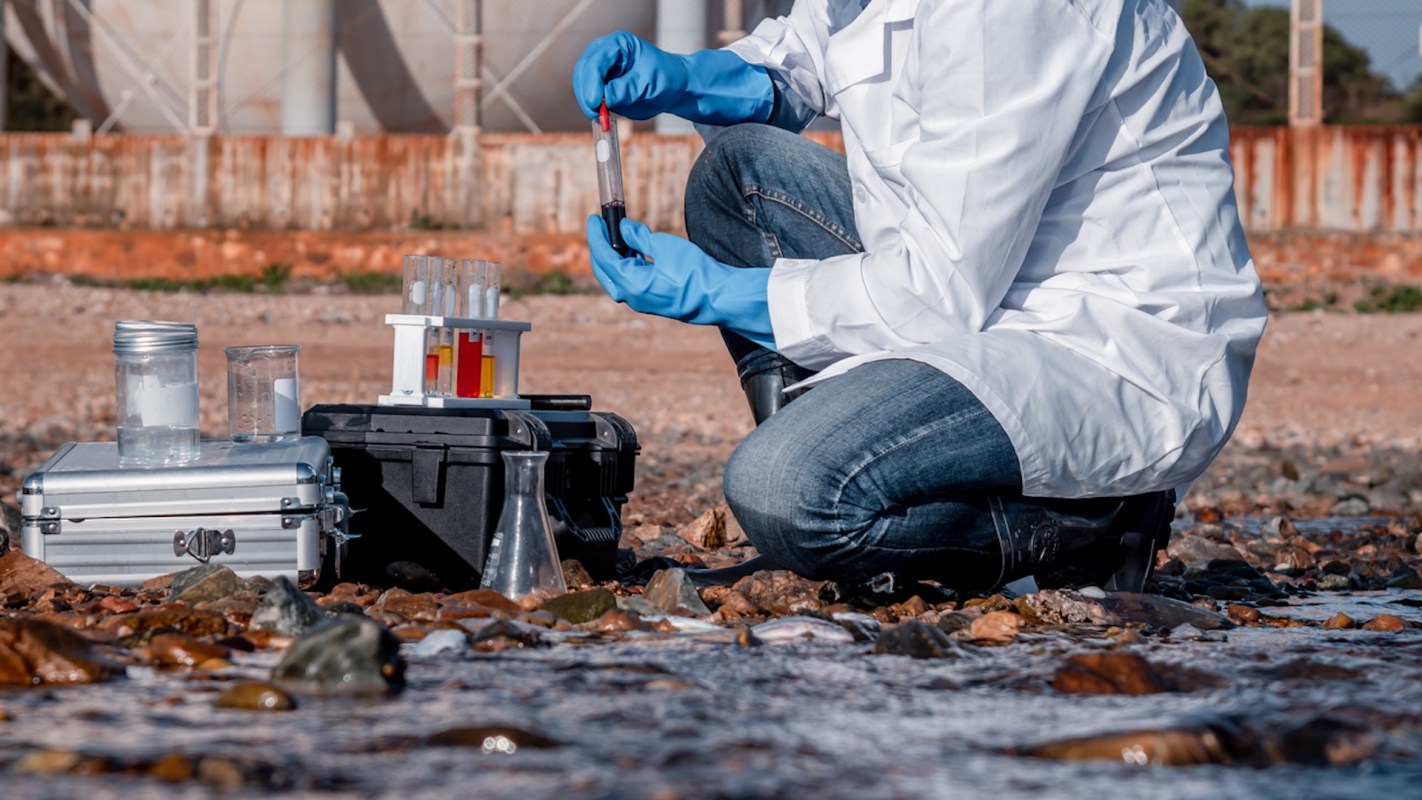
Researchers trying to collect plastic with magnets might at first seem to be part of a misguided effort.
But on the microscopic level, plate-shaped iron-oxide magnetic nanoparticles can attract and collect harmful microplastics from water in minutes, according to The Straits Times.
That's why experts from Pusan National University are studying the method's filtration potential. Success could deliver a way to prevent microplastics from invading our bodies through water.
"Nanoplastics measuring tens to hundreds of nanometers have emerged as a new environmental threat, but filter-based methods struggle to remove them," research lead Chung Sung‑wook said, per the publication.
Microplastics are the remains of plastic produced each year that take decades or centuries to degrade, turning into nano-sized pieces along the way.
Photos shared by the United Nations provide terrible evidence of the waste's repercussions — heaps floating in oceans, mountains of it on land, and polluted beaches — often in developing countries.
On the nano scale, plastics are entering human bodies at an astonishing rate. PBS reported that an average liter bottle has 240,000 particles, and a World Wildlife Fund study found that an average person could be ingesting a credit card's worth of plastic a week.
Additionally, the World Economic Forum noted that heart attacks, strokes, and Alzheimer's disease are among the material's associated health risks.
That's why enzymes that digest plastics, and filters that capture them before they become a problem, are in development in other labs.
The Pusan breakthrough uses a magnetic field to purify drinking water and wastewater systems. The plate-like particles cluster together when exposed to an external magnetic field, creating more contact area to trap microplastics.
TCD Picks » Quince Spotlight
💡These best-sellers from Quince deliver affordable, sustainable luxury for all




|
What's the most you'd pay per month to put solar panels on your roof if there was no down payment?
Click your choice to see results and speak your mind. |
 $200 or more 💰
 The particles are chemically modified to attract more of the pollutants. The plates can be magnetically removed, cleaned, and reused. This makes the process more cost-effective and environmentally friendly.
Impressively, 95% of microplastics can be collected in 10 minutes. The team bills it as a scalable system — from nanoparticle design to recovery — for water treatment systems.
"This offers a way to clear ultra-fine contaminants quickly and at high efficiency," Chung said.
Consumers can help to reduce the plastic waste burden by choosing sustainable alternatives. Reusable grocery bags are a great place to start. Plastic ones are hard to recycle and are prone to breaking. Durable cloth totes are more reliable, and they provide a way to cut waste without the headache of a grocery spill.

Get TCD's free newsletters for easy tips to save more, waste less, and make smarter choices — and earn up to $5,000 toward clean upgrades in TCD's exclusive Rewards Club.
Cool Picks





