


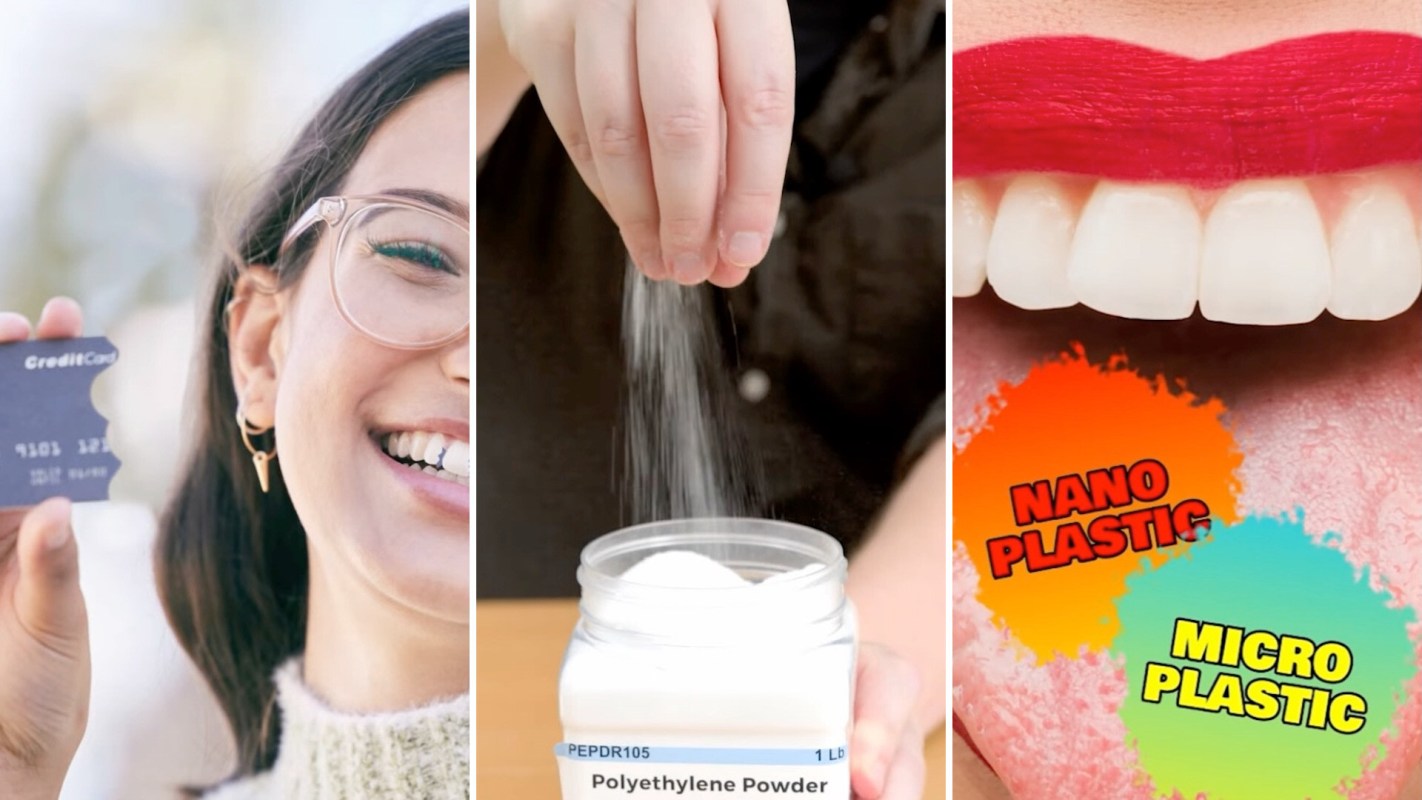
That "credit card a week" claim about plastic consumption is catchy, but the math behind it may be far less solid than many people realize.
In a video analysis for EcoBits (@EcoBitsOfficial), content creator Justin Pack argues that while people are still ingesting microplastics, the amount is likely nowhere near that often-repeated estimate.
Here's what to know
In Pack's YouTube investigation, he reviewed studies that have found plastic particles in water, seafood, meats, fruits and vegetables, salt, milk, and beer.
Researchers generally define microplastics as particles up to about 5 millimeters, while nanoplastics are smaller than roughly 1 micrometer, and those tiniest particles are the hardest to measure consistently.
Pack highlighted a 2024 study that analyzed 111 samples from 16 protein products sold in the United States, including steak, pork chops, chicken breast, shrimp, tofu, chicken nuggets, and fish sticks. In that study, researchers reported microplastics in 88% of the individual samples and in every protein category they examined.
Using food consumption data from nearly 2,000 U.S. adults, the researchers estimated yearly intake from 13 protein products at about 11,000 microplastic particles on average, with a median of roughly 4,300, Pack said.
TCD Picks » Quince Spotlight
💡These best-sellers from Quince deliver affordable, sustainable luxury for all




He argues that converting counts like those into a credit card comparison depends on particle size and weight assumptions that newer analyses do not support.
More background
Exposure can begin long before food reaches the table. Pack said farm soil may already contain plastic from degraded mulch, irrigation equipment, litter, sewage sludge, and compost. He noted experiments that traced nanoplastics through crops including tomatoes.
The kitchen can add more. Pack cited an experiment in which some plastic containers, after three minutes in the microwave, released millions of microplastics and billions of nanoplastics from each 0.16 square inch (1 square centimeter), and he said plastic cutting boards can shed fragments as repeated knife use wears down their surfaces.
Beverages can change the totals significantly. Pack cited a 2019 estimate that drinking the recommended daily amount of water entirely from bottled water could add about 90,000 detectable microplastic particles per year to 4,000 from tap water.
Researchers are still trying to pin down the health implications. Pack noted that micro- and nanoplastics have been found all over the body, and he pointed to an observational study in which patients whose arterial plaques contained plastic were about 4.5 times more likely to experience a heart attack, stroke, or death over about three years.
What can be done?
For the most avoidable sources of exposure, Pack recommends focusing on household habits like avoiding heating food in plastic, using glass or ceramic when possible, skipping pouring boiling liquids into plastic containers, and swapping plastic cutting boards for wooden ones.
He also advises washing produce, choosing tap water when safe, and favoring foods with fewer processing and packaging steps.
Even so, Pack emphasized that this is not something consumers can solve simply by shopping differently. He pointed to broader fixes such as reducing unnecessary plastic production, keeping plastic out of compost and sewage sludge, filtering microfibers from wastewater, and redesigning food-processing equipment and packaging.
"You can't completely eliminate microplastics from your diet, but you could reduce some of the most avoidable sources," Pack suggested.
Where can I learn more?
Here's a closer look at where microplastics come from and why estimates of human exposure keep changing.
• Scientists are still debating how worried we should be as plastics reach blood and organs.
• Researchers estimate plastic packaging sheds roughly 1,000 tons of microplastics into food and drinks yearly.
• Swapping bottled water for tap water may lower blood pressure in days by reducing plastic exposure.

Get TCD's free newsletters for easy tips, smart advice, and a chance to earn $5,000 toward home upgrades. To see more stories like this one, change your Google preferences here.






