


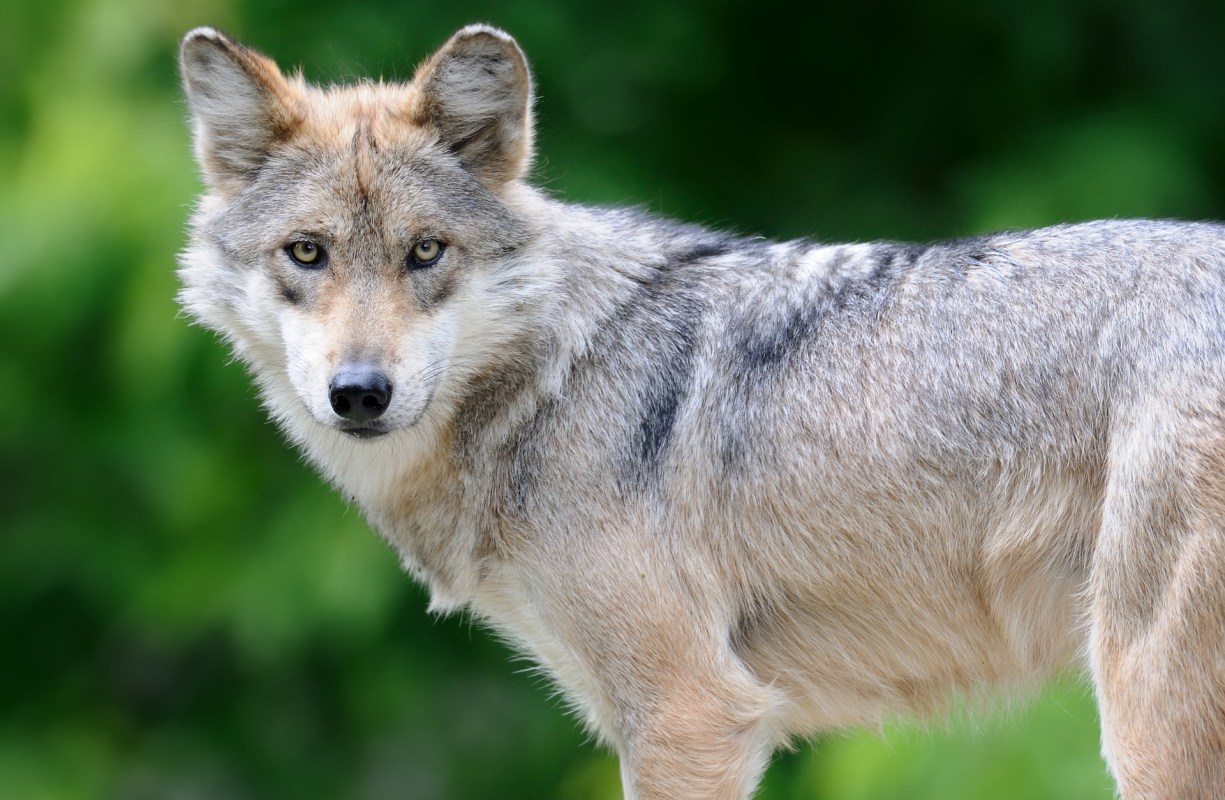
Eight Mexican gray wolves just took an unusually glamorous trip for a conservation mission: a chartered flight to Durango, Mexico, for a wild release.
For wildlife advocates, the moment was worth celebrating. But experts have said it also shows how much work remains to keep the species from sliding back toward extinction.
What's happening?
In April, two Mexican gray wolf families were transported to Durango and released into the southern edge of the species' historic range, according to the Arizona Republic.
Conservationists have said the move is a major step toward rebuilding the wolves' wild population and improving the species' genetic health.
Greta Anderson, deputy director of the Western Watersheds Project, said the release carries special significance. She told KJZZ's The Show that Durango was where lobos — the Spanish word for "wolf" that most commonly refers to the Mexican gray wolf — were last known in the wild before the remaining animals were taken to the United States for captive breeding in the 1970s.
As Anderson said, every living Mexican gray wolf traces back to just seven founders. That makes genetic diversity one of the biggest challenges facing the recovery effort.
TCD Picks » Quince Spotlight
💡These best-sellers from Quince deliver affordable, sustainable luxury for all




Anderson noted that one of the released wolves, Yahve, has had a particularly difficult path, moving between captivity and the wild multiple times after conflicts involving livestock. She was released in Durango alongside her mate, Wander, and their pups.
The release is encouraging, but experts noted that the species is still far from secure. Under the recovery plan, Mexican gray wolves cannot be delisted unless, as Anderson told KJZZ, both the United States and Mexico have stable wild populations — and Mexico's population is not yet close to that point.
"Well, we're getting close if you look at the numbers," she said. "But if you look at the genetics of the species, there's still a long way to go."
Gray wolves are on the rebound in the U.S., with bright spots in Oregon and Colorado showing promise for the reintroduction effort.
Numbers alone do not tell the whole story. Anderson added that the captive population remains more genetically diverse than the wolves currently living in the wild, meaning the recovery effort is racing against time to get those genes into free-ranging packs.
Why does it matter?
A genetically narrow population is more vulnerable to disease, inbreeding, and long-term decline. In other words, even if wolf counts rise, the species could still face serious risks if its gene pool remains too limited.
The issue also shapes ongoing debates across the Southwest, where wolf recovery has collided with livestock concerns and political efforts to weaken protections before scientists say the species is ready.
For conservation groups, the Durango release offers a model for what should happen next. More translocations and more releases of bonded family groups rather than isolated animals should give wolves a better chance of adapting and reproducing successfully in the wild.
Anderson said that approach is especially important now, while the overall wild population is still relatively small. The longer managers wait, the harder it becomes for newly introduced wolves with more diverse genes to influence the broader population.
"There is still greater genetic diversity in the captive population than there is in the wild population," Anderson said. "Absolutely, the clock is ticking."
She added, "We need to see more releases and quick."
What's being done to help?
That urgency is shaping calls for additional science-based releases in both Mexico and the United States. Supporters have argued that management decisions should be driven by recovery goals and genetics, not by political pressure from anti-wolf lawmakers or industry interests.

Get TCD's free newsletters for easy tips, smart advice, and a chance to earn $5,000 toward home upgrades. To see more stories like this one, change your Google preferences here.






