


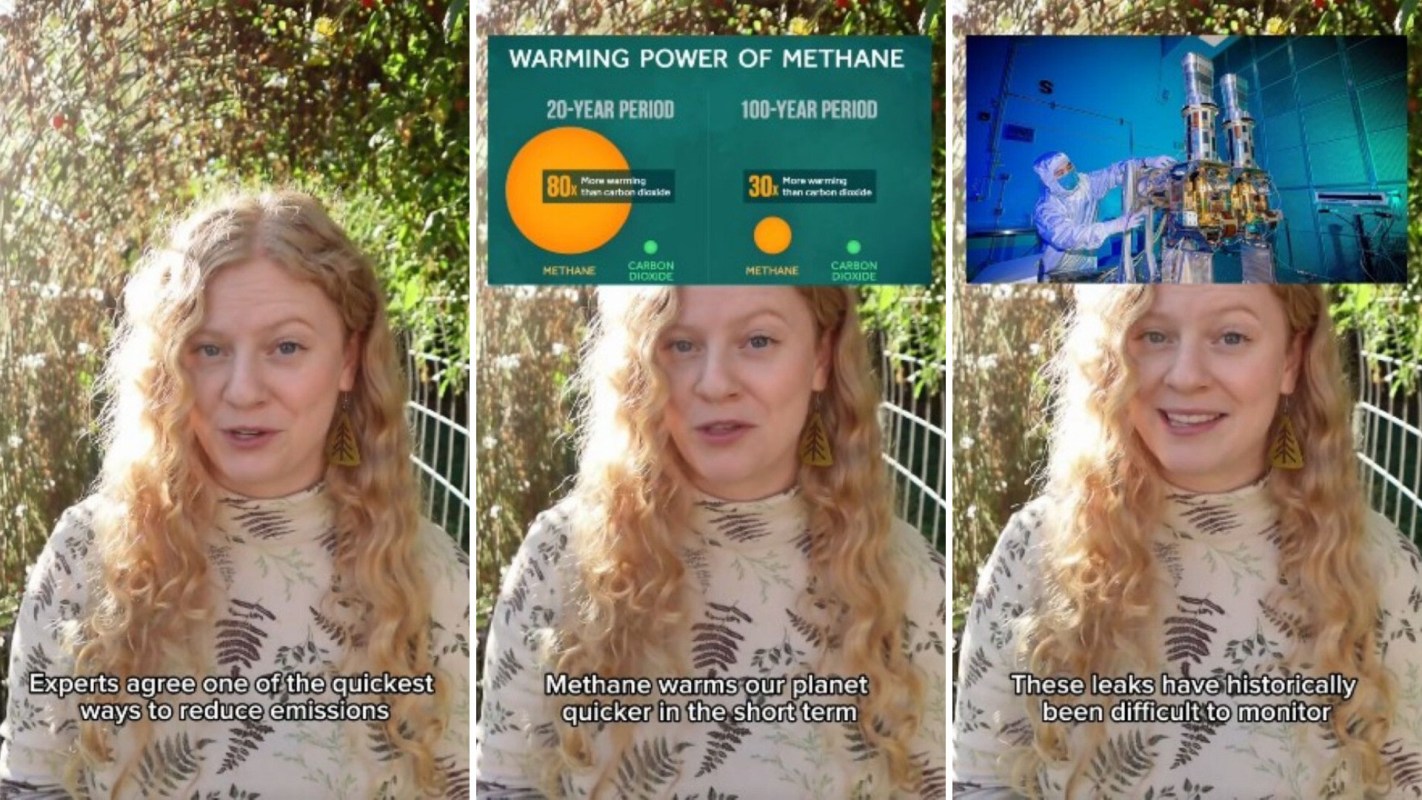
A creator with experience tracking methane at landfills is drawing attention to a less flashy climate measure: fixing leaks from oil, coal, and gas infrastructure.
Here's what to know
In a TikTok video, Alaina Wood (@thegarbagequeen) presented methane leak repairs at fossil fuel sites as a fast way to cut emissions.
She said, "Experts agree one of the quickest ways to reduce emissions is to plug methane leaks at fossil fuel infrastructure."
She explained that methane "warms our planet quicker in the short term than carbon dioxide," making it especially important for near-term climate action.
@thegarbagequeen I used to monitor methane emissions at landfills, so I know way more about methane than I would like 😵💫
♬ original sound - Alaina Wood
In addition to fossil fuel systems being a major methane source, Wood cited animal agriculture and organic waste breaking down in landfills. She said emissions can come from the entire network, from "mines and wells to pipelines and refineries."
According to Wood, one reason the problem has been hard to measure is that methane is invisible and, in her words, "the fossil fuel industry has a tendency to cover them up." To illustrate how that changed, she pointed to methane SAT, a satellite system that tracked methane emissions globally in real time for a time.
TCD Picks » Quince Spotlight
💡These best-sellers from Quince deliver affordable, sustainable luxury for all




Wood said that brief monitoring effort showed methane leaks from fossil fuel infrastructure were "far more underreported than previously thought."
More background
Coal- and natural-gas-fired power plants can harm nearby residents and communities through air and water pollution.
Delays in wind, solar, and other alternatives can prolong reliance on systems that release both planet-warming pollution and contaminants that harm human health.
Methane acts as a short-term climate accelerant. If the gas is leaking at levels far above what has been reported, those unsealed sites could be worsening the heat, weather instability, and pollution burdens communities already face.
What's being done?
The creator argued that bringing the program back should be a priority, saying that the world needs ways "to restart the methane SAT program in order to stop these methane leaks as soon as we find them."
Wood also said the challenge is not primarily technical. In her view, fossil fuel companies already have what they need to plug leaks across oil, coal, and gas infrastructure.
"The fossil fuel industry has the capability to plug these leaks," she asserted. "They just choose not to."
That suggests the bigger issue is not the absence of a fix, but whether companies are pushed to use one.
Where can I learn more?
For a closer look at how methane pollution from fossil fuels and landfills is measured, debated, and regulated, these stories cover methane accounting rules, landfill emissions, and propane industry greenwashing.
• In Colorado, oil and gas companies now face stricter rules for counting methane pollution.
• In California, food waste in landfills is still driving methane despite sweeping new laws.
• Leaked recordings showed the propane industry attempting to distance itself from dirtier fossil fuels.

Get TCD's free newsletters for easy tips, smart advice, and a chance to earn $5,000 toward home upgrades. To see more stories like this one, change your Google preferences here.






