


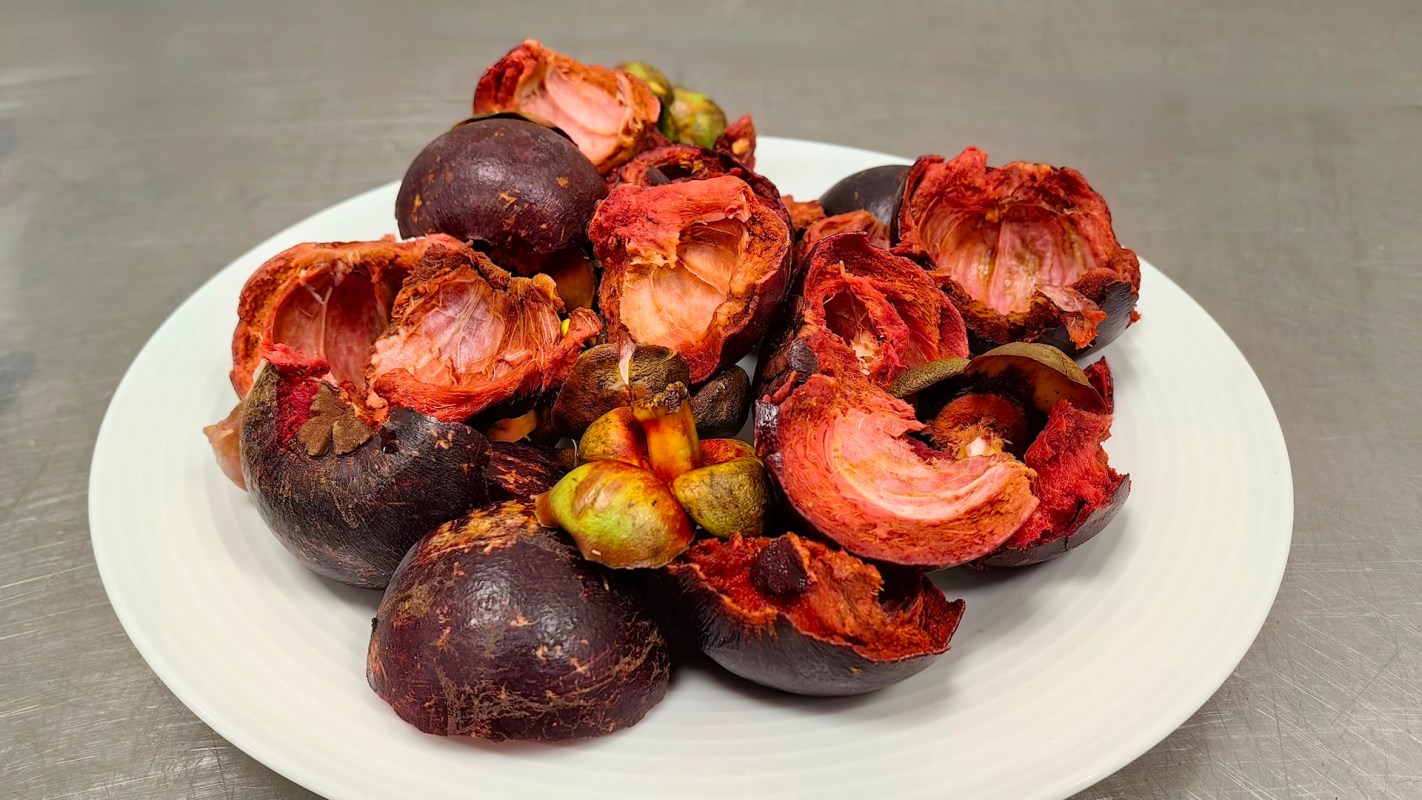
Fruit peels. Unless you're into gardening or natural makeup removal, chances are you probably toss them in the trash when you've gotten the sweet stuff, right?
But, what if those scraps could help lower your electric bill? It may sound weird, but it turns out Doc from Back to the Future might have been on to something.
Tech Xplore reported that postdoctoral researcher Vianney Ngoyi Kitenge found a way to turn mangosteen peels into organic batteries.
"I developed a simplified method to transform mangosteen shells into highly porous activated carbon," he explained.
This means peels can store enough power to produce camera flashes, run fitness trackers, or even power electric vehicles, much like Doc's DeLorean DMC-12. Reality is catching up to sci-fi at a dizzying pace.
Supercapacitors — unlike regular batteries — deliver fast bursts of energy. They're already tucked inside things like car jump starters and smartwatches. And turns out, they can be made from stuff we usually trash.
But why does it work?
"Their peels naturally contain 35%-45% carbon-rich compounds," Kitenge said, per Tech Xplore. He dried the peels, mixed them with potassium carbonate, and baked them at 700 degrees Celsius — all in one step. "This faster method makes activated carbon much cheaper," he added.
Other researchers are thinking along the same lines. At Nanyang Technological University, scientists used fruit peels to help recycle lithium-ion batteries. Another team created electricity from pomelo peels by layering the spongy part with plastic films. These scraps are turning into power sources.
Instead of going to landfills, peels now serve a purpose. Just a few kilograms can make hundreds of energy cells. This is waste that is getting a second life.
TCD Picks » Quince Spotlight
💡These best-sellers from Quince deliver affordable, sustainable luxury for all




|
If you compost your food scraps, what's your primary motivation? Click your choice to see results and speak your mind. |
 Improving my garden's soil 🌱
 Mangosteen trees grow across eastern and southern Africa. They handle both drought and heavy rain, which makes them a smart resource for future tech. It's a local solution that could reduce pollution and support jobs.
The supercapacitor market isn't huge yet — $3 billion to $4 billion in annual sales — but it's picking up fast. Lithium-ion batteries still dominate at $50 billion to $60 billion, but more clean energy projects are leaning on fast-storage options like this.
Other regions are finding similar solutions. In the Isle of Wight, a waste-to-energy plant is already turning trash into usable electricity. The more we reuse what we'd normally throw away, the less we depend on fossil fuels.
Some companies are already building the infrastructure. Haycarb in Sri Lanka uses coconut shells. U.S.-based Takachar is rolling out compact conversion tech.
"This breakthrough converts agricultural waste into valuable components for energy storage technology," Kitenge said, per Tech Xplore.
Fruit-powered future? It's not that far off.

Join our free newsletter for weekly updates on the latest innovations improving our lives and shaping our future, and don't miss this cool list of easy ways to help yourself while helping the planet.
Cool Picks





