


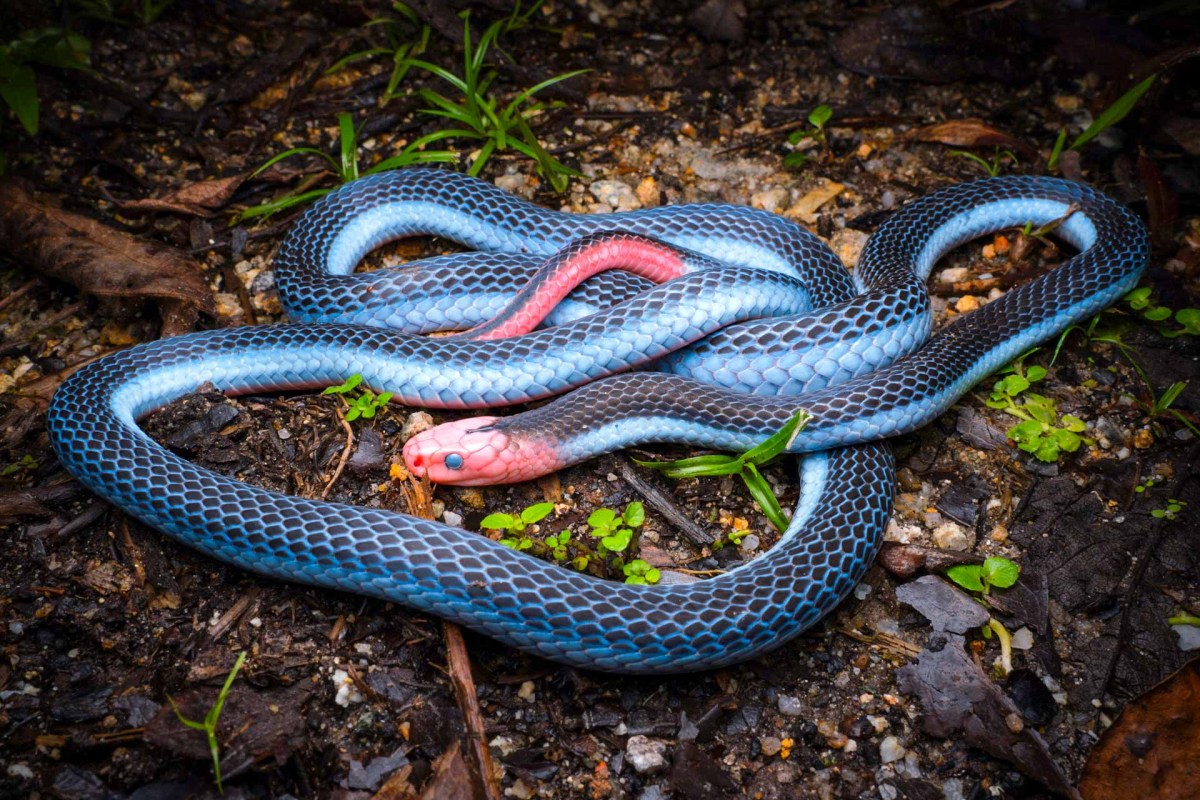
One of Southeast Asia's most unusual reptiles is drawing attention online after a Reddit post spotlighted the Malayan blue coral snake's almost unreal coloring.
The creature is both beautiful and deadly, and as one commenter pointed out: "Its venom targets the nervous system and can cause near-instant immobilization."
The footage was captured by Australian videographer and photographer Jesse Campbell in Singapore.
The snake, also known as the Malaysian blue coral snake, has an electric-blue body with a vivid red head and tail. The dramatic color pattern led commenters to describe it as otherworldly, while others focused on how rarely it is spotted and how dangerous it can be.
"It has the largest venom glands of any snake known to man; they're like a third the length of its body," one commenter wrote. "Also there is no known antivenin [also known as antivenom] for its neurotoxic venom."
Much of the discussion centered on the snake's venom. Unlike many venoms that incapacitate prey through slower mechanisms, the blue coral snake's venom is known to trigger an intense reaction that causes all muscles to fire at once, quickly paralyzing its target.
TCD Picks » Quince Spotlight
💡These best-sellers from Quince deliver affordable, sustainable luxury for all




As landscapes shift and development extends into wild spaces, people are more likely to encounter animals that are rare, venomous, or widely misunderstood. In many cases, the risk comes less from the animals themselves than from how humans respond to them.
Wildlife photographers and naturalists are helping document species that can be difficult to study in the wild.
For people living in or traveling through snake habitat, the most useful precautions are simple: stay on marked paths, avoid reaching into brush or under logs, never try to handle a wild snake, and contact trained wildlife professionals if one appears near a home or public area.

Get TCD's free newsletters for easy tips, smart advice, and a chance to earn $5,000 toward home upgrades. To see more stories like this one, change your Google preferences here.






