


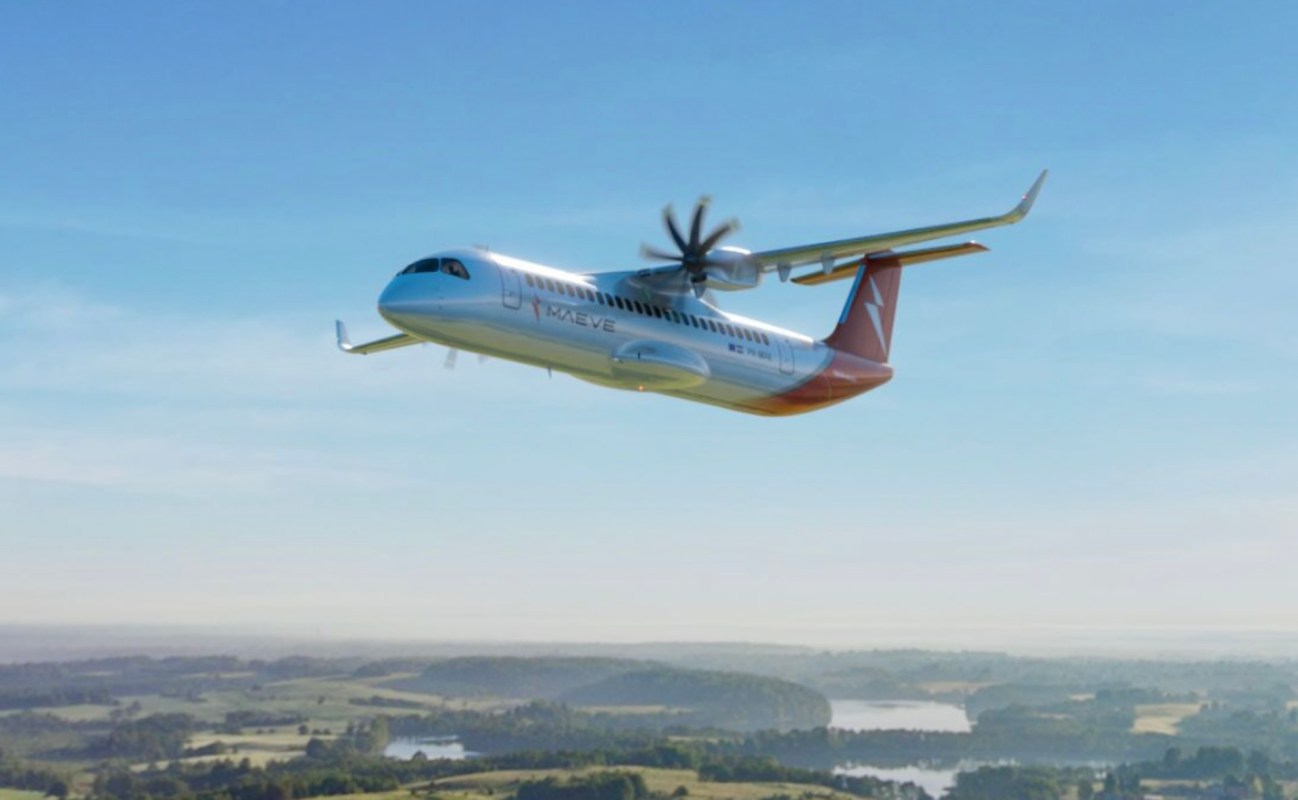
A government-backed startup is reportedly planning to bring a different type of electrical charge to the skies that could help reduce harmful pollution from the aviation industry.
Bloomberg reported Dec. 10 that Maeve Aerospace BV, which has the support of the Dutch government, the European Investment Council, and other private investors, is developing a hybrid-electric plane that can seat 80 passengers.
"The aircraft is designed to support the future of the regional aviation market, delivering a decarbonized, low-energy solution with regional jet performance and turbo-prop economics," the company said in an email to Bloomberg.
While the first hybrid-electric vehicle was introduced all the way back in 1901, according to the U.S. Department of Energy, many credit the Toyota Prius for helping make the technology mainstream on the ground in the early 2000s.
Not long after, Tesla entered the scene with its fully electric vehicles.
The skies have been a different story, though, with the use of electricity thousands of feet in the air presenting a unique set of challenges. The limitations of current battery technology and aircraft body design were among the hurdles cited in a study published by ScienceDirect.
The first all-electric passenger flight took place in September 2022, with the Eviation plane in the air for eight minutes, according to CNN. That aircraft had an estimated range of roughly 500 miles, and other companies have also seen success with shorter-range flights.
The first-of-its-kind Maeve Aerospace BV hybrid aircraft will be able to fly more than 900 miles before needing to land, thanks in part to a "40% higher energy efficiency," per Bloomberg.
In its current state, aviation is responsible for 2.5% of all carbon pollution linked to the overheating of our planet and health concerns like asthma.
However, the Dutch startup has sparked optimism that the industry will be able to make a similar planet-friendly transition to that of the Earth-bound transportation sector, which has managed to save consumers major money while reliably getting them where they need to go.
TCD Picks » Quince Spotlight
💡These best-sellers from Quince deliver affordable, sustainable luxury for all




The company, which was founded in 2021, intends to have its plane ready for travelers by 2031.

Join our free newsletter for weekly updates on the coolest innovations improving our lives and saving our planet.
Cool Picks





