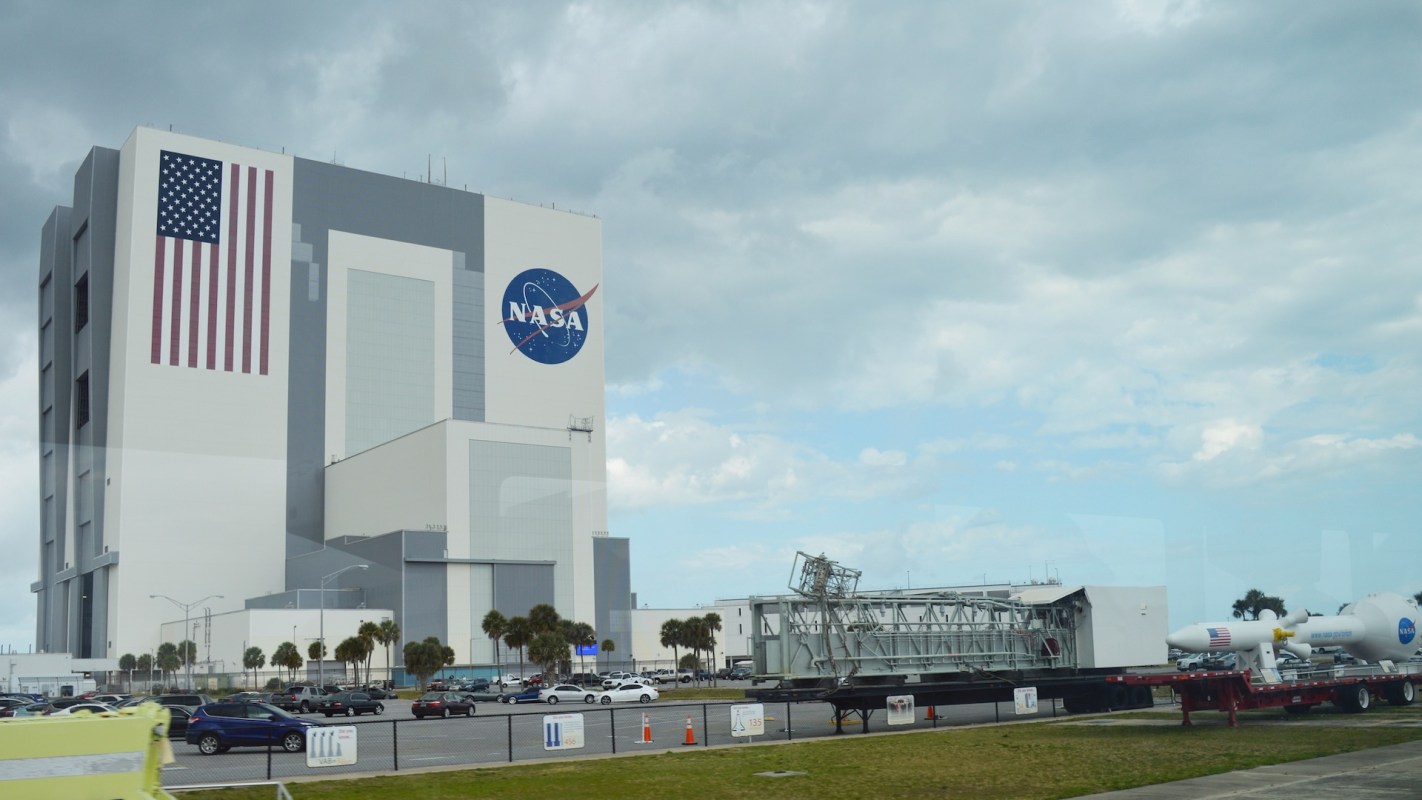
The United States is headed back to the Moon, with plans for a lunar surface fission reactor by 2030, per a press release from NASA.
On January 13, NASA and the Department of Energy announced plans to develop a fission lunar surface power system on the Moon and eventually on Mars.
In December, President Trump signed an executive order to pursue "superiority in space," pushing for economic growth, commercial development, and national security through space.
The commitment between NASA and the DOE places focus on achieving this vision.
"America is committed to returning to the Moon, building the infrastructure to stay, and making the investments required for the next giant leap to Mars and beyond," said Jared Isaacman, NASA Administrator.
"Achieving this future requires harnessing nuclear power," Isaacman added. "This agreement enables closer collaboration between NASA and the Department of Energy to deliver the capabilities necessary to usher in the Golden Age of space exploration and discovery."
Perk up the winter blues with natural, hemp-derived gummies Camino's hemp-derived gummies naturally support balance and recovery without disrupting your routine, so you can enjoy reliable, consistent dosing without guesswork or habit-forming ingredients. Flavors like sparkling pear for social events and tropical-burst for recovery deliver a sophisticated, elevated taste experience — and orchard peach for balance offers everyday support for managing stress while staying clear-headed and elevated.
Learn more → |

Nuclear fission is the process in which two neutrons hit a larger atom, splitting it into two smaller atoms, releasing energy. Fission releases zero emissions and produces minimal waste.
Currently, nuclear power removes 470 million metric tons of emissions that would come from fossil fuels, the equivalent of over 100 million internal-combustion vehicles off the road. However, nuclear power is more expensive than other forms of power, including solar and wind, with nuclear waste costing up to four times more than other fuel sources.
Some experts have concerns over these small modular reactors. The Union of Concerned Scientists has raised issues surrounding their security and safety, in addition to their high cost.
The DOE recently announced $800 million in small modular nuclear reactor projects that will come online in the early 2030s for use on Earth.
TCD Picks » Upway Spotlight
💡Upway makes it easy to find discounts of up to 60% on premium e-bike brands





|
What's the most you'd pay per month to put solar panels on your roof if there was no down payment?
Click your choice to see results and speak your mind. |
 $200 or more 💰
 The SMRs "will give our nation the reliable, round-the-clock power we need" to fuel manufacturing and data centers, Secretary of Energy Chris Wright said.
With nuclear power in space, scientists can constantly create energy, "regardless of sunlight or temperature," per NASA's statement.
Fission power in space could be used for a number of things, including fast-transit missions to Mars and powering outposts.
"Nuclear power has the potential to usher in a new space age that will make our ancestors' dreams of living on the red planet a reality and pave the way for new and even bigger dreams," per Physics Today.
NASA and the DOE hope that a lunar surface reactor will be able to sustain future power for years to come.
"History shows that when American science and innovation come together, from the Manhattan Project to the Apollo Mission, our nation leads the world to reach new frontiers once thought impossible," Wright said.
"The department is proud to work with NASA and the commercial space industry on what will be one of the greatest technical achievements in the history of nuclear energy and space exploration."

Get TCD's free newsletters for easy tips to save more, waste less, and make smarter choices — and earn up to $5,000 toward clean upgrades in TCD's exclusive Rewards Club.
Cool Picks