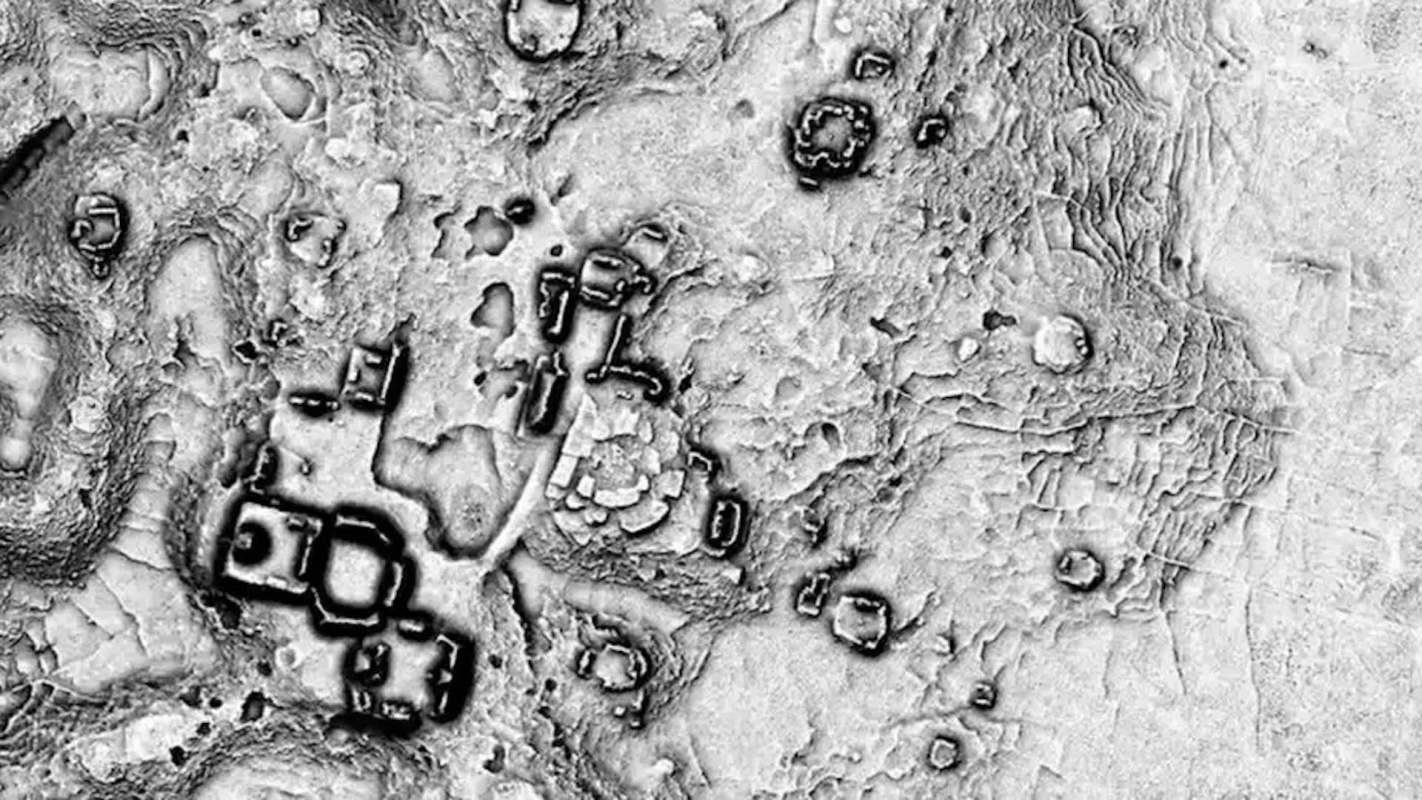
More than 2,500 years after it was built, El Yesal is emerging from the forest of Campeche.
New mapping shows that the long-obscured site inside Mexico's Balam Kú Biosphere Reserve was once a large Maya urban center, according to Daily Galaxy.
The survey clarified the scale of the city, from its pyramids and wide plazas to constructed terraces, and also produced an image of a ruler linked to a Maya storm deity.
What happened?
El Yesal, identified earlier through airborne LiDAR that picked out hidden remains under the canopy, has now been the subject of its first comprehensive study.
Although the site spans more than 0.39 square miles (1 square kilometer), researchers had made only limited visits before this work.
Professor Ivan Šprajc of the Research Centre of the Slovenian Academy of Sciences and Arts headed the investigation, which was carried out with approval from Mexico's National Institute of Anthropology and History.
TCD Picks » Good Store Spotlight
Get 10% off your next purchase with code TCD10


A large ceremonial core dominates the settlement.
Its Great Acropolis is a square platform about 492 feet (150 meters) on each side and roughly 49 feet (15 meters) high, topped by four pyramidal buildings, including one that rises another 89 feet (27 meters) above the platform.
Pottery recovered in test excavations dates to the Mamom and Chicanel phases, indicating the city was established sometime between about 600 BC and AD 200.
Archaeologist Atasta Flores Esquivel said the city's architecture resembles that of other Maya centers such as Edzná, while later Late Classic growth added plazas, major buildings, and terraces.
Researchers also found a heavily damaged stone stela.
A digital reconstruction revealed a ruler carrying a ceremonial staff and wearing a headdress associated with Yopaat, the Maya storm deity.
Why does it matter?
Finds like this can reshape researchers' understanding of how Maya cities were organized, connected, and defended.
El Yesal does not appear to have been a small outpost deep in the forest.
Instead, it seems to have been a major settlement with ceremonial architecture, trade spaces, and possible defensive hilltop complexes.
The unusual "nested complexes" near the acropolis, which researchers believe may have served as marketplaces, could also expand understanding of how goods moved through the region.
Protected forests can preserve far more than wildlife habitat.
Places such as the Balam Kú Biosphere Reserve may also shelter major parts of human history that would be much harder to recover if those landscapes were cleared, fragmented, or heavily developed.
What's being done?
The mapping and excavation are part of an archaeological effort in the reserve supported by local authorities and reserve managers.
The work gives researchers a baseline for future studies of El Yesal and its possible links to nearby Maya centers including Calakmul, Balamkú, and Uitzilná.
The reserve is also part of the Great Maya Forest Biocultural Corridor, established in 2025 to link protected areas across Mexico, Guatemala, and Belize.
Cross-border conservation can help protect ecosystems while also safeguarding archaeological sites that remain hidden beneath dense vegetation.
For Šprajc, El Yesal is "one of the largest known Maya cities in the Central Lowlands," and the findings suggest the reserve may still conceal many more discoveries beneath the trees.

Get TCD's free newsletters for easy tips, smart advice, and a chance to earn $5,000 toward home upgrades. To see more stories like this one, change your Google preferences here.