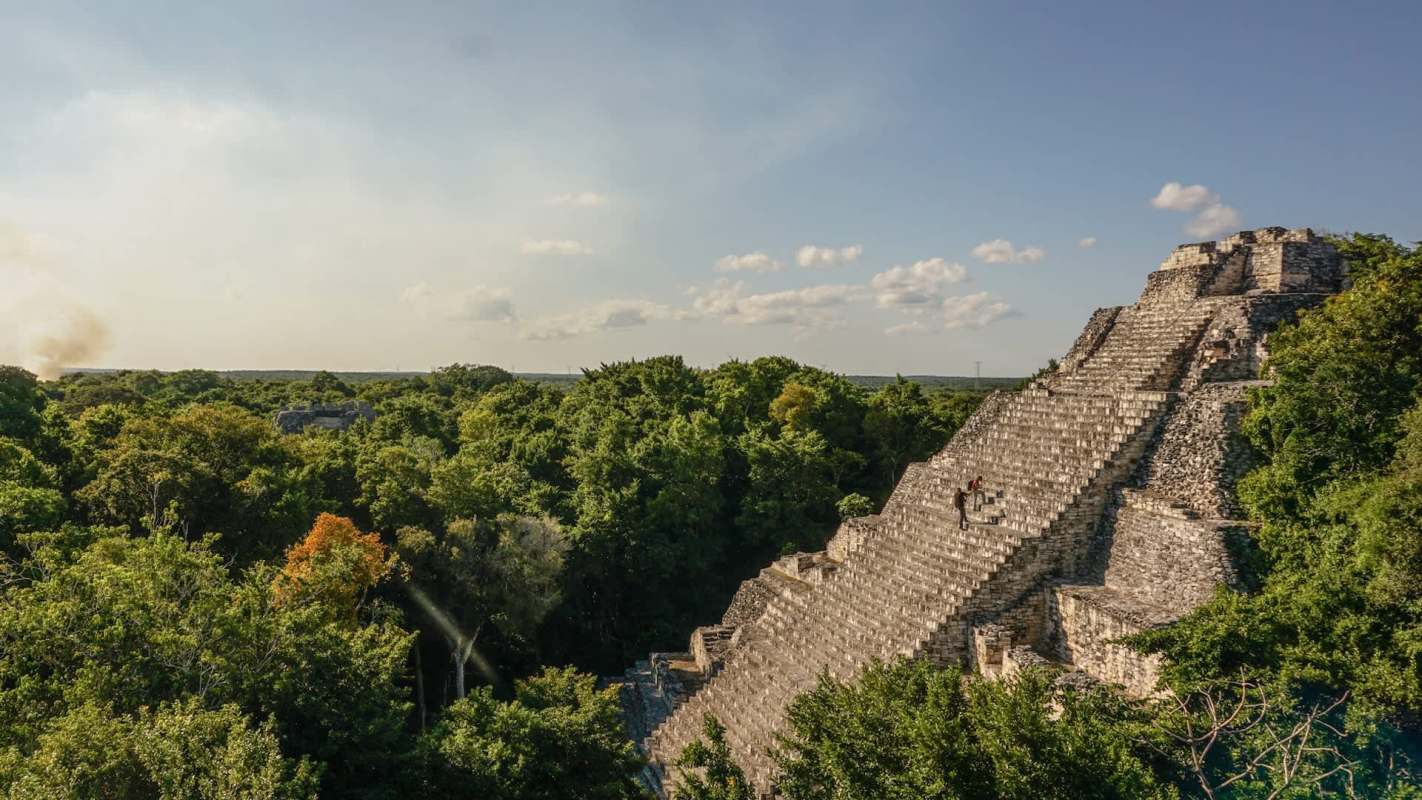
Within the Calakmul Biosphere Reserve in southern Mexico, archaeologists have reached an ancient Maya settlement by carving a three-mile route through thick jungle with machetes.
Heritage Daily reports that the site appears to have remained undisturbed for more than 1,000 years and has been named Minanbé, which means "there is no path" in Yucatec Maya.
Mexico's National Institute of Anthropology and History (INAH) announced the discovery, which added that the broader landscape of the Central Maya Lowlands housed between 9 and 11 million people during the years 600-900 CE.
What happened?
In a remote part of the reserve in Campeche, a Mexican-Slovenian team led by archaeologist Ivan Šprajc of the Research Centre of the Slovenian Academy of Sciences and Arts identified the lost city.
Its location stayed concealed in part because dense vegetation covered the area, and no logging tracks led to it. Researchers got there only by first clearing a route through the forest, then continuing by all-terrain vehicle and on foot.
The search began from above. According to Heritage Daily, the team used airborne LiDAR to spot features hidden under the forest canopy before verifying them on the ground.
TCD Picks » Quince Spotlight
💡These best-sellers from Quince deliver affordable, sustainable luxury for all




Spread across about 37 acres, Minanbé contains plazas, ceremonial buildings, palatial structures, terraces, and wetland and channel features linked to water management, per the INAH announcement.
It also includes a pyramidal temple more than 42 feet in height, and a video released with the announcement shows carved stone monuments, including altars marked with hieroglyphics.
Why does it matter?
What makes the discovery stand out is the report that the city was found intact and without signs of looting. That gives researchers an unusual opportunity to examine a Maya urban center while much of its original context remains preserved.
That level of preservation can help historians better understand how people in the region lived, governed, farmed, traded, and managed water.
The find also adds to the growing picture of how vast and interconnected the Maya Lowlands once were.
What are people saying?
Šprajc described how unusual the find was.
In the INAH announcement, he was quoted as saying, "Compared with other places where we have conducted surveys, access here was much more difficult. However, in the last three years, this is the first site we have found completely intact, with no signs of looting. It was a major surprise."
Archaeologist Vitan Vujanović pointed to one particularly notable structure, saying, "This is the first time I have recorded a temple that is relatively well-preserved and still associated with a stela bearing glyphs."
Šprajc said the jungle may still be hiding far more than researchers have uncovered so far, adding that "Each new site helps us better understand the complexity of Maya civilization… At the same time, it opens new questions that will require further research to answer."

Get TCD's free newsletters for easy tips, smart advice, and a chance to earn $5,000 toward home upgrades. To see more stories like this one, change your Google preferences here.