


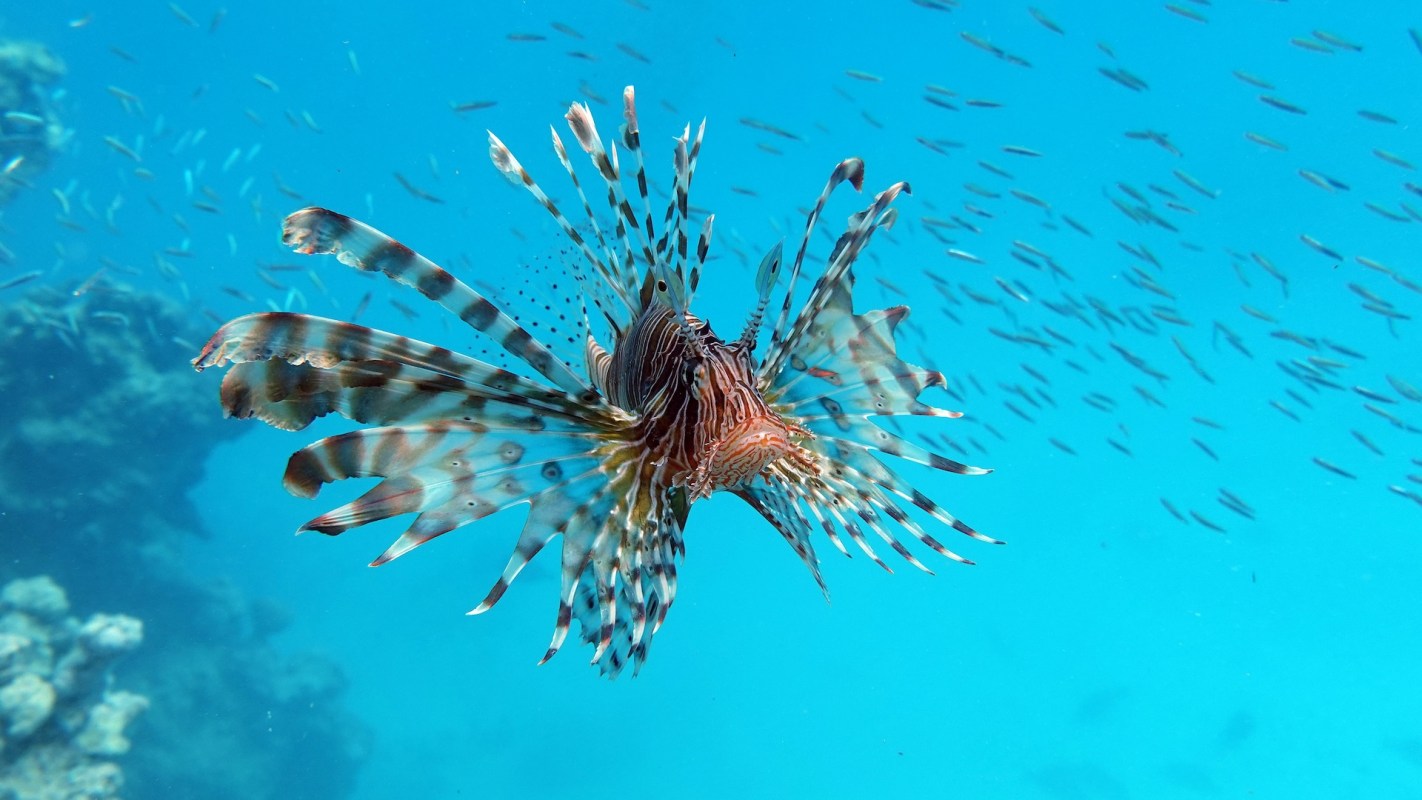
A popular form of climate adaptation is happening off Cyprus: Invasive lionfish are being caught, cleaned, and turned into food.
The backdrop is the Mediterranean Sea, which is in a fast transition, with scientists estimating that a new non-native species appears every two weeks.
What's happening?
Working near Cyprus, a skipper named Pepis assists researchers by pulling lionfish from experimental traps, removing their venomous spines, and preparing the catch, The Independent reported.
His role is part of a larger effort to monitor invasive marine life entering the Mediterranean and to keep it in check.
Research compiled by the Cyprus Academy of Sciences, Letters and Arts estimated that the Mediterranean gains roughly one newly introduced non-indigenous species every fortnight.
That report counted more than 1,000 non-native species overall, up from fewer than 800 recorded between 2012 and 2017, according to The Independent.
TCD Picks » Quince Spotlight
💡These best-sellers from Quince deliver affordable, sustainable luxury for all




Scientists say warmer seas, together with the passageway that is the Suez Canal, are helping tropical species from the Red Sea and farther away move into the region.
"Changes have been drastic, especially since 2000," marine scientist Periklis Kleitou told the newspaper.
There has been a similar trend in Greek waters, with more than 230 non-native marine species documented in recent decades, including rabbitfish and the toxic silver-cheeked toadfish, also known as the Lagocephalus pufferfish.
Why does it matter?
The changes are affecting food systems, jobs, and coastal communities.
TCD Picks » Quince Spotlight
💡These best-sellers from Quince deliver affordable, sustainable luxury for all
Though it makes up only 0.8% of the planet's ocean surface, the Mediterranean is home to as much as 18% of the world's marine species, The Independent noted.
The region supports both biodiversity and communities that rely on healthy waters.
Invasive species can quickly reshape ecosystems. Scientists say lionfish lack a known predator in the Mediterranean and feed heavily on native fish and crustaceans.
Rabbitfish can strip underwater habitats of algae, while pufferfish prey on native species and have been linked to declining octopus catches, per The Independent.
These shifts affect people who fish for a living, sell seafood, or depend on stable marine ecosystems to support local economies.
"Invasive species are taking over our seas, and that affects the local biodiversity as well as the economy," Christina Kakoulli, a colleague of Kleitou at the Marine and Environmental Research lab, told The Independent.
Rising temperatures can ripple through everyday life in unexpected ways, changing what ends up in fishing nets, on restaurant menus, and in coastal markets.
What's being done?
In Cyprus, researchers are testing specially designed traps for lionfish and Atlantic blue crabs that let native species escape, the newspaper reported.
To reduce pufferfish numbers, authorities in Cyprus and Greece have offered financial incentives to fishers who bring them in.
They are also trying to make consumers comfortable eating invasive species.
Once its venomous spines are removed, a lionfish is safe to eat, and chefs working alongside researchers are trying to build demand for the striking creature as a high-quality seafood choice.
Researchers are also looking at ways to turn troublesome species into useful products.
Testing in Greece has involved processing pufferfish toxins into fishmeal for farmed sea bass, while other studies have examined possible uses in cosmetics, supplements, leather goods, and pain relief products.
"In the beginning people were afraid, but now they understand it's a high quality, delicious fish," chef Petros Yiangou told The Independent.
Scientists caution that the challenge is bigger than a single menu change.
"The sea is very complicated," Kleitou said. "It has so many confounding variables interacting at the same time."

Get TCD's free newsletters for easy tips, smart advice, and a chance to earn $5,000 toward home upgrades. To see more stories like this one, change your Google preferences here.







