


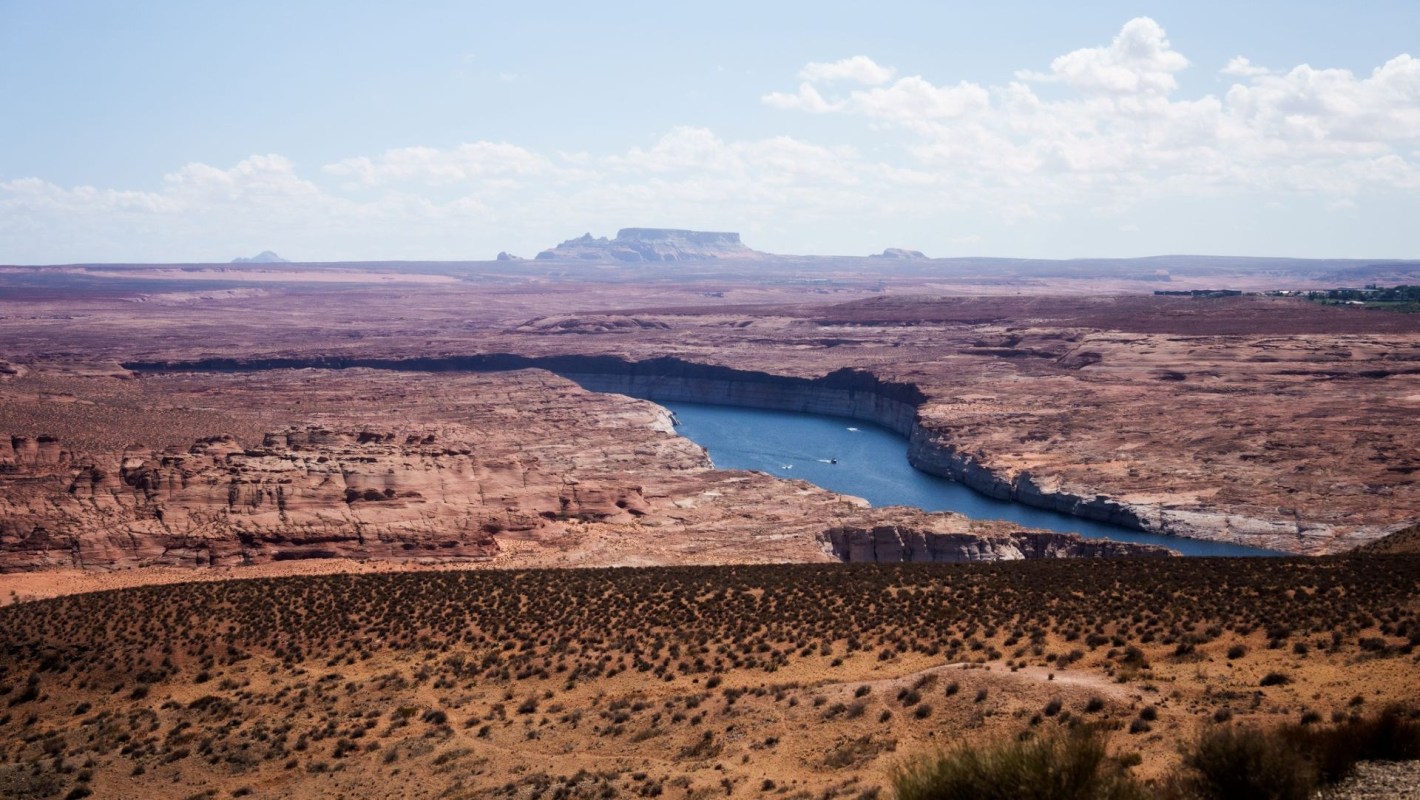
As the Colorado River shrinks, area officials are exploring unusual strategies to keep supplying homes, farms, and expanding cities.
Because the states remain deadlocked over water cuts, attention is turning to costly plans intended to boost the water supply rather than reduce demand.
What's happening?
Lake Mead and Lake Powell have fallen to dangerously low levels after more than 20 years of drought and long-term overconsumption, underscoring a basic problem for the seven states that depend on the Colorado River: They are taking more water than the river can provide, as reported by Grist, which classified some of the discussed possible solutions as "weird."
Sometimes, though, you have to get a little bit weird — or creative, to put it another way, to solve a resource problem.
The most straightforward answer has long been to cut usage, but that remains politically difficult. The states have tried to find solutions since 2022, when the Colorado River faced detrimental effects from the ongoing dry spell.
Negotiations between the Upper Basin states — Colorado, Utah, Wyoming, and New Mexico — and the Lower Basin states of Arizona, California, and Nevada have stalled over which side should absorb the bigger reductions, leaving the Trump administration facing a September deadline to impose restrictions.
TCD Picks » Quince Spotlight
💡These best-sellers from Quince deliver affordable, sustainable luxury for all




Instead of settling on a cuts plan, federal officials are now reviewing more than $50 billion in supply-focused proposals from governors and private companies. Jennifer Pitt, Colorado River program director for the National Audubon Society, told Grist, "It is something easier for people to agree on."
Among the ideas being weighed are water-saving retrofits for power plants, schools, airports, and data centers in Nevada, cloud seeding in the Rockies, and a Baja California desalination plant that could help offset Arizona's shrinking share of river water.
Why does it matter?
The Colorado River is vital for both major farm regions and fast-growing metropolitan areas across the U.S. Southwest. When the river weakens, communities could face stricter water limits, added strain on farmers, and rising costs for people already coping with extreme heat.
Without an agreement on fair reductions, the states could end up leaning on expensive infrastructure projects that still might not deliver enough additional water.
Some of those options come with major drawbacks. Desalination consumes huge amounts of electricity, groundwater export proposals can threaten fragile desert ecosystems, and even potentially useful approaches like cloud seeding are still small in scale and uncertain as a fix.
At a recent Senate hearing, Senator Martin Heinrich of New Mexico said, "The basin should not be forced to choose between stabilizing the present and negotiating the future."
What's being done?
Federal officials are evaluating a wide array of proposals, even as Interior Department water official Andrea Travnicek has urged lawmakers to be "thoughtful" about spending taxpayer money. Backing appears to be increasing for projects that might buy time while the political impasse drags on.
Desalination is among the most prominent possibilities. A new plant in Mexico could turn seawater into treated water and let Southwestern cities take less from the Colorado River. Nevada is also pursuing funding for closed-loop and zero-water cooling systems that could lower demand from power plants and data centers.
Upper Basin states are continuing to put money into cloud seeding, which uses salt or silver iodide to encourage clouds to produce more snow or rain. Utah officials say the practice could raise annual snowpack by as much as 10%, and startups are claiming even bigger increases. For example, the Florida company Rain Enhancement Technologies claims it has produced 15,000 homes' worth of rainwater this year, Grist noted.
Conservation at the local level remains part of the response. Swapping out thirsty lawns, fixing leaks, and using more efficient cooling and irrigation policies can all cut household demand, even if individual actions by themselves cannot solve a crisis of this scale.
Pitt summed up the challenge this way: "This is a slow-moving crisis, but it is a crisis."
And as Cadiz CEO Susan Kennedy said of the push for solutions, "This isn't a competition; it's an all-of-the-above situation.

Get TCD's free newsletters for easy tips, smart advice, and a chance to earn $5,000 toward home upgrades. To see more stories like this one, change your Google preferences here.






