


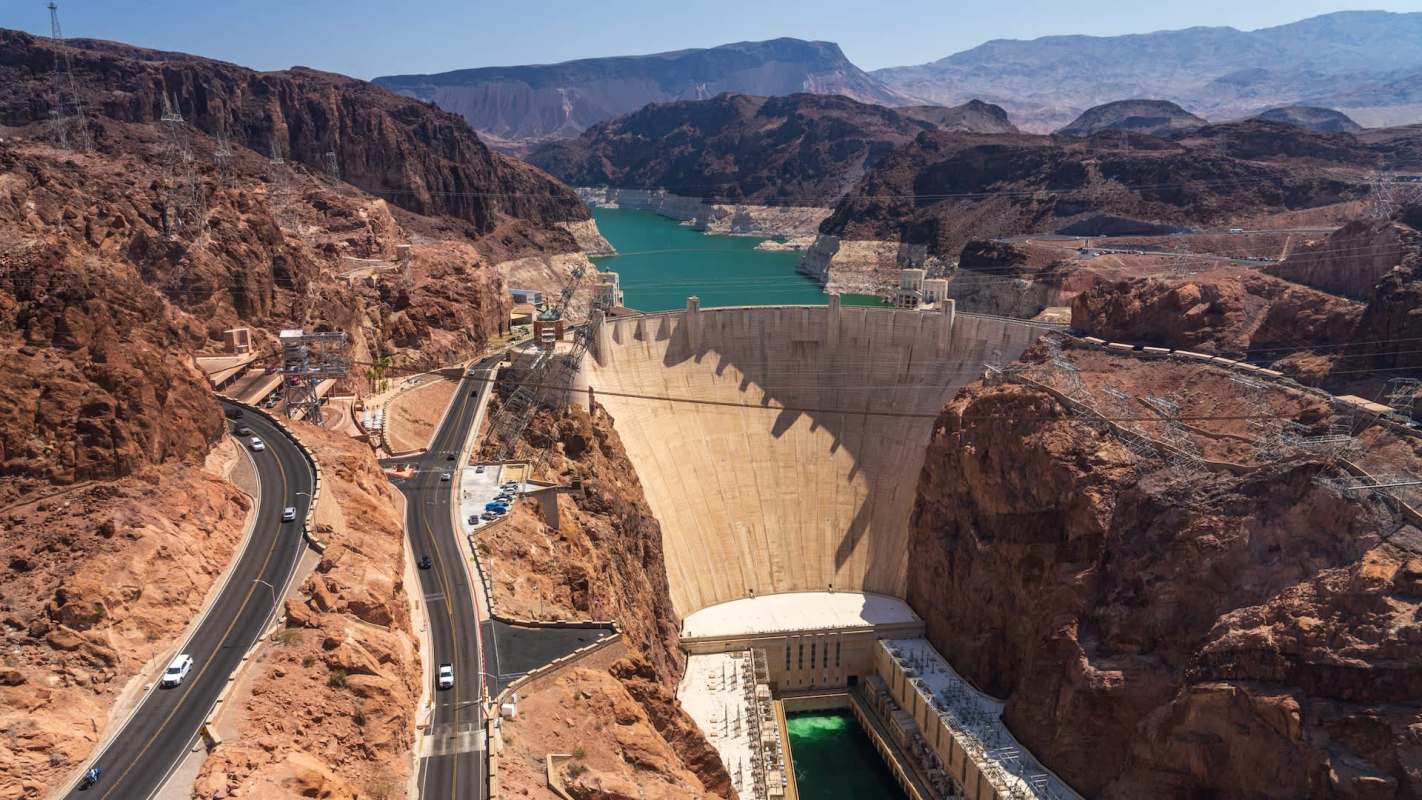
Lake Mead has fallen under 1,050 feet above sea level, underscoring how deeply the West's water shortages still run.
As the country's largest reservoir continues to shrink, Las Vegas appears to have stronger safeguards against a worsening shortage than most major Colorado River Basin cities.
What's happening?
Federal forecasts show Lake Mead could reach about 1,020 feet by July 2027, the Las Vegas Sun reported. With the reservoir already sitting at roughly 35% of capacity, that outcome would take it past the low it hit in 2022.
For Southern Nevada, the stakes are high. About 2.4 million people rely on the Colorado River for around 90% of their drinking water.
Weak snowpack in the Rockies, hotter conditions, dry soils, and a drought that has dragged on for years are all worsening the strain.
"This is a multi-decade-old drought, and then on top of that multi-decade-old drought are the impacts of climate change, which predominantly translate into higher temperatures, more variable precipitation, and drier soils and higher water demand," Kevin White, a water resources researcher at Arizona State University, told ABC News.
TCD Picks » Quince Spotlight
💡These best-sellers from Quince deliver affordable, sustainable luxury for all




A separate problem remains unresolved as well: The seven Colorado River Basin states still have not agreed on the water-sharing rules that will replace the current arrangements when they end in late 2026.
Why does it matter?
More than 40 million people depend on the Colorado River system, so the drop in reservoir storage carries consequences beyond household taps.
Falling levels at Lake Mead also put hydropower generation at the Hoover Dam at risk.
What Southern Nevada does have in its favor is years of planning.
The region's access to Lake Mead was reinforced by a deep-water intake tunnel completed by the Southern Nevada Water Authority in 2015 and a low-lake-level pumping station added in 2020. Those projects mean water can still be drawn even if the reservoir falls much farther.
"We invested as a community and built a deep-water intake and a low-lake-level pumping station at Lake Mead. Those two facilities secure our access to our water supply, regardless of what Lake Mead's elevation is," said Bronson Mack, a spokesman for the Southern Nevada Water Authority, per the Las Vegas Sun.
What's being done?
Las Vegas has combined those infrastructure upgrades with strict conservation and extensive water recycling.
Even as the population increased by about 876,000 people, per-person water use in the community fell 58% from 2002 to 2025.
Indoor water from showers, sinks, and hotel rooms is treated and sent back to Lake Mead. Roughly 99% of that indoor use is recycled, which helps Nevada remain within its legal consumptive limit while continuing to support a larger metro area.
In 2024 alone, 245,000 acre-feet of treated water flowed back into the reservoir.
The area has also replaced 250 million square feet of ornamental grass, a change that has saved 217 billion gallons of water since 1999.
As larger negotiations continue, Nevada, Arizona, and California have proposed temporary additional cuts to help stabilize the river through 2028.
"Southern Nevada is one of the few places on the face of the planet that recycles every drop of water that goes down the drain," Rep. Susie Lee said at the Southern Nevada Water Authority's yearly Water Summit, per the Las Vegas Sun.
Colorado water commissioner Becky Mitchell described the challenge this way: "We're being asked to solve a problem we didn't create with water we don't have."

Get TCD's free newsletters for easy tips, smart advice, and a chance to earn $5,000 toward home upgrades. To see more stories like this one, change your Google preferences here.






