


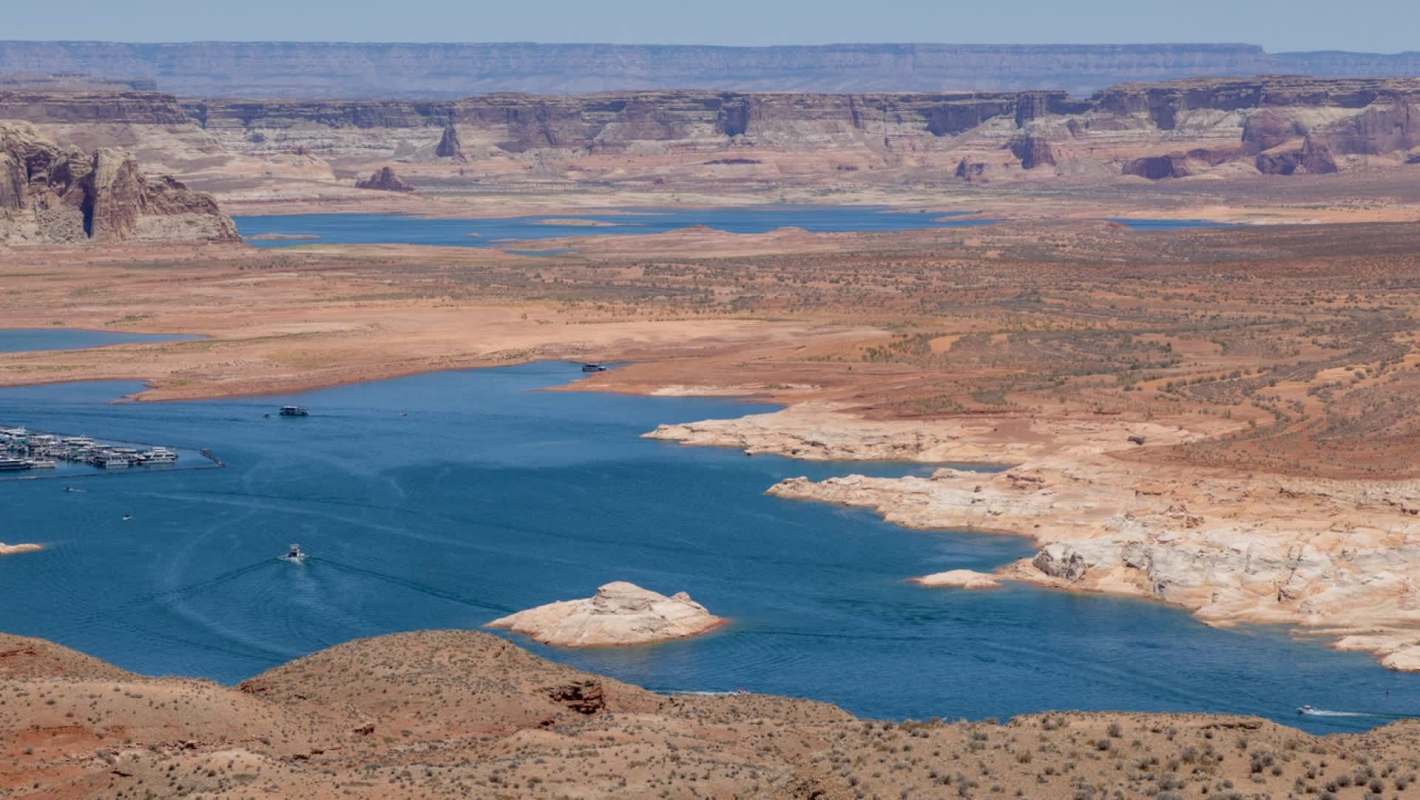
Colorado River reservoirs are already hovering near critical thresholds, and a new analysis warns that one more warm, dry winter could push the system dangerously close to failure.
For millions of people across the West, that means the region's water crisis is far from over — even if a wet year arrives.
What's happening?
A group of Colorado River experts released a new report projecting what could happen to the basin's federally managed reservoirs under both dry and wet winter scenarios, Inside Climate News reported.
Their conclusion was stark: Neither outcome would be enough to pull the system out of a long-running, climate-fueled drought.
"Both scenarios demonstrate the need to adopt significant additional measures to permanently decrease consumptive uses across the entire Basin," the authors said.
If 2027 tracks much like 2025, a notably dry year, and use remains near this century's lowest levels, the U.S. would still consume 2.59 million acre-feet more than the river naturally provides.
TCD Picks » Quince Spotlight
💡These best-sellers from Quince deliver affordable, sustainable luxury for all




That outcome would leave Lakes Mead and Powell only slightly above the thresholds needed for power generation and safe dam operations.
Even a much wetter year would offer only short-term relief. The report found that if next winter looks more like 2023, one of the wettest years of the century, the system could briefly gain water, but overuse would likely pull reservoir levels back down within two years.
According to ICN, the Colorado River and its tributaries are relied on by around 40 million people, 30 tribal nations, seven Western states, and Mexico.
Why does it matter?
The Colorado River helps sustain drinking water supplies, food production, power generation, and local economies across the Southwest.
When those reservoirs fall, the strain spreads to households, cities, farms, and tribal communities alike.
Experts said agriculture could face particularly severe pressure. Anne Castle, one of the report's authors, warned that another dry winter could intensify pressure on farmers to sell water to cities, a shift that could ripple through rural communities and reduce agricultural production.
As climate change deepens water shortages, it can also drive up food costs, create energy uncertainty, and add financial stress for families already living in vulnerable areas.
What's being done?
The seven basin states are still negotiating how to manage the river after the current operating rules expire, though discussions have increasingly shifted toward a shorter-term deal rather than a durable solution.
The Bureau of Reclamation is expected to release a record of decision this summer describing how it intends to manage the river going forward.
Experts said the only realistic path is permanent reductions in consumptive use across the basin, not temporary fixes. That could include better measurement of who is using water, along with stronger incentives to help major users — especially in agriculture — conserve more.
The report's authors argued that wet years alone will no longer save the system. Without structural cuts, each dry cycle begins from a weaker position than the last.

Get TCD's free newsletters for easy tips, smart advice, and a chance to earn $5,000 toward home upgrades. To see more stories like this one, change your Google preferences here.






