


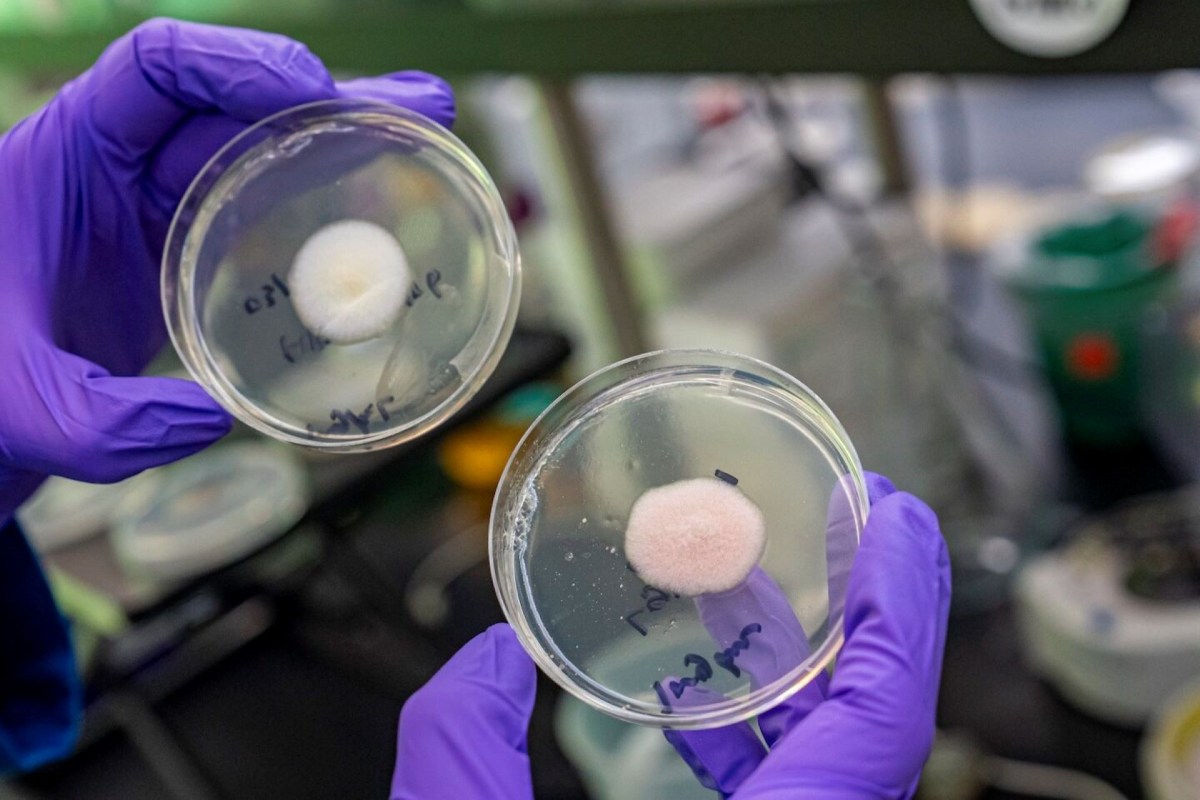
A chef who replaced his apron with a lab coat has come up with some interesting bioengineering, creating a grill-top delicacy from fungus.
Vayu Hill-Maini is using his culinary background to create a protein alternative from koji mold while working at Lawrence Berkeley National Laboratory in California. Fascinatingly, a lab photograph of a koji burger sizzling on an apparent flat top looks the part, with the right color and consistency.
Now he is fine-tuning fungal genetics for more beef-like features.
"We might be able to program the structure of the lot fibers to be longer, which would give a more meat-like experience. And then we can think about boosting lipid composition for mouth feel and further nutrition," Hill-Maini said in a Berkeley lab summary.
It's all part of an effort the Berkeley report said is aimed at creating planet-friendly, cruelty-free foods.
Surprisingly, our food system generates around one-third of the world's planet-warming air pollution, according to the United Nations. Beef production tops the list, due in part to the extensive acreage needed to raise cattle, and from digestive gasses (methane) from the animals, the agency claims. Methane is a powerful world-warming fume.
Skipping just one meat meal a week can provide for a planet- and body-healthy plate, as well as helping to save hundreds of dollars a year on groceries — even with partial menu adjustments.
Koji, long used in East Asia to help ferment starches into soy sauce, sake, and miso, could be part of future options on the table elsewhere. The process from fungus to burger includes some in-depth biology.
As part of the work, Hill-Maini and his team developed a "gene-editing toolkit," including an iron-based molecule prevalent in animal tissue. This helps to give the fungus a meat-like flavor and color, all per the lab report.
The experts feel this is the start of developing an easy-to-grow, low-cost protein source, among other products.
TCD Picks » Quince Spotlight
💡These best-sellers from Quince deliver affordable, sustainable luxury for all




🗣️ Which of these factors would most effectively motivate you to buy an induction stove?
🔘 Healthier indoor air 🏠
🔘 Superior cooking results 🍳
🔘 Helping the planet 🌎
🔘 I wouldn't buy an induction stove 🚫
🗳️ Click your choice to see results and speak your mind
"By unlocking koji mold through the development of these tools, we are unlocking the potential of a huge new group of hosts that we can use to make foods, valuable chemicals, energy-dense biofuels, and medicines," research senior author Jay Keasling said in the report.
It's not the only research into unique, albeit odd, meat alternatives. France-based Ÿnsect is making protein from mealworms. Lab-grown meats are also gaining FDA approval. Though the options will likely have to overcome some stigmas before going mainstream.
Hill-Maini and his labmates are tapping his kitchen experience to make koji mold delicious for even people with "sophisticated tastes." They are also looking into the potential of other fungus types, according to the lab.
"It's a thrilling new avenue for biomanufacturing," Keasling said in the Berkeley report.

Join our free newsletter for weekly updates on the coolest innovations improving our lives and saving our planet.
Cool Picks





